
Vandaag of morgen in huis

Kwaliteit gegarandeerd

Welkomstaanbiedingen ontgrendelen: GRATIS bezorging | Tot 80% korting | Gratis 30 dagen JoyPlus-proefperiode
Download de app
A mobile storage cabinet on wheels is handy when you want to store your belongings flexibly and need to move the cabinet around regularly. It could be for a bedroom, student accommodation, home office or small workspace. However, a cabinet on wheels can look more practical on a product page than it turns out to be in everyday use.
So don’t just look at the number of compartments or an attractive price. The construction, maximum load and assembly method are what really determine whether a storage cabinet on wheels is right for you.
A description such as “extra large” doesn’t tell you much without specific measurements. Always check the width, depth and height, and measure the space where you plan to put the cabinet. Remember to allow for skirting boards, a desk leg or a door that needs to open.
A multi-tier cabinet can offer plenty of storage, but narrow compartments are less suitable for large ring binders or piles of clothes. A plastic storage cabinet for toys, towels and everyday essentials works differently from a filing cabinet on wheels for documents.
Not every mobile cabinet is designed to be moved around regularly when fully loaded. Check whether the product information mentions the type of wheels, whether they swivel or whether they lock. For a heavy cabinet, 360° swivel castors and brakes on the front wheels are useful features.
A lightweight cabinet may roll more easily, but could be less stable on an uneven floor. Place any cabinet on wheels on a level surface and don’t exceed the stated load capacity.
A storage cabinet with no assembly required might be a pre-assembled model, or it could be one that snaps together without tools. There’s an important difference. Check whether the parts just need unfolding, snap together magnetically, or still need to be assembled using panels and connectors.
A folding storage cabinet also needs a dry, clean and compact place to be stored when not in use. Don’t put a plastic cabinet next to a radiator or another direct heat source; extreme temperatures can deform PP plastic.
PP plastic is lightweight, easy to wipe clean and suitable for many household uses. It’s practical for a bedroom, bathroom, kitchen or student room, but according to the product information, these models aren’t designed for heavy industrial loads.
A steel and board cabinet is generally better suited to documents, equipment and more frequent use. Check the weight of the cabinet, the drawer construction and any information about the load capacity per drawer or for the whole unit.
For everyday care, use a soft, damp cloth with mild soap. Avoid abrasive cleaners, strong chemicals and bleach, as these can damage the surface.
Open compartments are handy when you want to grab things quickly. They work well for books, toys, snacks, toiletries and office supplies. A model with four or five tiers makes good use of vertical space, but check that each compartment is wide enough.
A storage cabinet with drawers makes more sense for documents, cables, stationery and small accessories. Drawers keep their contents out of sight and can make things easier to organise. If privacy is important to you, consider a lockable filing cabinet on wheels.
Compare the external dimensions with the space available. A cabinet around 55 cm wide could work beside a bed or desk, while a model about 40 cm wide is easier to fit under or beside a worktop.
Also check:
The product information should always guide your decision. If no maximum load is given, it’s sensible to use the cabinet for light to medium-weight items and avoid putting heavy equipment on top.
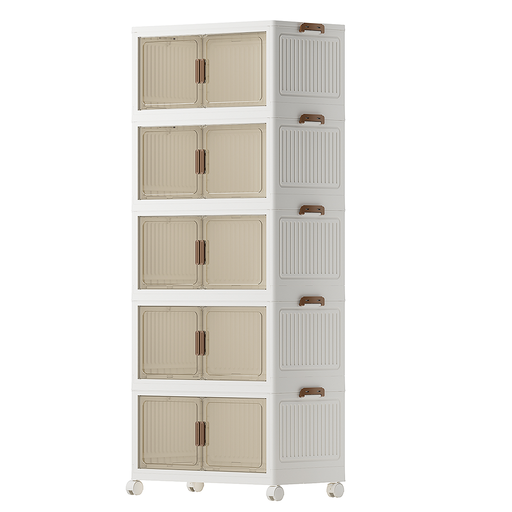
Why it suits this profile: This cabinet is 55 cm wide, has five compartments and unfolds without tools. That makes it suitable for a student room, bedroom or small home where flexibility matters.
The product description clearly states the material, five compartments, magnetic closure and nylon wheels. The cabinet isn’t designed for heavy industrial loads.
PP plastic, five compartments, a folding design and wheels for moving it between rooms.
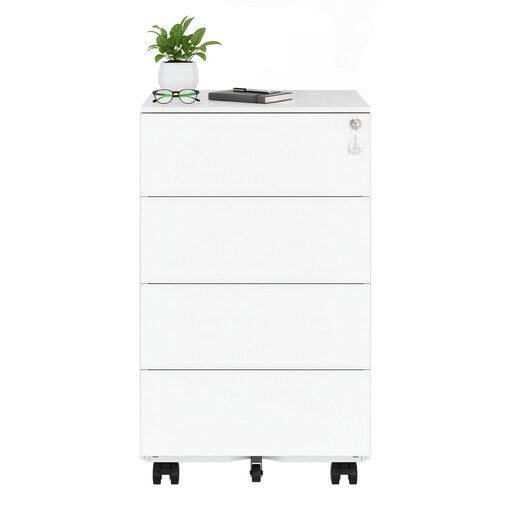
Why it suits this profile: This pre-assembled steel model is designed for an office or home office where documents need to be stored securely and neatly. It measures 45 × 39 × 69,3 cm.
According to the product information, the cabinet arrives pre-assembled. So there’s no uncertainty about having to fit the drawers or wheels yourself.
Steel construction, four drawers, a lock, full-extension drawer runners and wheels included.
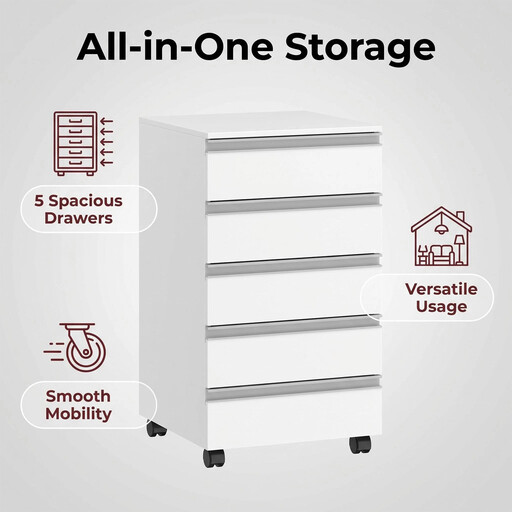
Why it suits this profile: For an office, studio or workshop where documents, tools and materials need to be moved around often, this model offers a different layout from a plastic storage cabinet.
The product information lists the dimensions and material, a total load capacity of up to 50 kg and lockable front wheels. Before use, check that this capacity is suitable for the way you plan to arrange the contents.
Five deep drawers, 360° swivel castors, two lockable front wheels and a top surface for lightweight equipment.
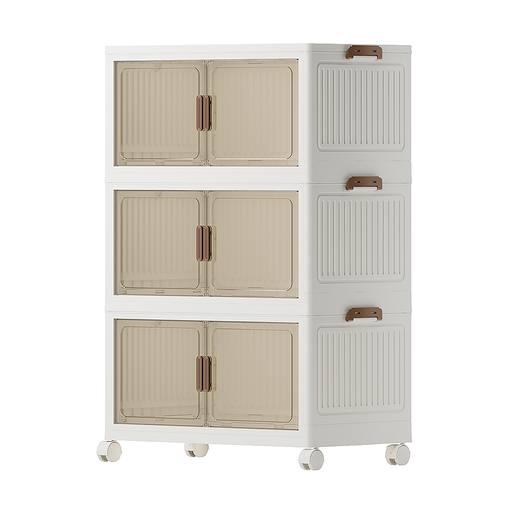
Why it suits this profile: Its compact layout works well beside a bed, in a bathroom, kitchen, office or flat. The model is lightweight and can be assembled using tool-free snap-fit connectors.
The product description specifies three tiers, PP plastic and tool-free snap-fit assembly. This makes it clearer what the cabinet is designed for: lightweight household and office items.
Compact design, smooth surface, three tiers and easy mobility for small indoor spaces.
We’ve put together a complete, up-to-date list of products that meet these strict selection criteria and current European safety regulations.
It depends on the model. Some cabinets come pre-assembled and just need to be unpacked. Others have magnetic closures or snap-fit connectors and require no tools. Always check whether “no assembly” means the cabinet just needs unfolding or whether you still need to connect the panels.
Its lifespan depends on the load, how often it’s used, the floor surface and where it’s stored. A plastic cabinet will generally stay in good condition for longer if you stick to the maximum weight, avoid pushing it over a threshold when fully loaded and keep it away from heat. Only use a model indoors if this is stated in the product information.
Aside from the purchase price, there are usually few ongoing costs. The main things to consider are maintenance and the possible replacement of damaged wheels or other parts. A steel model is heavier to move than a lightweight plastic cabinet, but its product specifications may show that it can handle a higher load. So compare more than just the price: consider the material, capacity, assembly and how you plan to use the cabinet every day.
