For one short video call on a coach, your phone’s hotspot is the simplest thing to try first. A separate mobile router is mainly useful if you want a dedicated connection for a laptop or several devices. Start by checking your provider’s coverage and upload connection along the route: a router can’t restore a mobile signal where there isn’t one. 5G is a practical choice only if your SIM card, plan and route all support usable 5G.
Who is a mobile router suitable for?
Traveller with a scheduled call
You want to know whether your SIM card will give you enough reception and upload speed along the route. A router with higher specifications won’t fix a coverage gap; the Dutch Authority for Digital Infrastructure (Rijksinspectie Digitale Infrastructuur) explains that the Dutch coverage and speed requirements apply outdoors.
Occasional video caller
You have one short call and want to see whether your phone’s hotspot will do the job before buying a separate router.
Traveller with a laptop and extra devices
You’re looking for a hotspot with its own power supply for more than one device, so you’ll want to consider ease of use, battery life and suitable mobile coverage. Manufacturers such as TP-Link, D-Link and Zyxel describe portable MiFi models with their own batteries.
What should you look for when choosing one?
Your phone’s hotspot
Choose this if: you make one short call occasionally and can start by testing your existing connection.
Bear in mind: your phone handles both the mobile connection and the hotspot. Test beforehand to see whether this works with your device, plan and call duration.
Portable 4G MiFi
Choose this if: you want a separate battery-powered connection for your laptop or several devices, and the SIM card you’ll use has usable 4G coverage.
Bear in mind: stated maximum speeds and battery life don’t guarantee a good upload connection on a moving coach.
Portable 5G MiFi
Choose this if: you have a specific reason for choosing 5G, such as connecting several devices, and your SIM card, plan and route support it.
Bear in mind: a higher theoretical peak speed doesn’t prove that a video call on the move will be more stable than with 4G.
| Concern |
What to look for |
Who should consider this? |
| Connection during the call |
Check network support and SIM compatibility; where possible, also test the upload connection with your intended provider along the route. |
If you need to join a call during a particular part of the journey, you’ll want to know whether your provider offers enough upload speed there. Around 36% of consumers prioritise a usable connection during a call. |
| Keeping things simple for one short call |
Try your phone’s hotspot first; if you choose a MiFi, check how the SIM card, Wi-Fi password and settings work. |
If you only make calls occasionally, you probably don’t want the hassle of setting up a second device unnecessarily. Around 29% of consumers say ease of use is their main consideration. |
| Data allowance and extra charges |
Check whether your plan allows use in a router and what happens when you reach your data limit. |
If you only use the router occasionally, you won’t want to be caught out by unexpected data charges. Around 21% of consumers prioritise their data allowance and any possible extra charges. |
| Power and sharing with devices |
Compare the stated battery life and charging options with the number of devices you want to connect. |
If you also want to connect a laptop or other devices during the journey, consider the power supply and device-sharing options. Around 14% of consumers say this is their main buying concern. |
What to watch out for when buying
-
Confusing the router’s theoretical speed with coverage on a coach
Your actual connection also depends on your provider and the conditions along the route. The Dutch coverage and speed requirements apply outdoors and don’t guarantee reception at every seat.
First check your provider’s coverage along the route and, if possible, test the upload connection with the SIM card you intend to use.
-
Buying a MiFi without factoring in your data allowance
A router doesn’t come with a mobile data allowance. According to ACM ConsuWijzer, a provider may charge extra or reduce your speed once you reach your data limit.
Before buying, read the terms for using the device in a router and check what happens when you reach your limit.
A separate router may also require an extra subscription or a prepaid data bundle; the terms and costs depend on your provider and plan.
-
Assuming similar model names mean the same version
Differences in model variant, SIM size and supported frequency bands can matter when using the device with your provider.
Compare the full model name and version with what you need, and check the CE marking on the actual device when you buy it. The Dutch Authority for Digital Infrastructure (Rijksinspectie Digitale Infrastructuur) states that radio equipment must carry the marking.
Brands to consider
TP-Link
The portable M7450 V3 is a 4G option, while the M8550 is a 5G model. This lets you compare models from the same brand if you’re deciding between these network options.
- TP-Link states that the M7450 V3 has a 3280 mAh battery and offers up to 15 hours of use. For the M8550, TP-Link lists a 4700 mAh battery.
- These are manufacturer claims, not measured battery life or proof of call quality on a coach. For the M8550, also check how many devices the version on offer supports.
D-Link
According to D-Link, the DWR-933 is a portable 4G/LTE Cat 6 hotspot for anyone who doesn’t need 5G.
- D-Link states that the DWR-933 supports up to 10 Wi-Fi devices and offers up to 14 hours of battery life.
- These are manufacturer specifications, not a guarantee of performance during a journey. D-Link’s 2020 declaration of conformity doesn’t confirm the marking on every individual device on sale, so check the version and marking.
Zyxel
According to Zyxel, the NR2301 is a portable 5G router with 4G support, for anyone who specifically wants one device for both networks.
- Zyxel lists a 4500 mAh battery for the NR2301 and notes that it has a nano-SIM slot.
- Zyxel warns that maximum data speeds are theoretical and that frequency bands and coverage can vary between providers.
NETGEAR
The Nighthawk M7 MH7150 is a portable 5G router with SIM and eSIM options, which may be useful if you need that flexibility.
- NETGEAR lists support for up to 32 connected devices at the same time.
- That number doesn’t tell you how much mobile speed each device will get. NETGEAR’s claim that it performs better than a phone hotspot doesn’t guarantee a video call will work on your route.
Mobile routers on Joybuy
These products include portable 4G and 5G routers for a separate mobile connection on the move. When buying, check compatibility with your provider and look for the CE marking on the actual device; the Dutch Authority for Digital Infrastructure (Rijksinspectie Digitale Infrastructuur) states that radio equipment must carry this marking.
 No image available
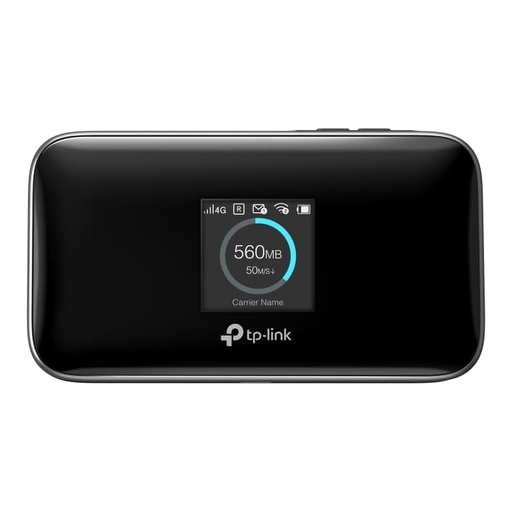
TP-Link M7750
An option if you want a separate mobile connection for a laptop.
The product information describes mobile network connections and dual-band Wi-Fi.
Joybuy
 No image available
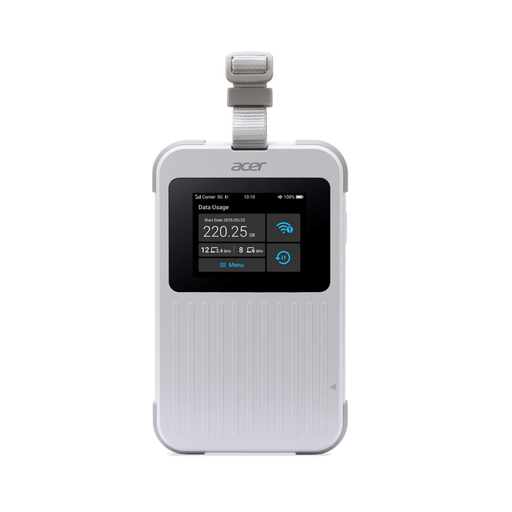
Acer Connect M6E
A portable 5G hotspot for anyone looking for a connection for several devices while travelling.
The product name lists 5G, Wi-Fi 6E and support for up to 32 devices. The product information mentions a built-in battery.
Joybuy
 No image available
TP-Link M7350
A portable 4G hotspot for anyone who also wants to connect a laptop or other devices.
The product name lists Cat 4, a colour screen, a 2000 mAh battery, up to 8 hours of use and support for up to 10 connected devices.
Joybuy
Frequently asked questions
How can you tell whether the connection is suitable for your video call?
Test it with the SIM card and provider you intend to use, ideally on similar parts of the route. Zoom Technical Library gives around 2.6 Mbps upload and 1.8 Mbps download as guidelines for 720p group video on Zoom. These figures aren’t a guarantee for other meeting apps or for the connection on a coach. The Dutch Authority for Digital Infrastructure (Rijksinspectie Digitale Infrastructuur) explains that the Dutch coverage requirement applies outdoors, not to every location inside a vehicle.
What should you set up before setting off?
Insert the compatible SIM card, charge the router, connect your laptop to Wi-Fi and try a call beforehand. If you have connection problems, check the SIM settings too. For the TP-Link M8550, TP-Link describes connecting using the network name and password displayed on the device.
What data charges and purchase rights should you be aware of?
Check the terms of your data plan: according to ACM ConsuWijzer, a provider may charge extra or reduce your speed if you exceed your allowance. For online purchases, you generally have a statutory cooling-off period of up to 14 days after delivery. Check the relevant exceptions and returns policy; the cooling-off rules don’t affect your rights if a product is faulty or doesn’t match the contract.
What conformity requirements apply to a mobile router in the Netherlands?
Radio equipment placed on the European market must meet the applicable requirements for radio equipment. The Dutch Authority for Digital Infrastructure (Rijksinspectie Digitale Infrastructuur) states that the device must carry the CE marking. A product page alone doesn’t confirm that the marking is present on the actual device you buy.
What if the coach crosses an EU border?
Within the EU, roaming generally costs the same as at home, but a data limit or surcharge may apply in certain circumstances. ACM ConsuWijzer advises checking the terms of your own SIM card. Also check that your router and provider support roaming; this only matters if the journey actually crosses a border.


