If you occasionally share a travel itinerary with a few fellow passengers, your phone’s hotspot may be enough, provided your device and data plan are suitable. If several people will use it regularly, a separate MiFi is worth considering. Check the number of devices, journey length and, above all, mobile coverage and data plan terms along your route.
Who can benefit from a hotspot?
Occasional itinerary sharer
You want to share a route or timetable now and then while travelling, and first check whether your phone’s hotspot and data plan are up to the job. Apple Support explains that a Personal Hotspot uses the mobile data connection of a compatible Apple device.
Group trip organiser
You regularly share updates with several devices during the journey and want to manage the connection, device limit and data plan yourself. Manufacturers such as TP-Link and D-Link specify a maximum number of devices for each model, so check the version you’re considering.
Cross-border trip organiser
You want to share an itinerary outside the Netherlands too, so you check coverage and roaming or data plan terms for each country. ACM ConsuWijzer explains the terms for using mobile internet within the EU.
What should you look for when choosing?
Your phone’s hotspot
Suitable when: you occasionally share an itinerary and your phone, connection and data plan are suitable for the job.
Bear in mind: the shared connection uses your phone’s mobile data, as Apple Support explains.
MiFi with your own SIM card
Suitable when: several people regularly need a connection and you want to choose a suitable SIM card and data plan yourself.
Bear in mind: you’ll be managing an extra device and data plan. A manufacturer’s stated device limit or battery life doesn’t guarantee reception or actual speeds on a coach in motion.
MiFi with data plans from the manufacturer
Suitable when: you want to compare data plans for each destination on a trip through several countries.
Bear in mind: support for using the device without your own SIM card doesn’t, in itself, tell you the price or availability of a suitable plan for your route.
When sharing an itinerary on a coach, having a usable connection on the move matters just as much as the number of devices that can connect to the hotspot. Use the table to weigh up the key things to check.
| What to consider |
What to check before buying |
Who should consider this? |
| Coverage and data plan |
Check the coverage and data plan terms offered by your chosen provider along the route and, for a cross-border journey, in each country. |
If I want to share the itinerary online in every country while travelling, I want to know in advance whether the connection and data plan are suitable. Around 33% of consumers are most concerned about coverage and data. |
| Number of devices |
Count how many devices need to be online at the same time and compare this with the limit for the exact model version. |
If several fellow passengers need the itinerary at the same time, I want to know how many devices can connect. Around 27% of consumers prioritise the number of devices that can connect at once. |
| Battery life |
Compare the stated usage time for the exact version with the planned journey, and check whether you can recharge on the way. |
If I want to keep the hotspot available during a long journey, I want to know whether I’ll need to recharge along the way. Around 20% of consumers mainly consider usage time during the journey. |
| Total cost |
Compare the device cost, data plan, any one-off charges and out-of-plan rates for the length of your trip and the countries you’ll visit. |
If I only share an itinerary occasionally, I want to weigh up the total cost of a separate hotspot against my existing phone plan. Around 20% of consumers prioritise the total cost. |
Common buying mistakes
-
Assuming the maximum number of devices guarantees a good connection speed
The device limit tells you how many devices can connect, but it doesn’t mean they’ll get the same speeds on a coach in motion. The mobile connection also depends on coverage and your subscription.
Count the devices that genuinely need to be online at the same time, then check mobile coverage and data plan terms along your route.
-
Taking the stated battery life as a guaranteed journey time
Actual usage time depends on the conditions of use; TP-Link also makes this clear for the M7350 V7.
Compare the stated battery life for the exact version with your planned journey, and arrange a way to recharge if needed.
A longer journey may mean you need to be able to recharge on the way.
-
Comparing only the cost of the device
With a separate MiFi, you also need to factor in the data plan and any possible out-of-plan charges. ACM ConsuWijzer recommends comparing data plans, any one-off charges and out-of-plan rates.
Compare the total cost for the length of your trip and the countries you’ll visit with using your existing phone plan too.
-
Assuming the same model name always means the same version
Specifications can vary between versions. TP-Link publishes details for each version, while NETGEAR distinguishes between regional MR6150 models with different supported frequency bands.
Check the full model name, version or regional code, and the bands supported by your provider and in the countries on your route.
Brands to compare
TP-Link
The M7350 V7 and M7450 V3 are versions worth comparing if you’re looking for a MiFi with your own SIM card. Check the version number before comparing specifications.
- According to TP-Link, the M7350 V7 supports up to 10 devices and offers up to 8 hours of use. For the M7450 V3, TP-Link specifies up to 32 devices and 15 hours.
- These are manufacturer’s figures for different models, not measurements taken on a coach. The exact version and journey conditions still matter.
D-Link
The DWR-933 revision B1 and DWR-932W revision B1 have different stated maximum numbers of device connections.
- D-Link specifies a maximum of 10 devices and up to 14 hours of battery life for the DWR-933; for the DWR-932W, the manufacturer specifies up to 32 devices and up to 16 hours.
- Check the revision, SIM compatibility and conditions along your route. Stated battery life doesn’t guarantee how long the device will last on a coach.
GlocalMe
The U3 is a 4G travel hotspot worth comparing if you’re weighing up data plans from the manufacturer against using your own nano-SIM.
- GlocalMe specifies up to 10 devices and up to 12 hours of use for the U3. According to the manufacturer, you can use it without a SIM card, and it also has a nano-SIM slot.
- Check coverage and the terms for a suitable data plan at each destination; support for a particular type of data plan doesn’t determine its terms.
NETGEAR
The Nighthawk M6 MR6150-100EUS is a European 5G version worth comparing when the frequency bands supported by your provider and along your route matter.
- NETGEAR distinguishes the European MR6150-100EUS from the North American MR6150-100NAS and publishes different band lists for each version.
- Don’t assume regional versions are interchangeable. 5G support alone doesn’t guarantee coverage along your route.
Mobile routers and hotspots on Joybuy
Below are mobile routers and MiFi hotspots for anyone wanting to share a mobile connection during a coach journey. Check the device limit, SIM card options and other specifications for your route for each model.
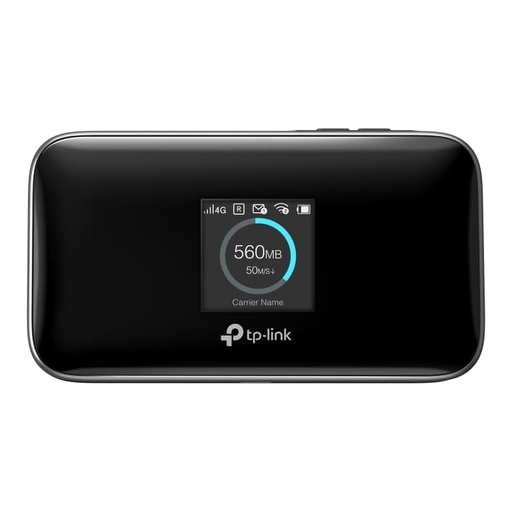 Image unavailable
TP-Link M7750 mobile router
A mobile router to consider if you want to share a connection over mobile networks and Wi-Fi while travelling.
The product description specifies 2.4 and 5 GHz Wi-Fi.
View on Joybuy
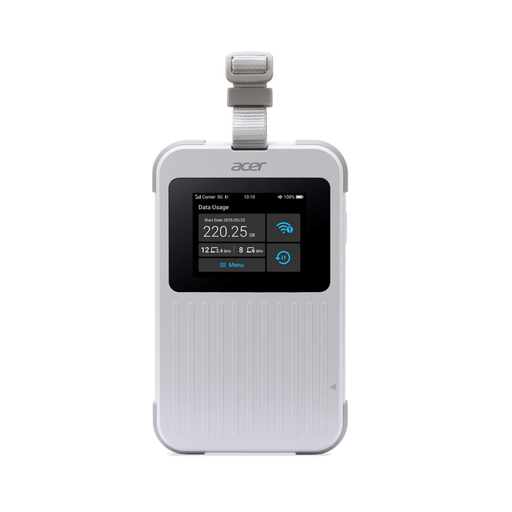 Image unavailable
Acer Connect M6E
Worth considering if several devices need a mobile connection at the same time; check the SIM card options and data plan for your destination.
The product name specifies 5G, up to 32 devices and 1 GB of SIMO data. The product description states that it supports a nano-SIM and eSIM.
View on Joybuy
 Image unavailable
TP-Link M7350 4G (CAT4)
Worth considering for your own 4G connection with a SIM card and up to 10 connected devices, according to the product name.
The product name specifies a colour screen, speeds of up to 150 Mbps and a 2000 mAh battery offering up to 8 hours of use. Check the exact version, and bear in mind that usage time and reception may vary during your journey.
View on Joybuy
Frequently asked questions
Can I share the itinerary without a separate router?
Yes, you can with a suitable phone and mobile data connection. Apple Support explains that an iPhone or compatible iPad can share its mobile data using a Personal Hotspot. For other devices, check the hotspot settings and the terms of your data plan.
How do I set up a Personal Hotspot on an iPhone?
Open ‘Personal Hotspot’ in Settings and turn on ‘Allow Others to Join’. Fellow passengers can connect using the Wi-Fi password. According to Apple Support, you can also find the setting under ‘Mobile Data’ if it isn’t immediately visible.
What if my route passes through another EU country?
According to ACM ConsuWijzer, you generally pay the same for roaming within the EU as you do at home, but a provider may apply a data limit or charge a surcharge under certain conditions. Check your data plan terms; the ACM calculator uses 2026 rates and isn’t suitable for prepaid plans.
Who can help if a MiFi bought in the Netherlands breaks down too soon?
The seller is responsible for the statutory guarantee if, under normal use, the product doesn’t perform as you could reasonably expect, explains ACM ConsuWijzer. What’s appropriate depends on the fault and the circumstances; a manufacturer’s guarantee doesn’t replace your statutory rights.


