
Vandaag of morgen in huis

Kwaliteit gegarandeerd

Welkomstaanbiedingen ontgrendelen: GRATIS bezorging | Tot 80% korting | Gratis 30 dagen JoyPlus-proefperiode
Download de app
A mobile air conditioner is handy for rented homes, bedrooms and home offices where a fixed installation isn’t possible or practical. However, choosing the wrong one can mean noisy operation, disappointing cooling or a window kit that doesn’t fit properly. Three common pitfalls are worth watching out for:
Manufacturers usually state cooling capacity in BTU per hour and kilowatts. According to product information, models rated at around 6,000 to 7,000 BTU are often intended for smaller bedrooms or home offices. A mobile air conditioner rated at 9,000 to 12,000 BTU is more suited to larger living rooms, but the stated room size doesn’t guarantee the same performance in every home.
Consider:
An undersized model will run for longer. A more powerful model isn’t always practical if the room is small or the electrical supply is limited.
If you’re looking for an air conditioner for a bedroom, don’t rely on the term “sleep mode” alone. Check the stated decibel level and the available fan speeds. For example, the Humhold 7000 BTU is listed at less than 49 dB and has a sleep mode; the Midea PortaSplit-E has a stated sound pressure level of 39 dB(A) in quiet mode. These figures come from product information and may vary depending on the conditions in which they were measured.
A quiet mobile air conditioner is therefore one with a relatively low stated noise level, not a completely silent one. In a bedroom, a timer, remote control and automatic shut-off can be just as useful as extra fan speeds.
A mobile air conditioner with a window kit should seal the window as closely as possible around the exhaust hose. Check in advance that the supplied panels or sealing tape are suitable for your type of window. Sliding windows, tilt-and-turn windows and roof windows may need a different solution.
Also check for:
An air conditioner with a dehumidifier can remove moisture from the air, but its stated capacity in litres per day depends on the conditions. Self-evaporation reduces how often you need to drain it manually, but it doesn’t mean you’ll never need to empty it.
A 3-in-1 air conditioner usually combines cooling, dehumidifying and fan functions. This is useful if you want to use one appliance in different seasons. An air conditioner with heating can add comfort in spring and autumn, but check the heating capacity, temperature limits and energy label separately.
Also understand the difference between:
A model with an A or A+ label may be a practical, energy-efficient air conditioner, but actual consumption depends on how long it’s used, the temperature setting, insulation and the outdoor temperature. So compare the stated power input as well as the label.
Finally, check which refrigerant is used, such as R290 or R32, and follow the safety instructions. Never damage the refrigerant circuit, and have any work on it carried out by a qualified technician. Claims about environmental impact or performance should be treated as manufacturer information, not a universal guarantee.
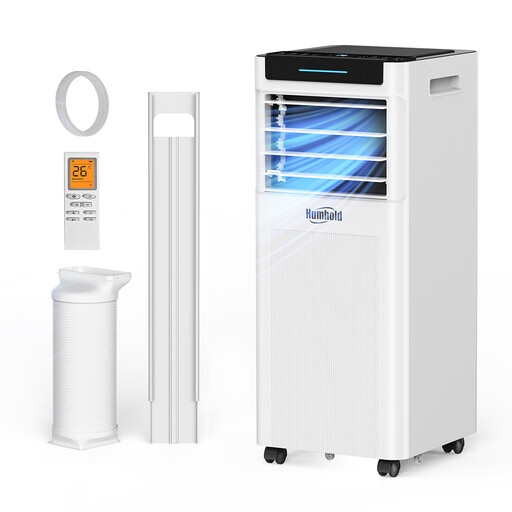
Why it suits this buyer: According to the product information, this 2.0 kW model is designed for rooms up to 28 m² and offers cooling, dehumidifying and fan functions. It’s a good fit for a bedroom or home office where flexibility matters.
Its stated cooling capacity and noise level, along with the supplied window kit, make it easier to compare than relying on a general claim such as “powerful”.
19.7 kg, remote control, 24-hour timer and a stated noise level of less than 49 dB.
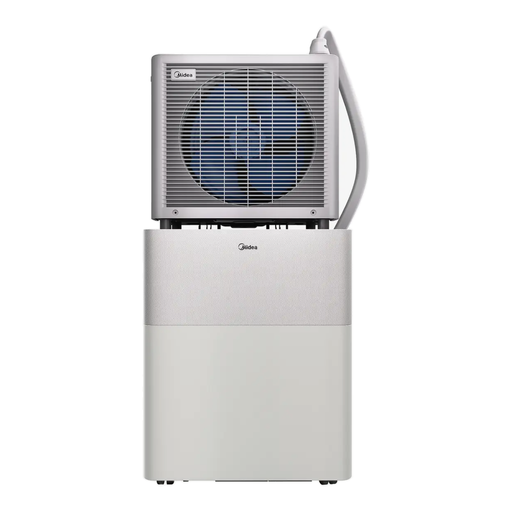
Why it suits this buyer: Its separate indoor and outdoor units make it a good choice for people willing to accept more installation work and weight in return for a lower stated sound pressure level in quiet mode.
The product specifications list separate noise levels and cooling and heating capacities. Bear in mind that installation should be carried out by a qualified technician.
12,000 BTU, 3-in-1 functions, heating, stated 39 dB(A) in quiet mode and an A++ energy class for cooling.
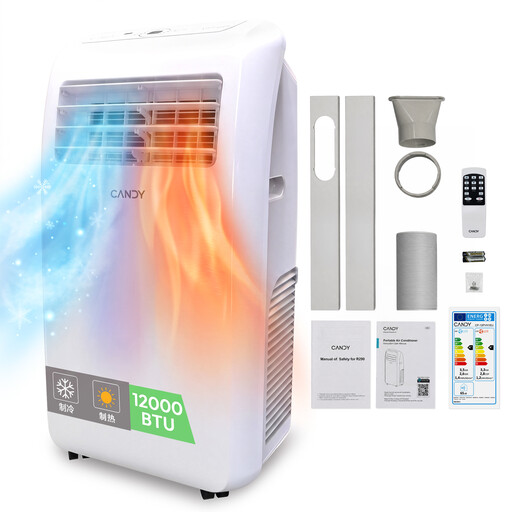
Why it suits this buyer: According to the product information, this model combines cooling, drying, fan and heating functions. It’s a practical choice if you want one appliance to use in different seasons.
Cooling and heating capacities are listed separately. Check both figures rather than looking at the BTU rating alone.
3.5 kW cooling capacity, 3.3 kW heating capacity, remote control, window kit and 24-hour timer.
We’ve put together a complete, up-to-date list of products that meet these strict selection criteria and the applicable European safety requirements.
Place the unit upright on a flat surface, leave the clearance specified in the manual and connect the exhaust hose to the window kit. Make sure warm air can escape outside and that the hose isn’t kinked. Then check that the socket is earthed. Have a model with a separate outdoor unit installed in accordance with the manufacturer’s instructions.
That depends on the power input, how long you use it and the temperature setting. Multiply the power in kilowatts by the number of hours it’s used and your electricity tariff. A timer, a good window seal and a suitable capacity can help prevent unnecessarily long running times. An energy label alone won’t tell you how much electricity you’ll use.
Its lifespan depends on how it’s used, maintained and stored. Clean the filter as instructed in the manual, keep the air grilles clear and store the unit upright in a dry place. Don’t use an appliance with a damaged cable or refrigerant circuit, and have repairs carried out by an authorised service provider.
