
Vandaag of morgen in huis

Kwaliteit gegarandeerd

Welkomstaanbiedingen ontgrendelen: GRATIS bezorging | Tot 80% korting | Gratis 30 dagen JoyPlus-proefperiode
Download de app
Summers are getting noticeably warmer. A sticky night in a sweltering bedroom or an unproductive afternoon in your home office is a familiar feeling for many. A mobile air conditioner might seem like the ideal, quick solution. But before you buy one, it's crucial to know what to look for. The market is flooded with models promising the world. As a Joybuy Product Recommendation Officer, I'll help you see through the marketing jargon and make a choice that fits your situation.
Many people make the same mistakes when purchasing, leading to disappointment and unnecessary costs. These are the three most common pitfalls.
Manufacturers love to advertise with terms like "quiet" or "whisper-quiet." In reality, this often means a noise level of 65 decibels (dB). That's comparable to the sound of a distant vacuum cleaner or a busy office. While this might be acceptable for a living room, for a bedroom air conditioner, it's too loud for an undisturbed night's sleep.
A common mistake is buying an air conditioner with insufficient power for the size of the room. A cheaper model with a low BTU rating in a large living room will, at best, function as an expensive fan. The unit will run continuously at full power without ever truly cooling the space, resulting in a high energy bill and little comfort.
Every mobile air conditioner needs an exhaust hose to vent hot air outside. The included window sealing kits are often designed for sliding windows and are a poor fit for the typical European tilt-and-turn windows. A bad seal allows warm air to leak straight back inside, making the air conditioner far less efficient.
To buy the right mobile air conditioner, focus on the specifications that truly matter. Don't be distracted by marketing terms.
Cooling power is expressed in BTU (British Thermal Unit). The higher the number, the larger the space the air conditioner can cool. A simple rule of thumb:
air conditioner 9000 btu is often sufficient.air conditioner 12000 btu or more.Measure your room and choose a model with adequate capacity. Too much power isn't necessary, but too little is wasted money.
Pay close attention to the noise level, expressed in dB. This number is objective and much more reliable than the term "quiet."
quiet mobile air conditioner, suitable for a bedroom.An energy-efficient air conditioner will save you a lot of money in the long run. Choose a model with at least Energy Class A. Newer, more efficient models often have an A+ or A++ label. Also, check the refrigerant used. The more environmentally friendly R290 is the current standard and has a much lower climate impact than older refrigerants.
Buying a mobile air conditioner is a personal choice. What works for one person may be unsuitable for another. Below are some popular choices, linked to specific user profiles.
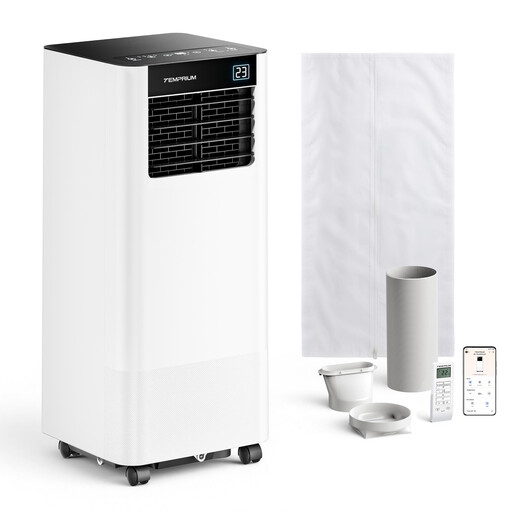
Why This Fits Their Persona: Ideal for a dorm room or home office up to 20 m?. This unit offers effective cooling and modern features like app control, without requiring a major investment.
With 7000 BTU, its power is clearly matched to smaller spaces, helping you avoid the under-capacity pitfall. The 48 dB night mode is a fair compromise for this price point.
Smart control via app and voice assistants (Google/Alexa). 3-in-1 functionality (cooling, dehumidifying, fan).
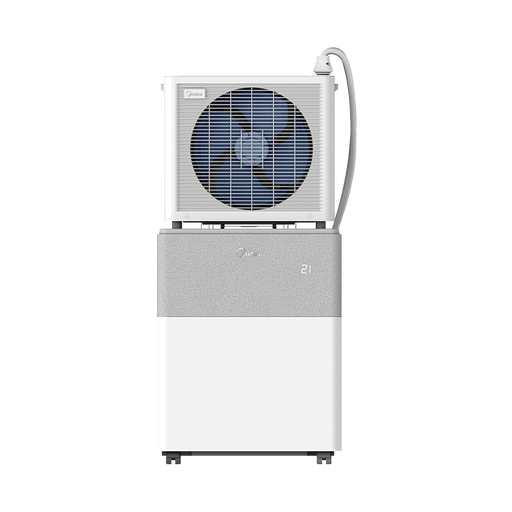
Why This Fits Their Persona: For those who prioritize peace and quiet in the bedroom or living room above all else. This unique split-system places the noisy compressor outside, just like a fixed air conditioner.
Tackles the "whisper-quiet" myth head-on. With a noise level of just 39 dB in quiet mode, this unit is quieter than a refrigerator and ideal for light sleepers.
Extremely quiet and highly energy-efficient (Energy Class A++). Combines the silence of a fixed installation with the flexibility of a portable system.
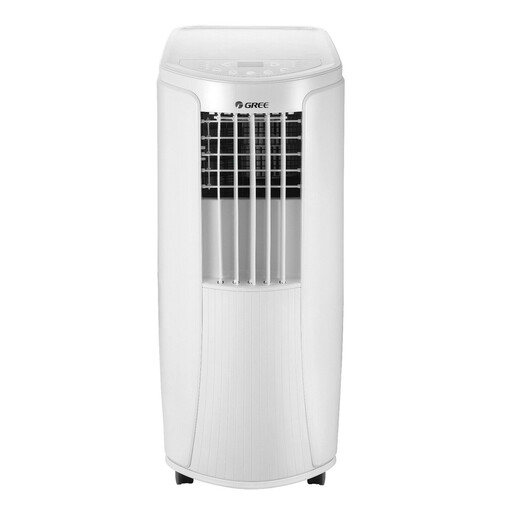
Why This Fits Their Persona: This is a `mobile air conditioner with heating`. Perfect for those seeking a single device for year-round climate control: cooling in the summer, and supplemental heating in the spring or autumn.
With a powerful 12,000 BTU capacity, this unit is suitable for rooms up to 30 m?, avoiding the pitfall of an underpowered device for the living room.
Efficient heat pump function with Energy Class A+ for heating. At 49 dB on its lowest setting, the noise level is relatively quiet for such a powerful device.
We've compiled a complete, up-to-date list of products that meet these selection criteria and local safety regulations.
Consumption depends on the cooling power (BTU) and energy class. An average energy-efficient air conditioner with 9,000 BTU and energy class A uses about 1 kilowatt-hour (kWh) per hour at full power. With current energy prices, that amounts to about €0.30 to €0.40 per hour. Therefore, always choose a model with the best possible energy class to keep costs down.
Yes, for cooling, this is essential. A portable air conditioner works by extracting heat and moisture from the room. This heat must be vented outside through the exhaust hose. Without a hose, the air conditioner would blow the heat back into the room, negating the cooling effect. Devices without a hose are usually air coolers, which work with water or ice. These lower the perceived temperature with a cool breeze but do not lower the actual room temperature.
As mentioned earlier, "quiet" is a subjective term. Trust the specifications. A model is considered a quiet mobile air conditioner if its noise level on the lowest setting is below 50 dB. This is comparable to a soft murmur or the hum of a refrigerator. Always read the specifications and remember that the noise increases on higher settings. For the quietest solution, a split-unit, where the compressor is located outside, is the recommended choice.
