
Vandaag of morgen in huis

Kwaliteit gegarandeerd

Welkomstaanbiedingen ontgrendelen: GRATIS bezorging | Tot 80% korting | Gratis 30 dagen JoyPlus-proefperiode
Download de app
Summers are getting noticeably warmer. A fan that just circulates hot air often isn't enough anymore. A mobile air conditioner seems like the perfect solution: just plug it in and start cooling. However, a hasty purchase often leads to disappointment. As a Product Recommendation Officer at Joybuy, I see where things go wrong. Let's walk through the most common pitfalls so you can choose a model that truly fits your needs.
Before you pull out your wallet, it's crucial to see through two common marketing claims that often lead to a bad purchase.
To make the right choice, focus on the specifications that truly matter. These are the three factors that determine whether a mobile air conditioner will be an asset or a source of frustration.
The cooling capacity, expressed in BTU, must match the size and characteristics of your room. An underpowered air conditioner will run constantly at full capacity without cooling the space, resulting in a high energy bill. An overpowered one cools the room too quickly, failing to effectively reduce humidity and leaving the air feeling clammy.
The noise level is crucial, especially for a bedroom air conditioner. Pay close attention to the specifications, expressed in dB(A).
An energy-efficient air conditioner with an energy label of A or higher will save you significantly on electricity costs in the long run. Additionally, many models offer useful extras:
Based on these objective criteria, we have selected several models that fit different user profiles.
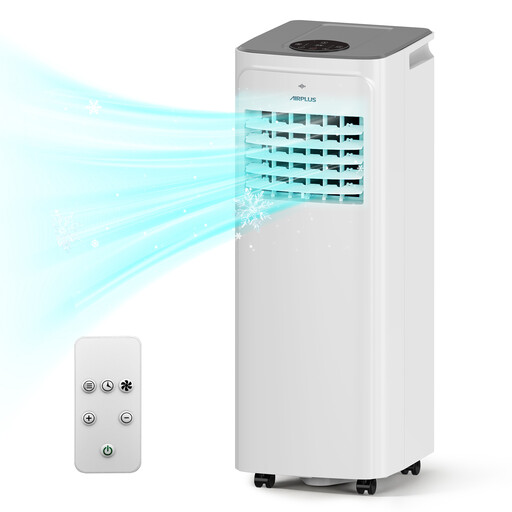
Why This Fits Their Persona: Perfect for those seeking an effective, no-nonsense cooling solution for a dorm room, home office, or small bedroom without a large budget.
This model makes no false promises. Its 9000 BTU is a realistic capacity for the recommended room sizes. According to the manufacturer, the noise level can reach 45dB on the lowest setting, which is acceptable for this price range.
Combines cooling, dehumidifying, and fan modes in one compact unit. It comes with a window kit for easy installation.
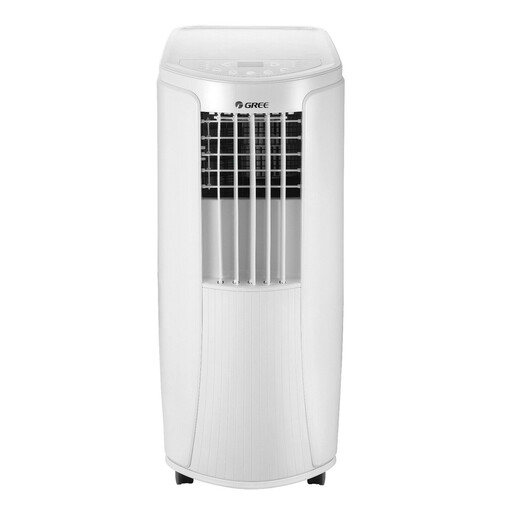
Why This Fits Their Persona: For those looking for a powerful and versatile solution for the living room or a larger bedroom, with the benefit of year-round comfort.
This mobile air conditioner with heating offers real added value. Its A+ energy label for heating (A for cooling) ensures you won't face surprises on your energy bill, a common hidden cost.
Offers both powerful cooling (3.5 kW) and heating (3.3 kW). The noise level of 49 dB(A) on its lowest setting is relatively quiet for a 12000 BTU model.
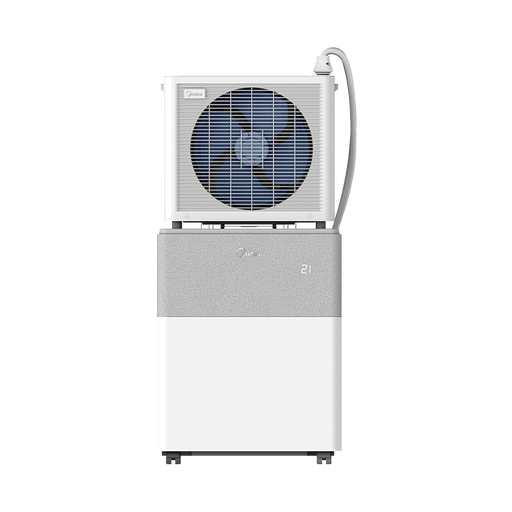
Why This Fits Their Persona: For those who want the silence of a fixed split-unit air conditioner but need the flexibility of a mobile system. Ideal for a bedroom or an office where absolute quiet is required.
This model sidesteps the "silent" promise by tackling the problem at its source. The compressor, the noisiest component, is located in the outdoor unit. This keeps the indoor noise level at a mere 39 dB(A), living up to the claim of truly silent operation.
Extremely quiet and highly energy-efficient (A++ for cooling). The split design provides more efficient cooling than a traditional monoblock mobile air conditioner.
We have compiled a complete, up-to-date list of products that fully meet these strict selection criteria and Dutch safety regulations.
Consumption depends on the power rating (in Watts) and the energy label. An energy-efficient air conditioner with a 1000 Watt (1 kW) rating consumes 1 kilowatt-hour (kWh) per hour. With an electricity price of €0.30 per kWh, this would cost €0.30 per hour. A model with an energy label of A or higher is always a more economical choice in the long run.
Yes, for effective cooling, an air conditioner with an exhaust hose is necessary. The AC unit extracts heat from the room's air, and that heat must be vented somewhere. The hose expels this warm air outside. Models without a hose are air coolers; they use water or ice and only lower the temperature to a limited extent while increasing humidity.
A silent mobile air conditioner typically produces between 48 and 55 dB(A) on its lowest setting. This is comparable to the hum of a refrigerator or a soft murmur. Models above 60 dB(A) are noticeably loud and less suitable for a bedroom. Always read the specifications and remember that the lowest value listed often applies to the lowest fan speed.
