
Vandaag of morgen in huis

Kwaliteit gegarandeerd

Welkomstaanbiedingen ontgrendelen: GRATIS bezorging | Tot 80% korting | Gratis 30 dagen JoyPlus-proefperiode
Download de app
Summers are getting noticeably warmer. A mobile air conditioner can seem like the ideal, flexible solution for cooling your home without major renovations. But the market is flooded with models that promise the world. Many people end up with a noisy unit that barely cools the room. As a Joybuy Product Recommendation Officer, I'll help you cut through the marketing jargon so you can make an informed decision.
Before we dive into specifications, it's crucial to recognise the most common mistakes. These often lead to disappointment and unnecessary costs.
To avoid a bad purchase, focus on three key specifications. These will determine if a model is right for your situation.
The required cooling capacity depends on the room's size, insulation, and sun exposure. A simple guideline:
For most standard bedrooms and home offices, a 9000 BTU air conditioner is sufficient. For a larger living room, you'll likely need a 12000 BTU air conditioner or more.
The noise level is expressed in decibels (dB). Every 3 dB increase represents a doubling of sound intensity.
Always check the maximum noise level in the specifications, not just the value for the quietest mode.
An energy-efficient mobile air conditioner with an energy class of A or higher will save you a significant amount on your energy bill in the long run. Additionally, many models offer extra features that enhance user convenience:
Based on these criteria, we have selected a few models that suit different user profiles.
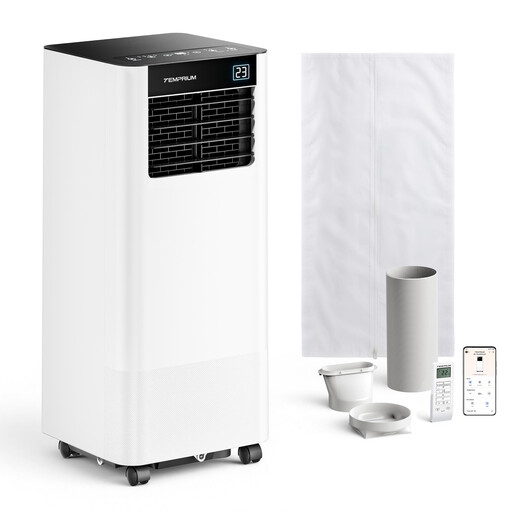
Why This Fits Their Persona: Ideal for those seeking a compact, smart solution for a bedroom or small office (up to 20 m?). The combination of app control and a dedicated night mode makes it a comfortable choice for a good night's sleep.
Tackles the "whisper-quiet" myth with a specified low noise level of 48 dB and a night mode that automatically reduces fan speed.
Smart control: Full management via app, remote control, or voice assistant. Energy Class A: Efficient power consumption for its cooling capacity.
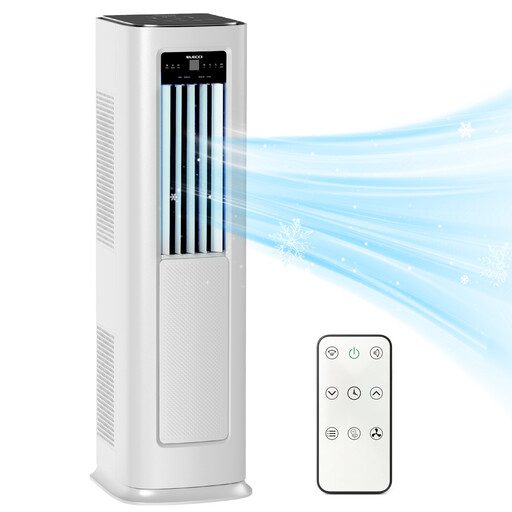
Why This Fits Their Persona: Suitable for those who need serious cooling power for a larger living room or open-plan office. The focus is on performance and rapid, effective air circulation.
Avoids the BTU trap by combining a powerful 12000 BTU capacity with a high airflow (400 m?/h), ensuring effective cooling in larger spaces.
Powerful air circulation: The fan, based on aviation technology, ensures fast and even cooling. 4-in-1 functionality: Cooling, dehumidifying, fan, and 4 fan speeds.
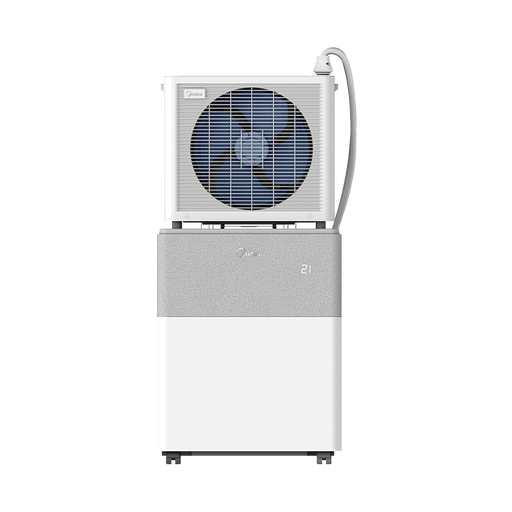
Why This Fits Their Persona: For those seeking the lowest possible noise level without sacrificing cooling power. This mobile split air conditioner places the noisy compressor outside, resulting in exceptionally quiet indoor operation.
This model is the ultimate solution to the noise myth. With an indoor sound level of just 39 dB(A) in quiet mode, it is significantly quieter than any monoblock air conditioner.
Extremely quiet: The split design provides unparalleled indoor silence. High efficiency: Energy Class A++ for cooling and A+ for heating, leading to lower operational costs.
We have compiled a complete, up-to-date list of products that fully meet these strict selection criteria and safety standards.
Consumption depends on the power rating (in Watts or kW) and how long you run the unit. A model with a 1000W (1 kW) power rating consumes 1 kilowatt-hour (kWh) per hour. With an electricity price of €0.35 per kWh, this would cost €0.35 per hour. An energy-efficient mobile air conditioner with a higher energy class (A or better) is more efficient and therefore cheaper to operate.
Yes, a standard (monoblock) mobile air conditioner must vent the warm air it removes from the room. This is done via a thick exhaust hose that must be routed outside through a window or door. Without this exhaust, the unit cannot cool the room. The only exception is a mobile split air conditioner, where the outdoor unit dissipates the heat directly.
A model marketed as 'quiet' often has a noise level of around 50-55 dB on a normal cooling setting. This is acceptable for most people in a living room but can be disruptive in a bedroom. Models with a specified noise level below 50 dB, or a special sleep mode, are a better choice for nighttime use. The quietest option remains a split-unit model.
