
Vandaag of morgen in huis

Kwaliteit gegarandeerd

Welkomstaanbiedingen ontgrendelen: GRATIS bezorging | Tot 80% korting | Gratis 30 dagen JoyPlus-proefperiode
Download de app
As a Joybuy Product Recommendation Officer, I see daily how electric vehicle drivers struggle to choose the right charging solution. A mobile 11kW charger offers the perfect balance between speed and flexibility, but the market is flooded with models that overpromise and underdeliver. Before you invest, it's crucial to understand the common pitfalls that lead to a poor investment.
Many chargers are advertised with smart features that are impractical in reality, or they lack critical safety characteristics. Below, we discuss the three main mistakes to avoid and what to look for when choosing a reliable, portable charger.
A wrong choice not only leads to frustration but can also be unsafe. Pay attention to the following points to avoid wasting money on a charger that doesn't suit your needs.
To make a smart purchase, focus on the technical specifications that truly matter. These three points are non-negotiable for a quality 11kW home charger.
An 11kW charger can theoretically add about 55-60 kilometres of range per hour to your car. This power is only achieved with a 3-phase 16A connection. Check if you have a red 5-pin CEE socket at home or at your intended charging location. Most modern electrical panels in the Netherlands can be adapted for this by an electrician. The charging cable for your electric car must have a Type 2 plug, which is the standard for virtually all European car models.
Safety comes first. A reliable portable Type 2 EV charger must have at least the following protections:
A well-designed interface makes all the difference. A clear display (preferably a touchscreen) where you can instantly read the charging status, power, and temperature is highly practical. If you opt for a model with an app, check if it offers the following features:
Not all chargers are created equal. We have highlighted some popular choices and matched them with specific user profiles, so you can find a model that fits your needs.
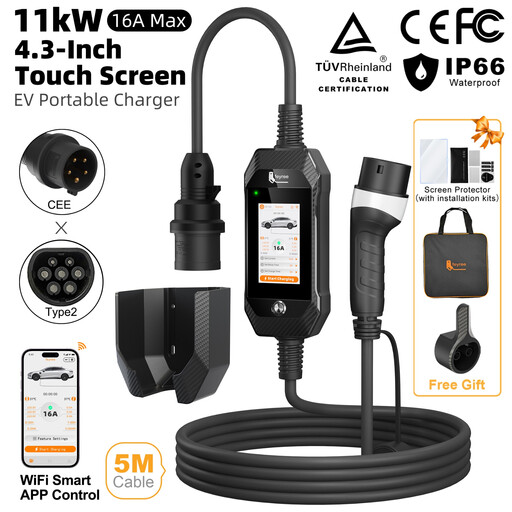
Why it's a match for this profile: This user wants complete control and insight. The large touchscreen and the comprehensive Tuya Smart App provide detailed charging data, history, and the ability to receive over-the-air (OTA) firmware updates.
The smart features here are genuinely practical. The app is stable and offers useful options like delayed charging and consumption monitoring, thus avoiding the 'impractical smart features' pitfall.
The combination of a physical touchscreen for quick operation and a comprehensive app for in-depth analysis and planning.
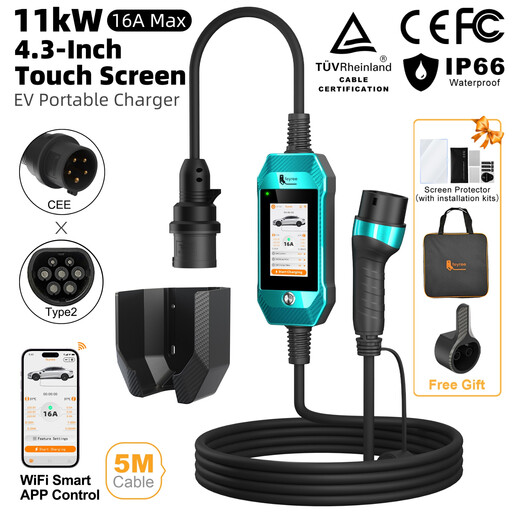
Why it's a match for this profile: This user is looking for a reliable and safe solution for daily home use, as an alternative to an expensive wallbox. Safety and durability are the priority.
This model tackles 'vague safety claims' with concrete, verifiable specifications like Type B leakage current protection and dual temperature monitoring in both the plug and the control box.
The dual temperature monitoring provides an extra layer of safety, offering peace of mind during long, overnight charging sessions.
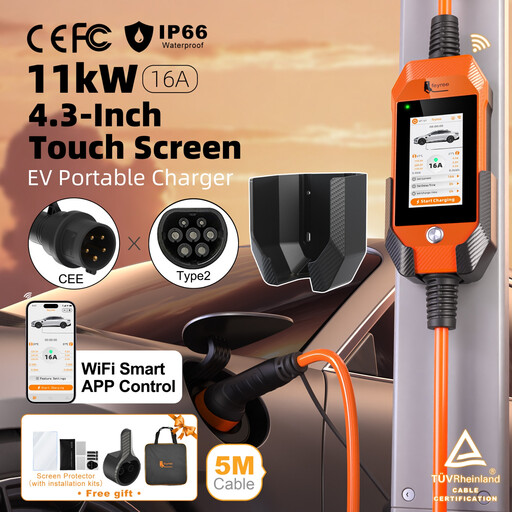
Why it's a match for this profile: For those who often charge at different locations (holiday home, friends, work), a compact and robust charger is essential. This model comes with a handy carrying case and has a wide voltage range.
This is a full-fledged 11kW charger in a portable format. It avoids the 'three-phase power surprise' pitfall by being clear about the required 3-phase connection, while still offering maximum flexibility.
The wide voltage range (380V ± 20%) ensures the charger functions reliably, even in locations where the grid voltage may be less stable.
The Feyree chargers above are popular choices, but there are more models with a convenient touchscreen. Discover other chargers that meet strict selection criteria and Dutch safety regulations.
Yes, in most cases. For 11kW charging, you need a 3-phase power connection, typically a red CEE 16A socket. A standard household socket (Schuko) delivers a maximum of 2.3kW to 3.7kW, resulting in a much longer charging time. It is advisable to have your electrical panel checked and, if necessary, have a three-phase power connection installed by a certified electrician.
The main differences are flexibility and installation. You can take a mobile charger with you and use it on any suitable 3-phase connection, whether at home, at work, or at a holiday destination. A fixed wallbox is permanently mounted on the wall and always requires professional installation. As a result, a mobile 11kW charger can be a more cost-effective and flexible alternative, without the fixed installation costs.
This depends on the IP (Ingress Protection) rating of the charger. A model with an IP65 or IP66 rating is dust-tight and protected against water jets from any direction. This makes the charger suitable for outdoor use, even during a typical Dutch rain shower. Always check the specific IP rating of the product before using it in wet conditions.
