
Vandaag of morgen in huis

Kwaliteit gegarandeerd

Welkomstaanbiedingen ontgrendelen: GRATIS bezorging | Tot 80% korting | Gratis 30 dagen JoyPlus-proefperiode
Download de app
A good bowl needs to do more than look smart in your kitchen. When choosing mixing bowls, many shoppers focus mainly on colour, price or the number of pieces in a set. That can lead to practical problems: a bowl turns out to be too small for your batter, slides across the worktop while you’re mixing or can’t go in the microwave when you expected it to.
Use these checks to compare a mixing bowl set, an individual stainless steel mixing bowl, plastic bowls and food storage containers on the features that really matter in a Dutch kitchen.
A bowl with a diameter of 24 or 25 cm may look roomy, but its height and actual capacity determine how much you can mix without spilling. For pancake batter or a small salad, 2 to 2.5 litres is often enough. For bread dough, larger batches of cake batter or family-sized portions, 3.5 litres or more is more practical.
Watch out for conflicting product information, too. For some items, the capacity in the product name differs from the technical specifications. Always check the stated capacity in litres, the dimensions and the recommended fill level.
A bowl can be dishwasher-safe without being suitable for an oven, hob or microwave. Stainless steel, for example, isn’t suitable for microwave use. Plastic may be microwave-safe but not suitable for a conventional oven. Microwave and oven instructions can also vary from one ceramic bowl to another.
So only use the bowl as specified by the product information. A brand’s claim about durability or heat resistance doesn’t apply to all bowls. Check the specific temperature limit and the stated uses.
A set of bowls in several sizes is handy, but only if the bowls nest or stack. Sets with lids also take up more room than individual mixing bowls. Check whether the lids seal airtight, whether they’re available separately and which parts are dishwasher-safe.
A practical guide:
For a dough bowl, capacity isn’t the only thing that matters. A wide rim, a firm grip and a non-slip base make kneading and mixing easier. With a stand mixer, the bowl is part of the appliance, so pay particular attention to the recommended fill level. According to the product information, the Monsga SM100 has a 6-litre stainless steel bowl, with a recommended capacity of 5 litres.
A bowl with a non-slip base won’t prevent every movement, but it can give you extra grip. Check whether the base is made of silicone, whether the bowl sits on a flat worktop and whether the non-slip parts can be removed for cleaning.
A dishwasher-safe bowl saves time, but check the smaller parts, such as lids, silicone rings and grater inserts. Abrasive cleaners and steel wool can damage the surface of stainless steel. With plastic, it’s best to follow the stated temperature and microwave limits.
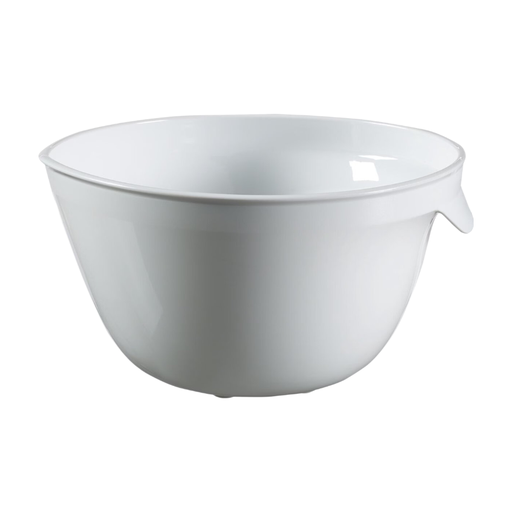
Why it suits this type of shopper: This lightweight plastic bowl has a capacity of 2.5 litres and is designed for everyday mixing, pouring and storing in the fridge.
The product specifications list a handle, stabilising knobs, and dishwasher and microwave suitability. According to the information provided, the bowl isn’t suitable for a conventional oven or freezer.
2.5-litre capacity; BPA-free plastic; handle and non-slip base; dishwasher-safe according to the product information.
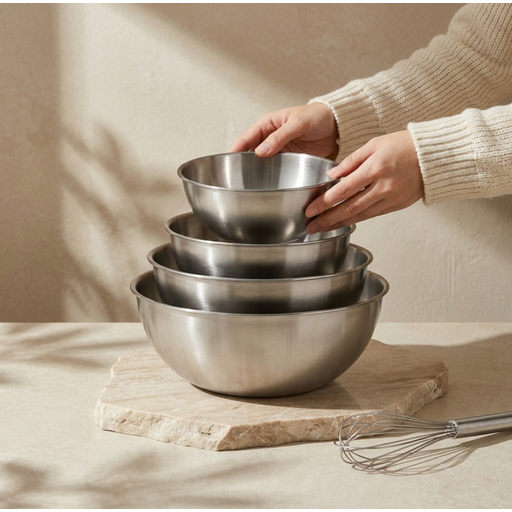
Why it suits this type of shopper: The four sizes—19, 22, 25 and 28 cm—are suited to a range of tasks, from portioning ingredients to making salads and mixing dough.
The bowls nest inside one another and, according to the product information, have a smooth, uncoated interior. This helps avoid storage problems and makes cleaning straightforward.
304 stainless steel; four nesting sizes; dishwasher-safe; suitable for hot and cold food according to the product description.

Why it suits this type of shopper: For regular baking and kneading, this stand mixer offers a 6-litre bowl, a recommended capacity of 5 litres and eight speed settings.
The recommended fill level is listed separately from the bowl’s maximum capacity. This helps you stay within practical limits when making dough and batter.
6-litre bowl capacity; recommended capacity of 5 litres; eight speeds; accessories including a dough hook, whisk and splash guard.
We’ve put together a complete, up-to-date list of products that meet these strict selection criteria and the applicable European safety regulations.
For everyday cooking and small batches of batter, 2 to 2.5 litres is usually practical. If you often make bread dough, cake batter or large salads, it’s worth looking for a bowl with a capacity of 3.5 litres or more. Don’t fill a bowl to the brim: its contents will expand as you whisk and mix.
Stainless steel is practical for mixing, whisking and marinating. Plastic is lightweight and handy for families or meal prep. Ceramic is best suited to serving and everyday dining. Always check the information about dishwasher, microwave, oven, freezer and direct heat use before choosing.
No. Food storage containers are designed for storing, carrying, chilling and sometimes reheating food. Mixing bowls are intended for preparing, mixing and serving. A set such as the Mepal Cirqula multi-bowls combines several storage features, but always check whether the lid needs to be removed before using a container in the microwave.
