If you’re mixing existing backing vocal takes in a quiet room and sound leakage isn’t an issue, start with open-back models and check your balance on another playback system too. If you’re recording with the same headphones, compare closed-back models and test the seal with your fit and microphone. SoundGuys describes closed-back models as suitable for recording and open-back models for mixing. Neither design, on its own, proves that a particular pair of headphones will deliver more accurate mixes in every situation.
Who is each option suitable for?
Mixing existing vocal takes
You’re judging the balance and placement of backing vocals in a quiet room, and don’t need to prevent sound reaching a microphone while you listen. SoundGuys describes open-back headphones as an option for mixing; Sennheiser positions the HD 490 PRO for producing and mixing.
Mixing and recording vocals
You want to use the same headphones to listen back to takes and monitor while recording with a microphone. SoundGuys describes closed-back models as an option for recording, although the actual seal also depends on how they fit.
Long sessions at your desk
You’re weighing up the design alongside fit, cable and maintenance, as you’ll be wearing the headphones for extended periods. Manufacturers describe replaceable parts on models including the Sennheiser HD 490 PRO and beyerdynamic DT 900 PRO X.
What factors should guide your choice?
Open-back, wired
Suitable when: you mainly mix existing vocal takes in a quiet room and don’t need to prevent sound reaching a microphone. SoundGuys describes open-back models as an option for mixing.
Trade-off: sound can leak out, making this a less obvious choice for monitoring with a live microphone.
Closed-back, wired
Suitable when: you monitor with the same headphones while recording, or want to block out background noise. SoundGuys mentions closed-back models as an option for recording.
Trade-off: the actual seal varies with fit; a closed-back design doesn’t guarantee a reliable mix or microphone isolation.
Semi-open, wired
Suitable when: you also want to compare a semi-open model and can test sound leakage in your own recording setup. AKG describes the K240 Studio as semi-open.
Trade-off: the semi-open label doesn’t prove that a microphone will be adequately isolated.
| Factor |
What should you check? |
Who is this important for? |
| Balance and placement |
Compare with recordings you know well and listen on another playback system too. |
When I’m balancing vocal layers and effects in a quiet room, I want to know that I can judge the balance accurately. Around 36% of consumers put mix detail at the top of their list when buying. |
| Sound leakage when recording |
Check whether you monitor through a live microphone during a take, and test the seal in your own setup. |
When I’m listening through the same headphones during a take, I want to prevent sound leaking into the microphone. Around 29% of consumers prioritise isolation when recording. |
| Fit and maintenance |
Try the fit, with your glasses on if needed, and check which replacement cushions and cables are available for the exact model. |
During long sessions, I want my headphones to stay comfortable and be easy to maintain. Around 21% of consumers put comfort and maintenance first. |
| Connection |
Check the plug and any adapter against the manual for your headphone output. |
When I use my existing interface, I want the connection to match its headphone output. Around 14% of consumers say compatibility with existing equipment is their top priority. |
Common mistakes when choosing
-
Assuming ‘open-back sounds better’ when you’re recording at the same time
When monitoring with a live vocal microphone, sound from your headphones can reach the microphone. An open-back design is therefore not an obvious choice for this setup.
First decide whether you’ll monitor through the same headphones during takes. If so, compare a closed-back model too, and test for sound leakage with your microphone.
If sound leakage affects a recording, you may need different headphones or have to record a take again.
-
Assuming ‘semi-open’ means guaranteed isolation when recording
The design label doesn’t tell you how much sound will leak into your particular microphone setup.
Test a semi-open model in your own recording setup before choosing it for vocal monitoring.
-
Only checking the plug size
The plug needs to fit the headphone output and have the right connection. Focusrite specifies a 6.35 mm TRS plug for the headphone output on the fourth-generation Scarlett 4i4.
Check the manual for your own device and compare it with the plug and any adapter supplied with the exact model.
If the plug and output don’t match, you may need a suitable adapter or cable.
Brands to consider
Sennheiser
Sennheiser says the open-back HD 490 PRO is designed for producing and mixing.
- Sennheiser lists two types of ear pad and a detachable cable for the HD 490 PRO.
- Its open-back design makes this model a less obvious choice for monitoring with a microphone.
beyerdynamic
The open-back DT 900 PRO X is a model to compare for mixing in a quiet room.
- beyerdynamic provides information about replacing parts such as the ear pads, cable and headband.
- Check the fit and sound leakage for your situation; the product description doesn’t prove an advantage over other brands.
Audio-Technica
The open-back ATH-R30x is an option for mixing in a private space; the closed-back ATH-M40x is worth comparing separately if you also record.
- Audio-Technica lists an open-back design and a supplied adapter for the ATH-R30x; for the ATH-M40x, it lists closed-back earcups and detachable cables.
- SoundGuys notes that the ATH-M40x ear pads can get warm and provide reasonable isolation. That assessment doesn’t automatically apply to the ATH-R30x.
AKG
The closed-back K371 and semi-open K240 Studio offer different options to compare.
- AKG describes the designs of both models and lists a replaceable cable for the K240 Studio.
- A semi-open design doesn’t guarantee useful isolation from a vocal microphone.
Headphones on Joybuy
This selection includes over-ear headphones and a stereo headset. For mixing, check that the wired operation, connection and any sound leakage are suitable for your setup.
 No image available
Sennheiser MOMENTUM 4 Wireless, Black
Worth considering only if you’re also looking for wireless over-ear headphones; for mixing, check that the wired operation and connection work with your interface.
The product title lists noise cancelling, 60-hour battery life and fast charging.
View on Joybuy
 No image available
Sony WH-CH720N, Black
Worth considering only if wireless listening and noise cancelling are also useful beyond mixing; test the seal before monitoring through a microphone.
The product title lists Bluetooth, noise cancelling, up to 35 hours of battery life and fast charging.
View on Joybuy
 No image available
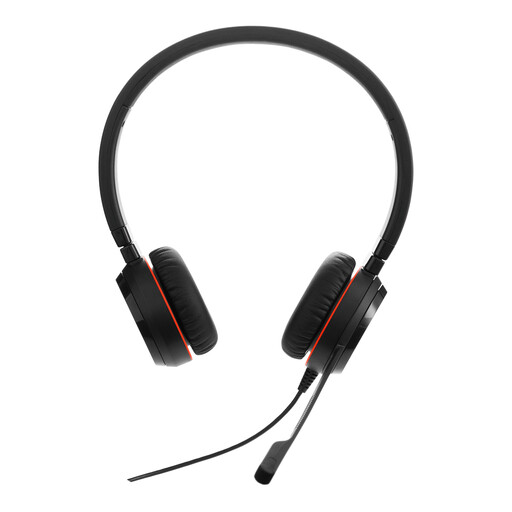
Jabra EVOLVE 30 II MS Stereo
Before using this stereo headset for mixing, check that its connection and wired operation are compatible with your audio interface.
View on Joybuy
Frequently asked questions
Should you always choose open-back headphones for mixing backing vocals?
No. Open-back models are mainly an option to compare if you’re mixing in a quiet room and sound leakage isn’t an issue. If you’re recording vocals at the same time or need isolation, compare closed-back models too.
Which plug do you need for your audio interface?
It depends on your interface’s headphone output. Focusrite specifies a 6.35 mm TRS plug for the headphone output on the fourth-generation Scarlett 4i4. For other devices, check the manual and whether you need an adapter.
How should you maintain headphones you use regularly?
Follow the guidance for the exact model and check which replacement parts are compatible. Sennheiser lists washable, replaceable ear pads for the HD 490 PRO; beyerdynamic provides information about replacing parts on the DT 900 PRO X.
How can you make long listening sessions safer?
Limit both the volume and listening time. The World Health Organization gives 80 dB for up to 40 hours per week as an example; this isn’t a guaranteed sound level for any particular volume setting.
What cooling-off period and warranty apply when buying online in the Netherlands?
According to the Dutch government, when you buy from a business at a distance, you’ll often have a 14-day cooling-off period; check the applicable terms and exceptions. The statutory guarantee is separate: there’s no fixed statutory guarantee period in the Netherlands, and if a product is faulty, the retailer is your point of contact.


