For an evening mix, choose based on how much you can use speakers in your space, whether you can position two speakers properly and which outputs your equipment has. A compact stereo system may fit on a small desk, separate nearfield monitors offer different positioning and connection options, and closed-back headphones are an alternative if speakers might disturb other people. This applies to mixing a recording; live monitoring during the recital calls for a separate choice.
Who is this choice relevant to?
Evening mixer with housemates or neighbours
You want to work on the recital mix without disturbing others with speakers, so you’re comparing nearfield monitors with closed-back studio headphones. Sennheiser describes the HD 280 PRO as closed-back headphones suitable for uses including mixing and monitoring.
Mixer with a small desk
You want to assess vocals and acoustic instruments in stereo, but need to fit two monitoring channels alongside your workspace. ADAM Audio describes the D3V as a stereo pair, while Genelec highlights the importance of listening distance and positioning.
Mixer with an existing audio interface
You want to know whether your interface’s outputs will work with the monitors’ inputs, and whether an offer includes one speaker or a stereo pair. Manufacturer information from ADAM Audio, Yamaha and Genelec lists different connections and box contents.
What should you consider when choosing?
Compact stereo system
A good fit if: you sit close to a small desk and want to set up two speakers straight away.
Bear in mind: a stated low-frequency limit doesn’t tell you how the bass will sound in your room. ADAM Audio lists USB-C playback for the D3V; this doesn’t necessarily replace equipment for recording.
Two separate nearfield monitors
A good fit if: you have room for separate left and right speakers and suitable outputs on your mixer or interface.
Bear in mind: Yamaha HS5 and Genelec 8010A monitors are packaged individually, so you’ll need two for stereo. Measurement limits with different dB tolerances aren’t directly comparable.
Closed-back studio headphones
A good fit if: speakers during an evening session could disturb housemates or neighbours.
Bear in mind: headphones don’t provide the same monitoring experience as two speakers in the room. Where possible, check the mix using a suitable speaker setup too.
| Consideration |
What should you check? |
Who should pay particular attention? |
| Listening without disturbing others |
Compare closed-back headphones with speakers, and adjust the playback level to suit your situation. |
If I can’t use speakers properly in the evening without disturbing housemates or neighbours, I want to be able to listen on my own. Around 36% of consumers put minimising disturbance at the top of their list of buying concerns. |
| Stereo balance |
Check whether you can position two speakers at a similar distance and height from your listening position, and whether the set includes one or two speakers. |
If I want to assess the balance between vocals and acoustic instruments in stereo, I need a usable left and right position. Around 29% of consumers give stereo assessment their highest priority. |
| Positioning and bass |
Measure the space available and compare frequency limits only when the stated dB tolerance is the same; bear room reflections in mind. |
When my desk has limited space and I want to assess the bass at my listening position, I consider both the setup and the measurement basis. Around 21% of consumers put positioning and bass reproduction first. |
| Connections and complete set |
Compare the outputs on your computer, mixer or interface with the inputs on the exact model. Also check the cables and box contents to make sure you have two channels. |
If I want to connect my existing equipment and need a complete stereo system, I want to know in advance what’s included in the offer. Around 14% of consumers make connections and set contents their main buying concern. |
Common buying mistakes
-
Assuming the price of one monitor covers a stereo setup
Yamaha lists the HS5 and Genelec the 8010A as individual monitors; ADAM Audio describes the D3V as a stereo pair. So one speaker isn’t automatically a complete stereo set.
Before buying, check how many speakers and cables are included, and what you’ll need to run two working channels.
A stereo system may require a second speaker and connection cables.
-
Comparing bass limits without considering measurement tolerance
The Yamaha HS5 and ADAM Audio T5V have stated frequency limits with different dB tolerances. Reflections and positioning also affect what you hear at your listening position.
Read the measurement basis and positioning information, and where possible check a mix using more than one suitable monitoring reference.
-
Expecting positioning EQ to fix a difficult room completely
Genelec notes that calibration won’t necessarily solve every acoustic problem. The MA 1 calibration described by Neumann requires additional measurement equipment.
First make room for a practical stereo setup, then consider whether calibration or room treatments are needed.
Acoustic treatments or optional measurement equipment may be additional requirements.
Brands to consider
ADAM Audio
According to ADAM Audio, the D3V is a compact active stereo system with USB-C and TRS; the T5V is a separate nearfield monitor with XLR and RCA.
- According to ADAM Audio, USB-C playback on the D3V may remove the need for a separate audio interface for playback.
- You may still need recording equipment. The stated low-frequency limit isn’t a measurement in your room; with the T5V, also check the positioning of the rear bass reflex port.
Yamaha
The HS5 is an active 5-inch nearfield monitor, packaged individually for a setup with two separate speakers.
- Yamaha lists XLR and TRS inputs, along with ROOM CONTROL and HIGH TRIM controls.
- Yamaha specifies 74 Hz at −3 dB for the HS5. You’ll need two for stereo; this limit alone doesn’t determine what you’ll hear at your listening position.
Genelec
The 8010A is a compact active monitor, packaged individually, with an analogue XLR input.
- Genelec lists positioning controls and a limit of 67 Hz at −6 dB.
- You’ll need one for each channel for stereo. Genelec points out that room reflections and acoustics affect what you hear.
Neumann
The KH 80 DSP A G EU is a compact nearfield monitor with an acoustic placement switch.
- The placement switch gives you an adjustment to factor into your setup.
- The automatic MA 1 calibration described by Neumann requires additional measurement equipment. A manufacturer’s explanation of reference playback isn’t an independent measurement in your room.
Sennheiser
The closed-back HD 280 PRO is a headphone option if speakers during an evening session could disturb others.
- Sennheiser describes these headphones as suitable for monitoring and mixing, and specifies their attenuation of ambient noise.
- This specification doesn’t mean that every sound will be inaudible to people nearby, or that headphones offer the same spatial reference as two positioned speakers.
Headphones at Joybuy
This Joybuy selection features headsets for personal listening during an evening session. The product descriptions mention gaming, calls or media; they don’t confirm that these models are intended as reference headphones for studio work.
 No image available
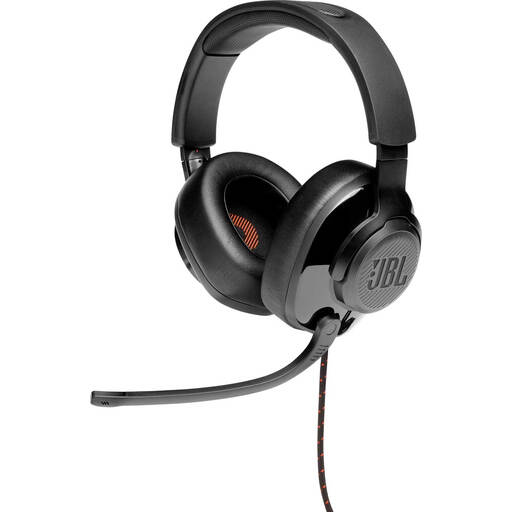
JBL Quantum 300 wired over-ear gaming headset
An option for personal listening; the product name describes this model as a gaming headset, not as studio reference headphones.
The product description lists a 3.5 mm connection, an included USB audio adaptor, a flip-up microphone and 50 mm drivers. Check which connection works with your mixer or interface.
View at Joybuy
 No image available
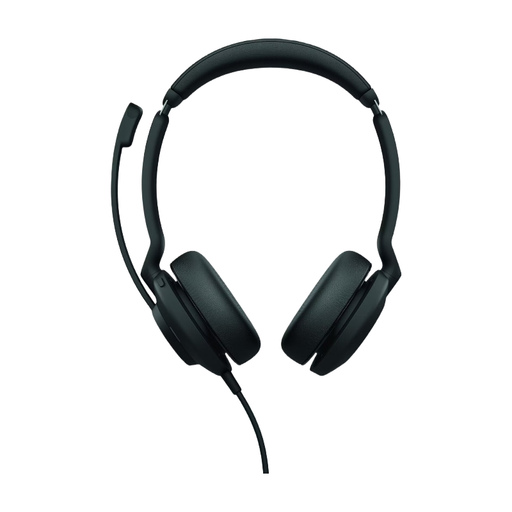
Jabra Evolve2 30 SE
A headset for personal listening; check that its connection type works with the equipment you use for mixing.
The product description lists USB-A, two integrated microphones and stereo earcups. A suitable adaptor is recommended for devices with USB-C.
View at Joybuy
 No image available
Bluetooth headphones with cat ears and RGB lighting
A wireless option for personal listening; the product name mentions use for music and gaming, not studio reference.
The product name specifies Bluetooth and an over-ear design. Check that the wireless connection suits your monitoring setup.
View at Joybuy
 No image available
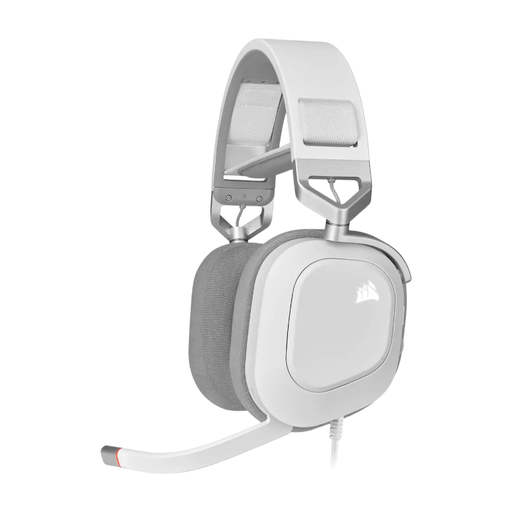
CORSAIR HS80 RGB USB wired gaming headset, white
A wired headset for personal listening; the product name describes it as a gaming headset.
The product description lists USB, stereo sound, volume control and a flip-up microphone. Check that USB works with the outputs on your playback equipment.
View at Joybuy
Frequently asked questions
Can I assess the bass in an acoustic recital by looking at the lowest stated frequency?
No, not from that frequency alone. Yamaha specifies 74 Hz at −3 dB for the HS5, while ADAM Audio specifies 45 Hz at −6 dB for the T5V. Your room and speaker positioning also affect what you hear at your listening position.
How should I position two monitors, and will room EQ fix acoustic problems?
Start by placing them at as similar a distance and angle to your listening position as possible, and pay attention to reflections around your workspace. Genelec says calibration can help, but it won’t necessarily solve acoustic problems completely.
Do I need an amplifier or audio interface as well as active monitors?
The active speakers discussed have built-in amplification. ADAM Audio describes USB-C playback on the D3V as a way to avoid needing an extra audio interface for playback; for other models, check that your mixer or interface has two suitable outputs and the right cables. This doesn’t determine what equipment you’ll need for recording.
Are these studio monitors suitable for live monitoring during a recital?
Their manufacturers describe the models discussed as studio or nearfield monitors. If you’re monitoring live during a performance rather than mixing a recording afterwards, assess your choice for that different use and setup; the studio use described here doesn’t confirm that they’re suitable as stage or PA monitors.
What can I do if a speaker develops a fault or an online purchase isn’t right for me?
For a consumer purchase in the Netherlands, the seller must resolve product problems under the legal guarantee; there’s no fixed statutory guarantee period. For online purchases from a business, you’ll usually have a 14-day cooling-off period. Check which terms apply to your purchase.


