
Ceramicist making glossy mugs
You want the colour, shape and glaze to stand out without distracting hotspots. MagicBOX explains how glossy ceramics can reflect light, so think about lighting and white balance as well as the camera.


For overall shots, choose a camera-and-lens combination that lets you frame the whole mug clearly and gives you control over lighting and white balance. For small glaze or relief details, the specific lens, magnification and working distance matter more. A camera won’t prevent reflections on glossy glaze, and a macro lens mentioned in a product listing isn’t necessarily included with a camera kit.
You want the colour, shape and glaze to stand out without distracting hotspots. MagicBOX explains how glossy ceramics can reflect light, so think about lighting and white balance as well as the camera.
You want to show relief, brushstrokes or small glaze details up close. The magnification and working distance of your chosen lens affect what you can frame; Sony Netherlands explains the term working distance.
You photograph several mugs and want consistent framing, sharpness and colour. Nikon Netherlands recommends a tripod and a fixed shooting position as aids for macro photography.
Suitable if: you’re considering an APS-C camera with a separate macro lens, and 0.5× magnification is enough for the details you want to photograph.
Bear in mind: Canon specifies 24.2 megapixels for the EOS R50 and 0.5× magnification for the RF 35mm F1.8 MACRO IS STM. Check whether that lens is included in the offer.
Suitable if: you want to photograph small details at 1:1 magnification and a 50mm lens suits your setup. Nikon says the lens is also compatible with DX cameras in the Z series.
Bear in mind: Nikon specifies around 5 cm of space in front of the lens at the closest focusing distance. Allow room for your lighting and check what’s included in the kit.
Suitable if: you want to combine RAW shooting with a separate 1:1 macro lens. Fujifilm specifies in-body image stabilisation for the X-S20.
Bear in mind: 1:1 magnification is a feature of the lens, not the camera body. Also consider the working distance and sharpness when shooting close-ups.
Suitable if: you’re considering an E-mount camera and want to use a separate 1:1 macro lens for small details.
Bear in mind: Sony highlights the α6400’s fast autofocus, but when photographing stationary mugs, lighting, lens choice and framing are still important considerations.
| What to consider | What should you check? | Who should give this more weight? |
|---|---|---|
| Glaze, reflections and colour | Try diffused light and different shooting angles; check RAW support and adjustable white balance for the exact camera model. | If I photograph glossy mugs, I want to show the glaze colour without distracting hotspots. Around 33% of consumers put glaze and colour first. |
| Small details | Compare the magnification and working distance of the exact lens, and check that its mount is compatible with the camera. | For relief or small decorations, I want to know how large I can make the detail in the frame and how much room will be left for lighting. Around 27% of consumers give details top priority. |
| Sharpness and consistency | Take a test shot to assess depth of field; check the focus options for the specific model and make sure there’s room for a tripod. | If I include several mugs in my portfolio, I want to be able to reproduce the framing and sharpness from one photo to the next. Around 20% of consumers prioritise a consistent series. |
| Complete kit | Read the exact list of what’s included and check whether it contains the lens you want and the essentials for your lighting setup. | I want to know in advance which parts I’ll need for my chosen setup, not just which camera body I’m buying. Around 20% of consumers check what’s included in the full kit first. |
Magnification of 0.5× or 1:1 applies to the macro lens mentioned, and doesn’t automatically apply to the lens included with every camera offer.
Compare the full model names and check what’s included before choosing a camera-and-lens combination.
You may need to buy a separate compatible lens to get the magnification you want.
When focusing up close, there may be little room in front of the lens for lighting. For a whole mug, the framing you want may matter more than maximum magnification.
Check the working distance and framing at the distances you’ll actually use to photograph your mug.
Glossy glaze can reflect a light source, and the position and spread of the light also affect the image.
Take test shots with diffused light and adjust the angles before relying on a camera feature to solve reflection problems.
A controlled lighting setup may take extra preparation time or equipment.
The EOS R50 is an APS-C option; for close-ups, you could pair it with the separate RF 35mm F1.8 MACRO IS STM.
The Z50II can be paired with the separate NIKKOR Z MC 50mm f/2.8 for detailed shots.
The X-S20 uses the X mount; the separate XF30mmF2.8 R LM WR Macro is an option for close-ups.
The α6400 has an E mount; the separate E 30mm F3.5 Macro is an option for small subjects.
The cameras below are options for photography. Check each model to make sure the camera type, lens and focusing capabilities suit your mugs and the details you want to capture.
 No image available
The stated 12× optical zoom gives you a choice of framing for a whole mug. For close-ups, check whether the camera-and-lens combination is suitable for the details you want to capture.
The product name specifies 4K, 64 MP and Wi-Fi.
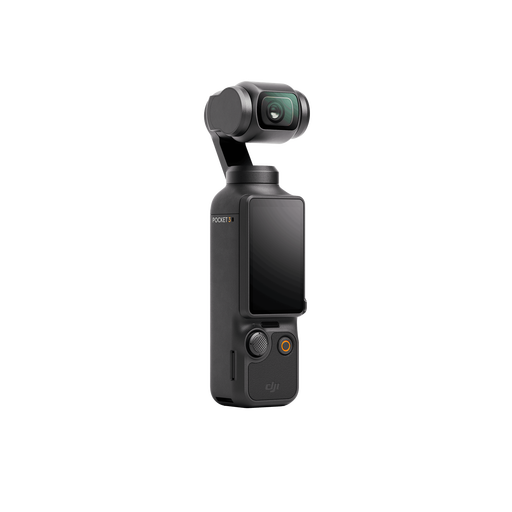 No image available
The description mentions still photography and a 1-inch CMOS sensor. Check whether this camera setup suits the framing and details you need for your portfolio.
The product name mentions 4K/120fps video and 3-axis stabilisation; the description also mentions a rotating screen.
 No image available
The description mentions still photography and a 1-inch CMOS sensor. Consider whether this camera suits the framing you want for your mugs.
The product name specifies 4K/120fps video and 3-axis stabilisation; the description mentions a rotating touchscreen.
 No image available
The kit name specifies a 16-50mm lens for framing a mug in different ways. Check its focusing capabilities for the details you want to photograph.
The description mentions an APS-C sensor, E mount and 24.2 MP.
 No image available
The kit is listed with a 16-50mm zoom lens. Check that the framing and focusing capabilities suit both the whole mug and the close-ups you want to take.
The description mentions an APS-C sensor, E mount and 24.2 MP.
Not necessarily: 1:1 describes how large a subject appears on the sensor, not whether a whole mug will fit neatly in the frame. First decide how you want to frame it, then check the focusing distance and working distance of the exact lens.
Try diffused light and change the angle between the mug, light source and camera. MagicBOX explains that glossy ceramics can reflect light; test shots will help you assess the lighting for your setup.
For a consumer purchase in the Netherlands, the seller must offer a solution if the product doesn’t meet reasonable expectations. According to the Dutch government, the legal guarantee doesn’t have a fixed two-year term; a manufacturer’s warranty doesn’t replace these rights. Check the terms that apply if you’re buying as a business.
ACM ConsuWijzer says consumers often have up to 14 days from delivery to change their mind about online purchases, with some exceptions. Don’t assume this consumer right applies if you’re buying in a business’s name.