If you mainly photograph the pond and its surroundings in changing or fading light, start by looking at exposure controls and a lens with the field of view you want. A mirrorless camera gives you the flexibility to change lenses; a camera with a fixed superzoom could suit you if you mainly want to photograph birds at a distance without changing lenses. A long zoom range won’t automatically keep a moving bird sharp: you’ll also need to consider the light, shutter speed and focus.
Which camera is right for you?
Pond and landscape photographer
You want to capture the pond, its banks and reflections in changing light. Think about the field of view you want and how you can adjust the exposure. The Consumentenbond recommends considering your subject, the camera’s size and how easy it is to adjust when choosing a camera.
Bird photographer by the water
You want to capture birds on the water or on the opposite bank clearly, and are weighing up zoom range against performance in lower light. Nikon Nederland and Panasonic Nederland describe cameras with optical zoom, while Canon Nederland offers advice on photography in low light.
Walker travelling light
You take your camera along to different spots and consider the weight of the complete setup, whether you’ll need to change lenses and how well it’s protected in changeable weather. The Consumentenbond includes size as a factor when choosing, while OM SYSTEM and Panasonic Nederland publish specifications for their camera models.
What should you look for when choosing?
The Consumentenbond recommends considering your subject, the camera’s size and how easy it is to adjust. For a park pond, four other priorities come into play: exposure, distant birds, portability and zooming without changing lenses.
Mirrorless camera with interchangeable lens
A good fit if: you want to take wide shots and photograph in fading light, and choose a lens to suit the subject.
Bear in mind: the lens is part of the setup; a camera body on its own won’t give you the telephoto reach you need for birds.
Camera with a fixed superzoom lens
A good fit if: birds or details on the opposite bank are your main subjects and you don’t want to change lenses.
Bear in mind: zoom can’t replace a suitable shutter speed or accurate focus, especially with moving subjects.
Compact mirrorless camera for changeable weather
A good fit if: you want to use interchangeable lenses on walks around the pond and also pay attention to weather sealing.
Bear in mind: check the weather protection of the fitted lens separately; stabilisation won’t prevent motion blur from a bird.
| What to consider |
What to look for when buying |
Who is this important for? |
| Exposure in changing light |
Check the exposure controls and the maximum aperture of your chosen lens; see whether stabilisation is in the body or the lens. |
If I want to capture the pond and its reflections in changing light, I’ll look at the exposure settings and lens aperture. Around 33% of consumers put exposure first. |
| Distant birds |
Compare the optical reach on the same 35mm-equivalent basis, and check the focus system and any subject tracking. |
If I want to clearly capture a bird on the opposite bank, I’ll look at optical reach and how well the camera focuses on moving subjects. Around 27% of consumers put distant, moving birds first. |
| Portability on walks |
Compare the weight of the body and the lens you plan to take; in wet weather, check the specifications of both. |
If I’m walking around the pond with my camera, the weight of the complete kit and its protection in the rain matter to me. Around 20% of consumers put portability first. |
| Zooming without changing lenses |
Check the optical zoom range and maximum aperture at both ends of the range; check that the exact model is available. |
If I want to switch between a wide view and a more distant subject on a walk without fitting another lens, I’ll look at the range of a single camera. Around 20% of consumers put an all-in-one zoom solution first. |
Common buying mistakes
-
Comparing camera bodies alone
The lens also affects your field of view, the amount of light entering the camera and your reach for photographing birds. Canon says the EOS R50 supports RF and RF-S lenses; for other lens mounts, check which setup you’ll need.
Before buying, check the exact kit contents, lens mount and complete setup. You may need to buy a suitable lens or adapter separately.
With a mirrorless camera, you may need to buy the lens separately, so check what’s included with the version you’re choosing.
-
Confusing digital zoom with optical zoom
For the COOLPIX P1100, Nikon distinguishes between 125× optical zoom and 250× Dynamic Fine Zoom, which extends the range digitally.
When photographing distant subjects, compare the optical range of the exact models first.
-
Assuming stabilisation will freeze a moving bird
Stabilisation helps reduce camera shake, but you’ll also need a suitable shutter speed for a moving subject. In lower light, you may have less scope to use a fast shutter speed.
Compare range, focusing, lens aperture and adjustable shutter speed as part of the same decision.
-
Assuming the body’s weather rating applies to the whole setup
OM SYSTEM lists the protection rating of the OM-5 Mark II and gives lens weather specifications separately.
If you expect wet weather, check the specifications for both the body and the lens you’ll actually be using.
Camera brands to consider
Canon
The EOS R50 is a mirrorless camera with an RF and RF-S lens mount. It’s an option if you want to choose an interchangeable lens for pond scenes or distant subjects.
- Canon Nederland specifies a 24.2-megapixel APS-C sensor and Dual Pixel CMOS AF II for the EOS R50.
- Canon doesn’t specify in-body image stabilisation for this model, so check the features of your chosen lens.
Sony
The α6700 is an APS-C mirrorless camera with interchangeable E-mount lenses. It’s worth considering if you want subject tracking and the flexibility to choose a lens.
- Sony lists approximately 26.0 effective megapixels, subject recognition and five-axis in-body stabilisation.
- How much you can crop a distant bird also depends on your chosen lens and the light you’re shooting in.
Nikon
This comparison includes both the mirrorless Z50II and the fixed-superzoom COOLPIX P1100. These are separate models with different features and uses.
- Nikon lists 125× optical zoom for the COOLPIX P1100 and an electronic viewfinder for the Z50II.
- The P1100’s zoom and the Z50II’s interchangeable-lens setup aren’t combined features. Consider the conditions you’ll be shooting in with either camera.
OM SYSTEM
The OM-5 Mark II is a compact mirrorless camera option if you want to walk around the pond with interchangeable lenses.
- OM SYSTEM lists a body weight of 418 g, an IP53 rating and built-in stabilisation.
- Check the weight and weather rating of the fitted lens separately; stabilisation won’t prevent motion blur from birds.
Panasonic
The LUMIX DC-FZ82D is a bridge camera with a fixed zoom lens. It’s an option if you want to use different fields of view without changing lenses.
- Panasonic Nederland specifies 60× optical zoom, a 20–1200 mm 35mm-equivalent range and optical stabilisation.
- Panasonic marks the versions shown on its Dutch product page as unavailable; check whether the exact model is in stock.
Camera options at Joybuy
The Joybuy products below are camera options for taking photos on a walk. The models listed differ in zoom and video features, so check whether each one suits your needs for still water, distant birds or both.
 No image available
Komery W6 digital camera
The listed 12× optical zoom gives you different framing options without having to fit another lens.
The product name lists 64 MP and 4K video.
View at Joybuy
 No image available
DJI Osmo Pocket 3
The product information describes this model as a vlogging camera. Check whether its controls and field of view suit the still photos you want to take of the pond.
The description lists a 1-inch CMOS sensor, mechanical 3-axis stabilisation and a weight of 179 g. The stated 4K/120fps specification is for video.
View at Joybuy
 No image available
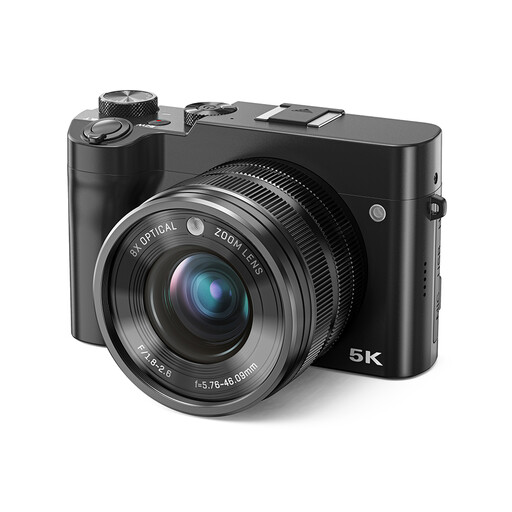
Songdian digital camera, 8× optical zoom
The 8× optical zoom gives you different framing options, and the product information lists both autofocus and manual focus.
The product name lists 5K video and 64 MP. The description mentions electronic stabilisation.
View at Joybuy
 No image available
Songdian digital camera, 10× optical zoom
The product name lists 10× optical zoom for different framing options; the description mentions front and rear cameras.
The product name lists 5K video and 56 MP. The description mentions electronic stabilisation.
View at Joybuy
Frequently asked questions
How should you set up your camera when the sun keeps coming and going?
Choose a shutter speed to suit your subject: you can use a different setting for a still view of the pond than for a moving bird. A wider aperture lets in more light, but also reduces depth of field. After the light changes, check the exposure and sharpness of a test shot.
Do you need to fit a lens to a mirrorless camera?
Check which lens is included with the version you’re choosing and whether its mount is compatible. Canon specifies that the EOS R50 directly supports RF and RF-S lenses; EF and EF-S lenses require an adapter. Refer to the manual for the exact model before changing lenses.
Who can help if a camera you bought online isn’t working properly?
According to the Rijksoverheid, the seller must provide a solution if there’s a problem with a product. When you buy remotely from a business, you’ll usually also have a 14-day cooling-off period; check the terms and exceptions that apply to your specific purchase.
Can you share a park photo publicly if passers-by are recognisable?
Not necessarily. The Autoriteit Persoonsgegevens distinguishes between photos you keep private and images you share more widely. The exception for personal or household use doesn’t apply when you publicly share recognisable people, so you’ll need an appropriate GDPR legal basis for the specific photo and how you share it.


