
Collector focused on key details
You want to capture wear, stamps or fine shapes in detail. Compare the lens's maximum magnification. Canon Netherlands and OM SYSTEM describe the relevant macro capabilities.


Choose the magnification to suit what you want to show: photographing an entire key calls for a different lens than capturing a close-up of wear or an inscription. Then compare the camera body's focusing options and make sure you have a stable setup, suitable white balance and manageable reflections. A camera body or standard zoom lens won't take care of these things on its own.
You want to capture wear, stamps or fine shapes in detail. Compare the lens's maximum magnification. Canon Netherlands and OM SYSTEM describe the relevant macro capabilities.
You want to capture both the tip and the bow in focus, with a consistent, repeatable composition. Close-ups have a shallow depth of field, so look at focus bracketing and make sure your setup is stable. Canon Netherlands and Nikon Netherlands cover these considerations.
You want to photograph metal without distracting glare, colour casts or light banding. Consider your lighting, white balance and shutter settings; Sony Netherlands Support, Nikon Netherlands and OM SYSTEM Netherlands cover these aspects.
A good fit if: an APS-C body and magnification of up to 1:2 are enough for the details you want to show. Canon lists focus bracketing for the EOS R50.
The trade-off: the lens offers a maximum magnification of 1:2, not 1:1. Check whether the lens is included with your chosen body or bundle; Canon does not list in-body image stabilisation for the EOS R50.
A good fit if: you want 1:1 close-ups and in-camera Focus Stacking is important to you. OM SYSTEM lists Focus Stacking for the body and 1:1 magnification for the lens.
The trade-off: the body and macro lens are separate parts of your choice. Check what's included in the bundle and whether the stacking settings you want to use work with this lens.
A good fit if: you're looking for an APS-C camera with an E-mount and need the SEL30M35's 1:1 magnification for small details. Sony lists 1:1 magnification for this lens.
The trade-off: Sony says the lens gets very close to the subject at maximum magnification. This can leave less room to light the key, so check which automated focusing features are available for your camera model.
| What to consider | What to look for | Most relevant to |
|---|---|---|
| Magnifying details | Check the maximum magnification and lens mount of the exact lens. The Canon lens mentioned offers a maximum magnification of 1:2; the OM SYSTEM and Sony macro lenses mentioned offer 1:1. | If you want to capture stamps, wear or small shapes in detail, lens magnification will help determine how tightly you can frame them. Around 33% of consumers rank magnifying small features as their top buying priority. |
| Sharpness across the whole key | Check whether the body supports focus bracketing with your chosen lens, and whether images are combined in-camera or afterwards. | If you want to capture both the tip and the bow clearly, consider your focusing workflow and keep the camera and key stable. Around 27% of consumers rank depth of field as their top buying priority. |
| Light and colour | Check the white balance and shutter options on the exact model. Test your own lights and adjust the light spread or shutter settings if needed. | If you're looking to reduce colour casts, glare or banding under artificial light, consider both the camera settings and the lighting. Around 27% of consumers rank managing light and colour as their top buying priority. |
| Complete setup | Check what's included in the bundle and whether you need a compatible macro lens, a tripod or additional lighting. | If you want to know in advance which components will work together to give you the shot you want, consider the body, lens and support as one complete setup. Around 13% of consumers rank a complete setup as their top buying priority. |
With a mirrorless camera, maximum detail magnification depends on the specific lens, not just the body.
Before buying, check the lens mount, maximum magnification and exactly what's included in the bundle.
For small inscriptions, you may need a compatible macro lens as well as the body.
Stabilisation doesn't change the shallow depth of field in a close-up. A fixed setup also helps keep the framing consistent in product photos.
Decide separately how you'll keep the camera stable and achieve sufficient depth of field.
A fixed shooting position may require a tripod or another sturdy support.
Sony says that flickering artificial light and shutter settings can cause banding in photos. The useful features and conditions vary by model.
Check the manual for the exact model and take test shots under the lights you actually use.
The EOS R50 and RF 35mm F1.8 IS Macro STM are an option for close-ups up to 1:2 and focus bracketing.
The OM-5 Mark II and M.Zuiko Digital ED 60mm F2.8 Macro are worth considering if 1:1 close-ups and in-camera stacking are important to you.
The α6700 has an E-mount; the E 30 mm F3.5 Macro (SEL30M35) is one option for 1:1 macro photography.
The full-frame Z5II and NIKKOR Z MC 50mm f/2.8 offer a Z-mount option for 1:1 macro photography.
A selection of Joybuy products related to cameras, photography and additional lighting.
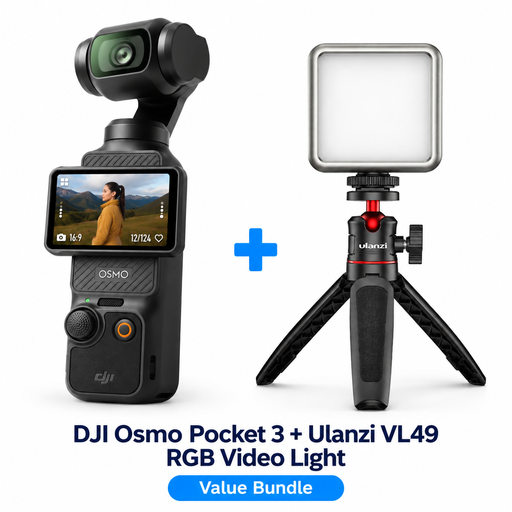 Image unavailable
According to the product description, the bundle includes a Ulanzi VL49 RGB LED light for additional illumination. Check whether the camera offers the close-up capability and focusing workflow you need.
The description mentions a 1-inch CMOS sensor.
Image unavailable
The bundle includes additional RGB LED lighting for indoor photography or low-light conditions. Check whether the camera suits your preferred shooting distance and focusing method.
The description mentions a 1-inch CMOS sensor.
 Image unavailable
The product name describes a digital camera with 12× optical zoom. Check whether it offers the magnification and focusing you need for small details on keys.
The product name mentions 12× optical zoom and 4K video.
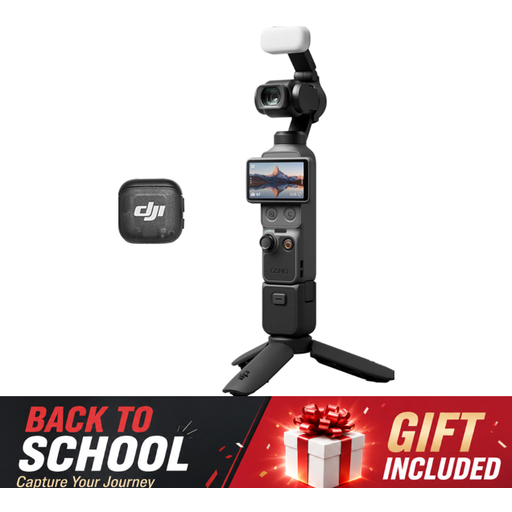 Image unavailable
The product name mentions an included microphone. Check whether the camera and its lens capabilities are suited to the key close-ups you want to take.
The product name mentions a 1-inch CMOS sensor and 4K/120fps video.
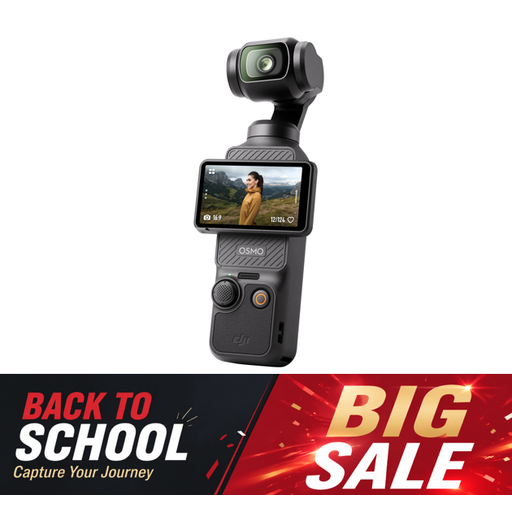 Image unavailable
The product name mentions fast focusing. Check whether the camera offers the close-up distance and focusing workflow you need for photographing keys.
The product name mentions a 1-inch CMOS sensor, 4K/120fps video and a 2-inch rotating touchscreen.
No, it depends on how you want to frame the shot. Lower magnification may be enough for an entire key, while 1:1 can be useful for a small detail. The Canon RF 35mm mentioned offers a maximum magnification of 1:2, while the OM SYSTEM macro lens mentioned offers 1:1.
Set up the key and camera so they are stable, and check whether the body can take a focus-bracketed sequence with your chosen lens. Focus stacking combines shots taken at different focus points. Check for each model whether the images can be combined in-camera or need to be combined afterwards.
First, check the white balance. If reflections are harsh, try softer, more diffused light. If you see banding under a flickering light, test the shutter speed or shutter type. Sony stresses that available anti-flicker features vary by camera and shooting conditions.
For a standard online consumer purchase, you generally have up to 14 days from delivery to change your mind, with some exceptions. ACM ConsuWijzer explains the cooling-off period; the Dutch government states that the Netherlands has no fixed statutory warranty period. If a product is faulty, contact the seller.
Not automatically: you need the creator's permission to publish someone else's copyrighted photo. The Dutch government distinguishes between using someone else's photo and taking a photo of a key yourself.