
Seller taking overall shots
You want to photograph the front and back of medals clearly and consistently against a white background, without automatically buying a dedicated macro lens.


A suitable kit lens may be all you need for overall shots. For small engravings and marks, it’s worth comparing the magnification offered by a dedicated macro lens. Think about your lighting setup too: switching cameras won’t, by itself, eliminate reflections on metal or an unwanted background colour. Check exactly which lens is included in the kit and what else you’ll need for a complete setup.
You want to photograph the front and back of medals clearly and consistently against a white background, without automatically buying a dedicated macro lens.
You want to capture engravings, marks or wear clearly in separate shots, so you’re comparing magnification and the space available for lighting.
You photograph several medals and prioritise a consistent angle of view and manageable lighting over features designed for moving subjects.
Choose this option: if your main aim is to capture the whole medal clearly.
The trade-off: the included lens may offer less magnification than a dedicated macro lens, so check exactly what the kit contains.
Choose this option: if you need small engravings or hallmarks to appear large and clear in separate shots.
The trade-off: check that the lens is compatible with the mount and that there’s still room around the camera for lighting.
Choose this option: if the medal is already large enough and sharp in the frame, but reflections or the background are spoiling the result.
The trade-off: according to Coins and Paper Money Wiki, a polarising filter only reduces reflections to some extent.
| What to consider | What should you check? | Who is this important for? |
|---|---|---|
| Magnification and how much of the frame the subject fills | Compare the magnification of the exact lens with the framing you need for your medal; check the lens mount too. | If I want to capture engravings or hallmarks separately, I prioritise magnification over an overall shot alone. Around 33% of consumers prioritise fine details. |
| Lighting and reflections | Assess the position and colour of the light, and the white balance, using test shots of both the medal and the background. Coins and Paper Money Wiki notes that a polarising filter only reduces reflections to some extent. | I want to assess the colour of the metal and the white background without distracting glare. Around 27% of consumers prioritise control over lighting and reflections. |
| Repeatable setup | Check that you can position the camera securely and have enough room for the lens, lighting and medals of different sizes. | When I photograph a series of medals, I want to be able to set the angle of view and exposure consistently. Around 20% of consumers prioritise repeatability. |
| Complete kit and costs | Compare what’s included in body-only and kit offers, and check whether you’ll need to buy the macro lens separately. | If I want to get started with a complete, usable setup, I want to know in advance which lens and other components are included. Around 20% of consumers prioritise the total cost of the setup. |
A kit lens isn’t automatically a macro lens. Canon specifies a maximum of 0.25× for the RF-S 18-45mm in MF close-up mode; that isn’t the same magnification as 1:1.
Read the full list of what’s included and compare the magnification of the actual supplied lens with the framing you want.
You may need to buy a compatible macro lens separately for dedicated macro shots.
The position and colour of the light affect how reflections and the colour of the metal appear in your photo; higher resolution won’t change how the light falls.
Take test shots with the light in different positions and check the white balance before choosing a different camera body as the solution.
Trying out a lighting setup that’s easier to control may take extra time and equipment.
The minimum focusing distance of the Fujifilm XF30mmF2.8 Macro is measured from the sensor plane, not from the front of the lens.
Assess the complete camera-and-lens setup and check that there’s enough room for lighting when taking close-ups.
The EOS R50 with the RF-S 18-45mm is an option for overall shots and limited close-ups. For greater magnification, you could choose a compatible macro lens separately.
A Z50II paired with a compatible Z macro lens is one way to capture fine details.
An X-series camera such as the X-S20 can be paired with a compatible XF macro lens for close-ups and other subjects.
A compatible OM SYSTEM camera paired with the M.Zuiko ED 60mm F2.8 Macro is one option for 1:1 detail shots.
The Alpha 6400A is an APS-C body with an E-mount, worth comparing if you already own compatible Sony lenses or photograph other subjects too.
The product list includes cameras for photography, including mirrorless cameras with kit lenses. Check each model to make sure the camera type and included lens are suitable for photographing medals against a white background.
 No image available
Check whether this type of camera suits your fixed setup for medal photography and whether the lens gives you the framing you want.
The product title lists 12× optical zoom, 64 MP and 4K.
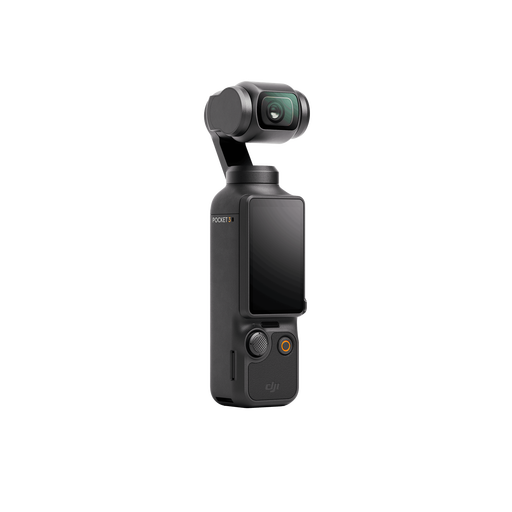 No image available
Check whether this camera suits the way you want to photograph medals and whether the setup leaves enough room for lighting.
The product title lists a 1-inch CMOS sensor, 4K/120fps video, 3-axis stabilisation and an included microphone.
 No image available
Check whether this camera suits the way you want to photograph medals and whether the setup leaves enough room for lighting.
The product title lists a 1-inch CMOS sensor, 4K/120fps video, 3-axis stabilisation and a rotatable 2-inch touchscreen.
 No image available
The included zoom lens may be useful if you want to frame the whole medal; check whether it offers the magnification you need.
The kit lists an E PZ 16–50 mm lens, and the product description says the body has an APS-C sensor and Sony E-mount.
 No image available
The included zoom lens may be useful if you want to frame the whole medal; check whether it offers the magnification you need.
The product description lists a 24,2 MP APS-C sensor and Sony E-mount; the kit includes a 16–50 mm f/3.5–5.6 OSS II lens.
No, not if a suitable kit lens captures the whole medal at a large enough size. For individual details, compare the magnification of the exact lens: Canon lists a maximum of 0.25× for the RF-S 18-45mm in MF close-up mode, while the dedicated macro lenses mentioned offer 1:1 or more.
Start with a clean white surface and assess the light from different directions. Catawiki suggests window light as a simple setup; Coins and Paper Money Wiki describes side lighting to show the relief and notes that a polarising filter only reduces reflections to some extent. Check both the colour of the metal and the background in your photo.
Check whether the offer includes just a body, adds a kit lens or also includes the macro lens you want. According to the Dutch government, if there’s a problem with a consumer purchase, the seller must provide a solution; a manufacturer’s warranty may offer additional cover.
According to the Dutch government, consumers buying at a distance often have a 14-day cooling-off period, but there are exceptions and not every transaction counts as a distance purchase. Check the information that applies to the specific seller and order.