What to consider when choosing
Start with the shooting distance and the framing you want. Then check whether the supplied lens offers enough magnification for any details you want to capture.
| What to consider |
What to look for |
Who is this important for? |
| Framing the whole bowl |
Check the kit lens’s focal length range and try the framing you want within the space available. |
If the camera needs to be close to the bowl, I still want to fit the whole bowl and perhaps part of the table edge in the frame. Around 28% of consumers say framing is their main consideration. |
| Showing small details |
Compare both the minimum focusing distance and the maximum magnification of the specific lens. |
For a close-up of a garnish or texture, I want to know whether the kit lens offers enough magnification. Around 22% of consumers prioritise magnifying details. |
| Lighting and depth of field |
Assess the available window light and decide how much of the bowl needs to be in focus before choosing extra equipment. |
If I want to control the colour and sharpness across the bowl, I first consider the lighting and the image style I’m after. Around 22% of consumers put lighting and image rendering first. |
| Total cost of the kit |
Compare the lens supplied with the kit and allow for the possibility of an additional lens; no maximum budget has been specified. |
If I’m looking for a complete kit, I want to avoid needing another lens later to get the framing I want. Around 17% of consumers focus mainly on the total cost of the kit. |
| Filming recipes too |
Check whether you’ll be recording video and, if so, compare the exact camera body generation, kit lens and screen controls. |
If you want to film the cooking or serving as well as take photos, screen controls and video features may influence your choice. Around 11% of consumers say video is their top priority. |
Cameras at Joybuy
These Joybuy products offer zoom options for adjusting the framing around a bowl of soup. Check each listing to see exactly which type of camera and lens are included.
 No image available
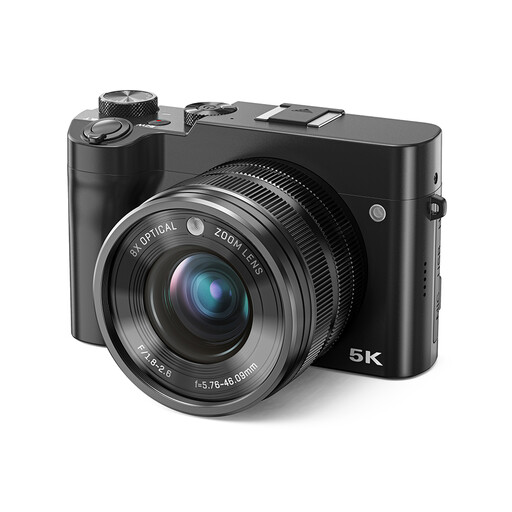
Songdian digital camera, 8X optical zoom, 5K, 64MP, dual lens, black
The stated 8× optical zoom gives you more framing options. Check whether the camera type and lens suit the way you want to shoot.
Listed features: 8× optical zoom, 5K, 64MP and dual lens.
Joybuy
 No image available
Sony ZV-E10 with 16-50mm zoom lens, black
The supplied zoom lens gives you more framing options; check the exact model generation if you also plan to record video.
Lens: 16-50mm zoom lens.
Joybuy
 No image available
Sony Alpha A6100 with 16-50mm f/3.5-5.6 OSS II
The supplied 16-50mm lens gives you framing options; check that the lens and camera type suit the shot you want to take.
Lens: 16-50mm f/3.5-5.6 OSS II.
Joybuy
Frequently asked questions
Should I buy a macro lens straight away to photograph a whole bowl of soup?
No. Start with the shooting distance and try the framing you want with the standard zoom. A dedicated close-up lens is mainly worth considering if the kit lens can’t show small details large enough.
How can I get started on a small table without an extra light?
Try placing the bowl in the light from a window, and pay attention to the direction of the light and how much of the bowl is in focus. Only consider extra equipment if that setup doesn’t give you the result you want.
What should I look for in a camera with interchangeable lenses?
Check which lens and accessories are actually included with the kit, and bear in mind that you may need to change lenses. Follow the instructions for your exact camera and lens when cleaning and maintaining them.
Does a two-year manufacturer’s warranty also cover the full statutory guarantee in the Netherlands?
No. ACM ConsuWijzer distinguishes between voluntary manufacturer’s or retailer’s warranties and the statutory guarantee. There is no fixed duration for the statutory guarantee in the Netherlands. If a product fails to meet the applicable requirements, the retailer is responsible for providing a solution.
Do I always have a 14-day cooling-off period when buying a camera online?
For a qualifying distance purchase from a business, you generally have a 14-day cooling-off period. The Dutch government lists exceptions and distinguishes these purchases from, for example, buying online from a private individual. So check who the seller is and what kind of purchase you’re making.


