What should you look for in a camera for a collage panel?
Existing smartphone
Choose this if: you take the occasional overview shot and can frame the panel steadily and straight on in soft light.
Bear in mind: check detail and colour at the size you need the photo for, and avoid digital zoom.
Mirrorless camera with standard zoom lens
Choose this if: you document your work more often and want an interchangeable lens and an adjustable shooting workflow.
Bear in mind: a kit means extra cost and storage space; check that the included lens gives you the framing you want from the height available to you.
Mirrorless camera for repeated colour documentation
Choose this if: you want to establish a repeatable workflow using fixed lighting, white balance and a reference shot.
Bear in mind: RAW files don’t guarantee accurate colours on their own; lighting and post-processing still matter.
First measure the panel and the available shooting height; then check the framing using the exact camera and lens you’re considering. For flat work, Kunstwerkt recommends shooting straight on. The Canadian Conservation Institute describes raking light as a way to emphasise texture, which serves a different purpose from an evenly lit overview shot.
| What to consider |
What to look for when buying |
Who is this important for? |
| Lighting and material rendering |
Check the panel for reflections and shadows; keep the lighting consistent throughout a series of shots. |
If I want to capture the paper layers and colours as evenly as possible, I look at the lighting and reflections first. Around 36% of consumers prioritise lighting and material rendering above all else. |
| Straight, full-frame composition |
Measure the panel and available height; check whether the specific kit lens can fit the whole work in the frame with the margin you want. |
When there’s limited space above my table, I want the whole panel in frame, straight on, without tilting the camera. For around 29% of consumers, framing within the available space is the top priority. |
| Colour and detail workflow |
Check RAW support for the exact model and plan for consistent lighting, white balance and a reference shot. |
When taking photos regularly, I want to be able to assess colour and fine detail in a consistent way. Around 21% of consumers prioritise this colour and detail workflow. |
| Simplicity and equipment |
Check whether the lens is included, which mount it uses and whether you can use equipment you already own. |
If I only take a work photo now and then, I’d rather make use of what I already have than buy a complete kit unnecessarily. Around 14% of consumers prioritise simple, occasional documentation above all else. |
Joybuy products for this type of photography
The products shown are vlog and pocket cameras, not mirrorless camera kits with interchangeable lenses. Consider them as individual camera options and, for a collage panel, focus on whether the framing and set-up will work with your table.
 No image available
Osmo Pocket 4P Vlog Combo – Black
The product title describes this model as a vlog camera; check whether its angle of view and framing will work for photographing your panel.
The product description mentions a 1-inch sensor and a 20 mm f/2.0 lens.
View at Joybuy
 No image available
KINSI Mini Vlog Camera 4K, 64 MP, 330° rotating lens
The title describes this model as a mini vlog camera; check in advance whether the stated lens angle will work for framing your entire collage.
The product title mentions a 330° rotating lens, a 1.72-inch touchscreen, a tripod and Type-C.
View at Joybuy
 No image available
DJI Osmo Pocket 4 Standard Combo
The product title describes this model as a pocket gimbal vlog camera; for your needs, assess its framing and whether you can photograph the panel straight on.
The product title mentions a 1-inch sensor and a 2-inch rotating screen. The description mentions 4K video up to 240 fps.
View at Joybuy
 No image available
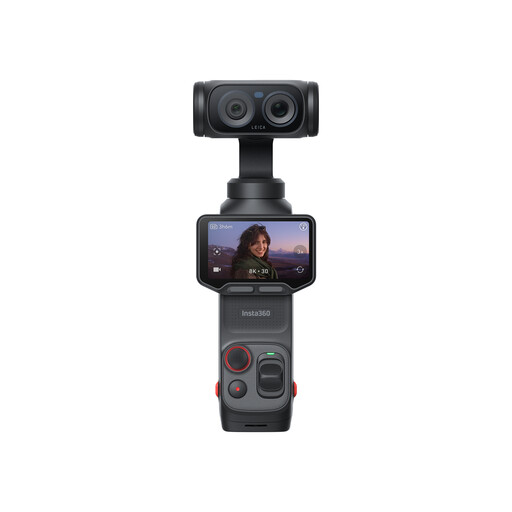
Insta360 Luna Ultra Standard Bundle Cosmic Black
The product title describes this as a vlog camera; check whether the lens choice and angle of view are suitable for the overview shot you want.
The product description mentions a 1-inch main sensor and a telephoto lens with an f/2.0 aperture.
View at Joybuy
 No image available
DJI Osmo Pocket 3 Creator Combo
The product description mentions use for still images; check the framing and set-up before choosing this model for a flat collage panel.
The description mentions 10-bit D-Log M and a rotating screen.
View at Joybuy
Frequently asked questions
How can I photograph a collage panel without skewed edges?
Position the camera steadily and straight on to the panel, then check the edges in the frame before taking the photo. For a horizontal panel, this means finding a stable position above it, without tilting the camera to fit more of the work into the frame.
Should I use direct light or flash to show the layers of paper?
Not necessarily: soft, even lighting serves a different purpose from raking light, which emphasises texture. The Canadian Conservation Institute describes using raking light to reveal texture; if needed, take separate shots for the overall view and the texture.
What extra accessories should I check for in a camera kit?
Check that the lens is actually included and whether your set-up requires a suitable support or memory card. For consumer purchases, your statutory rights apply alongside any commercial warranty; the Dutch government describes options including repair or replacement if a fault was present when the product was delivered.
Can I return a camera bought online in the Netherlands?
For many distance purchases from a business, you have a 14-day cooling-off period, but there are exceptions. The Dutch government also distinguishes between buying from a business and buying from a private seller; check which terms apply to your purchase.
Can I publish a photo of my collage if it includes someone else’s work?
Buying a camera doesn’t give you the right to publish other people’s work. According to the Dutch government, you generally need the creator’s permission to use or make copyright-protected images available to the public; whether an exception or licence applies depends on the specific work and use.


