What should you look for when buying?
Standard zoom kit for whole bowls
A good fit if: you mainly photograph whole bowls and larger details. Check which zoom lens is included and test the framing at your worktable.
Bear in mind: a standard zoom isn’t necessarily suitable for filling the frame with very small details.
Camera body with a separate macro lens
A good fit if: you want small crazing, maker’s mark or glaze details to appear large in the frame. Compare the magnification and working distance of the exact lens.
Bear in mind: a macro lens is a separate purchase unless it’s explicitly included in the kit. A short working distance can also limit the space available for lighting.
Compact or stabilised kit
A good fit if: you regularly move your camera or can’t leave a setup on the worktable. Consider the weight of both the body and lens.
Bear in mind: stabilisation won’t keep the camera in the same position for a series of consistently framed shots.
Adobe discusses controlled lighting and an uncluttered background for product photography; Canon explains how white balance helps colours appear accurately in photos. So compare cameras with the lighting and workspace you actually have.
| Consideration |
What to look for when buying |
Who is this important for? |
| Colour and glaze reflections |
Consider whether you can practically control the lighting, use a neutral background and adjust white balance. Then compare the camera features you need. |
I want the glaze colour and sheen to look true to life under studio lighting, and I want to be able to control the lighting and white balance. Around 33% of consumers say colour and reflections are their main buying concern. |
| Small glaze and maker’s details |
Compare the mount, magnification, minimum focusing distance and working distance of the exact lens. |
If I want small glaze, relief or maker’s mark details to appear large in the frame, I look at the lens, not just the camera body. Around 25% of consumers prioritise details like these. |
| Workspace and consistency |
Try the complete camera-and-lens combination in the space available. Separately consider whether your tripod and background can stay in place or need to be put away. |
I want to be able to put my setup away after use and reproduce the same framing across a series of bowls. Around 25% of consumers prioritise space and a workspace that needs to be set up again. |
| Cost and what’s included in the kit |
Read the full kit name and check which lens is included before choosing accessories or a second lens. |
I want to start with a straightforward kit and know what photos the included lens can handle. Around 17% of consumers say what’s included in the kit is their main buying concern. |
Cameras at Joybuy
This selection includes cameras with zoom options for framing bowls. Product names and lens specifications vary, so check the camera category and which lens is actually included with each model.
 No image available
Sony ZV-E10 + 16-50mm Zoom Black
The included zoom lens gives you a way to frame whole bowls.
The product description lists an E PZ 16-50mm zoom lens, an E mount, autofocus and 24.2 MP.
View at Joybuy
 No image available
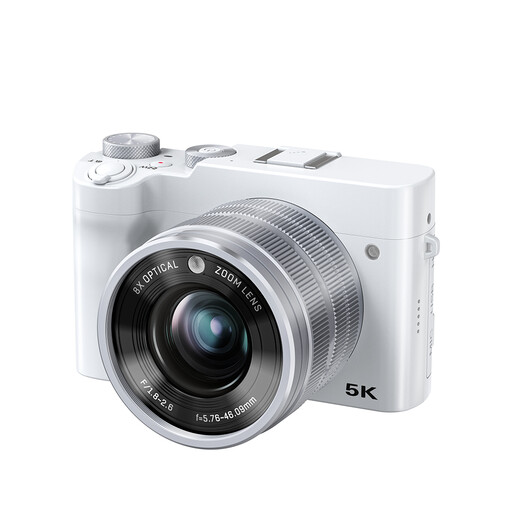
Songdian digital camera, white, 8× optical zoom
The zoom can help you adjust the framing. Check that the camera and lens are suitable for the photos you want to take.
The product title lists 8× optical zoom, 5K and 64MP. The product description lists autofocus, manual focus and a touchscreen.
View at Joybuy
 No image available
Komery W6 digital camera, 12× optical zoom
The product description lists close-ups as a possible use. Check whether the lens can also capture the details you want to show on your bowls.
The product title lists 12× optical zoom, 4K, Wi-Fi and 64MP.
View at Joybuy
Frequently asked questions
Do I need a macro lens for every ceramic bowl?
No, not if you mainly photograph whole bowls or larger details. First, check whether the zoom lens in the exact kit can capture the framing you need. Choose a compatible macro lens when you want small details to appear larger in the frame. Also compare the working distance to make sure there’s room for lighting.
How can I recreate the same photo setup on a shared worktable?
If space allows, a tripod can help you repeat the same framing. Also note where the bowl, camera, background and lights are positioned, and check for reflections again whenever you move anything.
How can I minimise maintenance issues in a dusty studio?
Avoid changing lenses unnecessarily in a dusty environment. Canon warns that dust can get onto the sensor when you change lenses, and that safe sensor cleaning requires expertise. Follow the maintenance instructions for the camera model you choose.
Should I consider service costs or the warranty as well as the camera?
Check which lens and accessories are included in the kit and what else you’ll need for your setup. The Netherlands government says that consumer purchases in the Netherlands don’t have a fixed statutory guarantee period; if there’s a problem, the seller must provide a solution. If you’re buying on behalf of a studio or business, don’t assume the same consumer rights apply.


