
Vandaag of morgen in huis

Kwaliteit gegarandeerd

Welkomstaanbiedingen ontgrendelen: GRATIS bezorging | Tot 80% korting | Gratis 30 dagen JoyPlus-proefperiode
Download de app
Choosing a mini fridge might seem straightforward: find a compact model, check its capacity and put it in the room. In practice, problems often only become clear after you’ve bought it. A door that hits the wall, insufficient ventilation or a cooler that can’t maintain a stable fridge temperature can seriously limit how useful it is.
This guide will help students, people living alone, office and bedroom users, and anyone looking for extra chilled storage to compare their options more carefully.
A 90-litre fridge holds more than a 40-litre model, but the layout determines how much you can actually store. A fixed shelf, narrow door compartments or a small chiller compartment can all limit the usable space. So be sure to check:
Not every model with a small compartment at the top is a fully fledged fridge with freezer compartment. For example, the Salora CFB4300WH states that its freezer compartment is intended for temporarily storing frozen food, not for freezing food from fresh. If you want to store ice, frozen meals or meat for a long time, check the freezing capacity, temperature and star rating carefully.
A mini fridge in a bedroom or office is often close to a bed or desk. A stated noise level of around 39 to 41 dB is a useful guide, but the noise you hear can vary depending on the compressor, the surface it stands on and where it’s placed.
Also, don’t place a compact fridge right up against the wall. Keep the vents clear and follow the clearance instructions in the manual. A portable mini fridge with thermoelectric cooling also often cools to a temperature relative to the ambient temperature. That’s different from the consistent cooling provided by a compressor fridge.
Measure the space first, allowing room for the door and cable. Check the height, width and depth, as well as which way the door opens. A fridge with a reversible door gives you more flexibility in a small kitchen, student room or office.
As a guide:
A 90-litre model won’t necessarily fit under a worktop. Check the exact dimensions and make sure there’s enough space for ventilation.
The European energy label for fridges runs from A to G. As well as the letter rating, compare the annual energy consumption in kWh. In practice, an energy-efficient fridge is one whose energy use is right for its capacity and how you use it. Work out the cost yourself using your current electricity tariff:
annual consumption in kWh × price per kWh = estimated annual electricity cost
For example, the Salora CFB4300WH lists an annual consumption of 107 kWh and an F energy rating. The CHiQ JR92DSE lists an annual consumption of 85 kWh and an E energy rating. Always compare these figures alongside capacity, layout and how often you’ll use the fridge. A larger fridge may offer more space, but its running costs may differ too.
A compressor fridge is generally designed to keep food and drinks at a set temperature. Portable models with capacities of 4, 6, 10 or 15 litres often use thermoelectric cooling. They’re handy for the car, camping, a caravan, office or bedroom, but according to the product specifications, they may cool to a certain number of degrees below the ambient temperature.
A cooling and warming function makes this type of appliance versatile, but it doesn’t make it a fully fledged fridge for storing food over the long term. Also check that the temperature settings, power connection and operating temperature suit your needs.
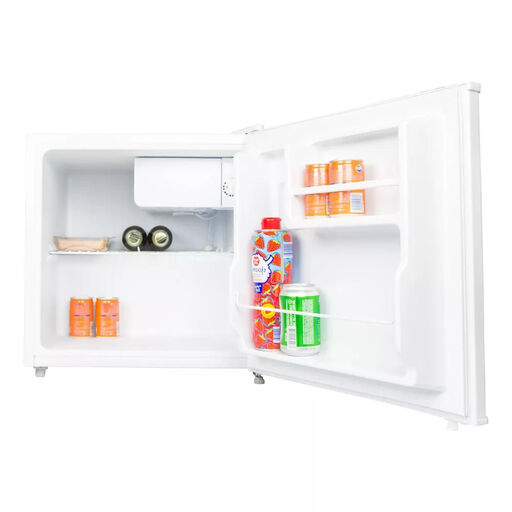
Why it suits this type of buyer: A handy size for a student room, bedroom, home office or minibar. The freestanding design doesn’t require complicated installation.
The capacity, dimensions, noise level of 41 dB and annual consumption of 107 kWh are all specified. According to the product information, the small compartment at the top isn’t intended for long-term freezing.
43-litre capacity, metal shelf, reversible door and a 1.5-metre cable.

Why it suits this type of buyer: A good choice if you’re looking for greater capacity and a flexible layout for your kitchen, office, studio or guest room.
The product specifications list a 92-litre capacity, 39 dB noise level, E energy rating and annual consumption of 85 kWh. The reversible door makes it easier to place in a tight space.
Seven temperature settings, adjustable glass shelves, a salad drawer and a separate chiller zone.
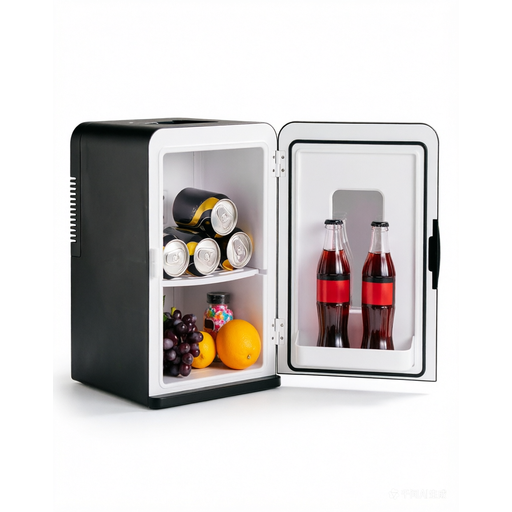
Why it suits this type of buyer: Handy for travelling, camping, the car, a caravan, office or bedroom when you need a lightweight appliance.
It’s clearly a portable thermoelectric model, not a fully fledged compressor fridge. The product specifications list 220–240 V and 12 V, so you can check the power supply you’ll need in advance.
15-litre capacity, carry handle, removable shelf, and cooling and warming functions.
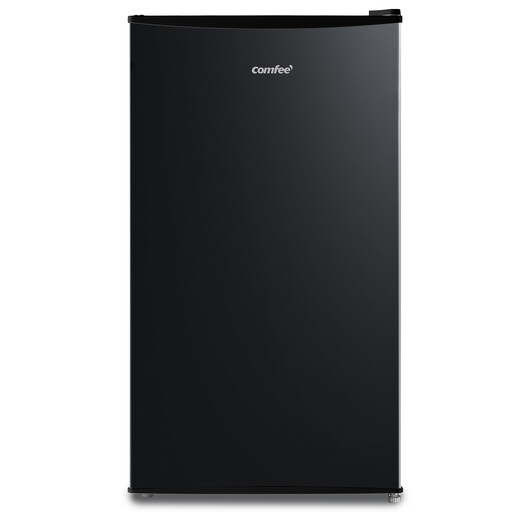
Why it suits this type of buyer: A practical choice if you want to store chilled and frozen food in a compact appliance.
The specifications list a 12-litre freezer compartment, a 4-star rating, 39 dB noise level and a reversible door. This makes it clearer how it differs from a simple chiller compartment.
80 litres in total, 12 litres of freezer space, LED lighting and an adjustable shelf.
We’ve put together a complete, up-to-date list of products that meet these strict selection criteria and the current European safety requirements.
Yes, as long as the model is suitable for the ambient temperature and has enough ventilation space around it. Check the stated noise level and place the appliance on a stable, level surface. A portable model with a fan may sound different from a compressor fridge, even if their stated decibel levels are similar.
It varies depending on capacity, energy rating, ambient temperature and how you use it. Check the annual consumption in kWh on the energy label or in the product specifications. Multiply this by your electricity tariff to get an estimate of the cost. Don’t leave the door open unnecessarily, and don’t place the fridge next to a heat source.
Its lifespan depends on the model, how you use it and how well you maintain it. Keep the vents clear, clean the inside regularly and transport a compressor fridge according to the instructions. Also check the warranty terms before you buy. Under the product terms, damage caused by drops, knocks or water may not be covered by the manufacturer’s warranty.
