
Vandaag of morgen in huis

Kwaliteit gegarandeerd

Welkomstaanbiedingen ontgrendelen: GRATIS bezorging | Tot 80% korting | Gratis 30 dagen JoyPlus-proefperiode
Download de app
A mini fridge may seem easy to choose: decide on the size, pick a colour and place your order. In practice, most disappointments come from misjudging the capacity, noise level or power supply. A compact fridge for a student room needs different features from a portable mini fridge for the car or campsite.
With this guide, you can compare important specifications without being swayed by isolated marketing claims. This makes it easier to choose between a tabletop fridge, a small fridge with a freezer compartment or an energy-efficient fridge for everyday use.
A fridge with a capacity of 4 to 6 litres is suitable for a few cans, snacks or cosmetics. That is very different from a fridge for groceries and fresh ingredients. Always check the net capacity, not just the external dimensions.
A tabletop fridge around 85 cm high can offer as much as 88 to 133 litres. This type takes up more floor space, but is more practical for a studio flat, office or small household. A portable mini fridge fits more easily in a car or caravan, but usually does not have room for a full supply of meals.
Thermoelectric models, such as some camping fridges, can cool and warm. However, their temperature control and capacity are limited. They are mainly intended for drinks, snacks and temporary use. When checking a portable model, look at:
A 12V car fridge is therefore not automatically a replacement for a compressor fridge at home.
The energy label indicates a class, but the stated annual energy consumption in kWh is more useful for a practical comparison. Two fridges with the same class can still have different energy consumption. Also consider ventilation space, ambient temperature and frequency of use.
The product details for the models in this guide state annual consumption figures of 72, 89, 90 and 110 kWh, among others. Use these figures as a comparison point and always check the current product specifications before buying.
For chilled drinks only, 4 to 10 litres may be enough. If you want to store groceries, vegetables and bottles, you will generally need 80 to 130 litres. A mini fridge with freezer compartment offers extra flexibility, but the freezer section takes up some of the fridge space.
Pay attention to the practical layout:
A fridge in a bedroom or office is often positioned close to a bed or desk. A stated noise level of 37 to 41 dB is therefore relevant. This figure is a product specification, but how audible the appliance is also depends on the floor, wall and ventilation space.
Place the fridge securely and level, and keep the ventilation openings clear. This helps to reduce vibrations and unnecessary noise. Quiet operation does not mean that the appliance is completely silent.
Do not just measure the recess; also allow space for opening the door. Check the recommended clearance around the appliance too. Larger tabletop models often weigh 20 to 32 kg and are designed to remain in one place.
For a camping fridge or 12V car fridge, the weight, carry handle and supplied cable are more important. A model with 100-240V and 12V connections can be used both at home and on the move. Bear in mind that portable thermoelectric models work differently from compressor fridges.

Why it suits this profile: This small fridge offers 88 litres of capacity for a student room, office or holiday home, while remaining relatively compact at 85 cm high.
The capacity, three glass shelves, three door shelves and salad drawer are clearly specified. There is no freezer compartment, so expectations are clear.
88-litre capacity, 39 dB noise level, reversible door and annual energy consumption of 90 kWh according to the product details.
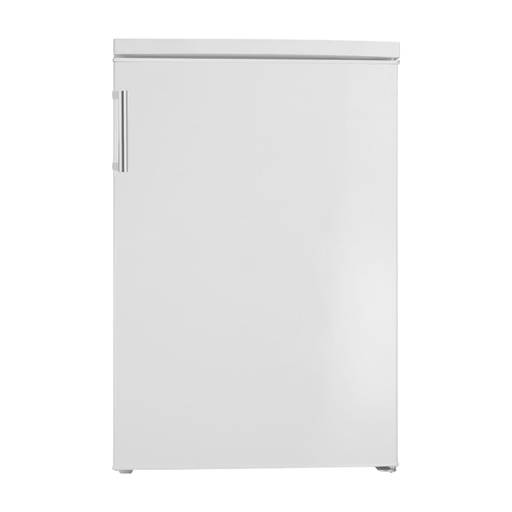
Why it suits this profile: This tabletop model combines a spacious fridge section with a freezer compartment, making it suitable for a small household, studio flat or office.
The split between 95 litres of fridge space and 14 litres of freezer space is stated clearly. The dimensions and noise level can also be checked.
133 litres in total, energy class C, 89 kWh per year, 37 dB and a reversible door according to the product description.
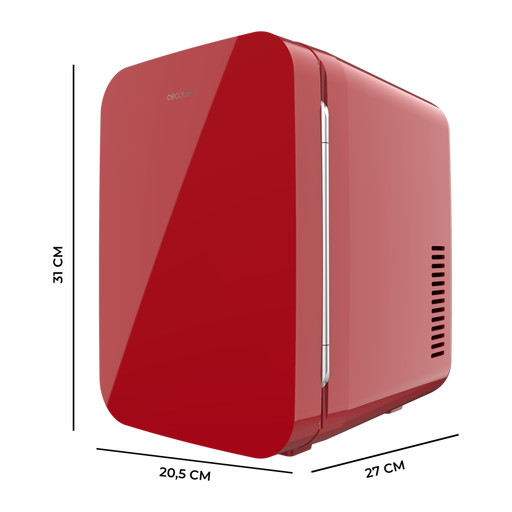
Why it suits this profile: This portable model is intended for use in a car, caravan, campsite, bedroom or office and, according to the product details, works with 12V and 220V.
The capacity is 6 litres and the model has no freezer compartment. It is therefore clear from the outset that this is a drinks cooler rather than a full-size food fridge.
Thermoelectric cooling, adjustable temperature, one shelf and a stated range of 5 to 65 °C for cooling and warming.
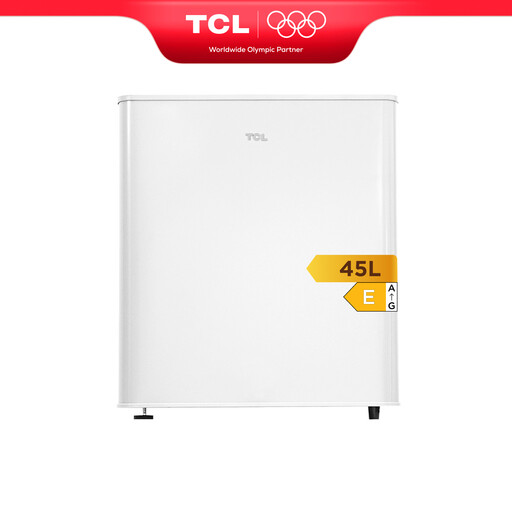
Why it suits this profile: The 45-litre capacity suits anyone with limited space who still wants a separate small freezer compartment for ice or a limited amount of frozen food.
The total capacity is split into 42 litres of fridge space and 3 litres of freezer space. The external dimensions of 449 × 485 × 512 mm are also stated.
45 litres in total, energy class E, mechanical controls, glass shelf and a stated noise level of 40 dB.
We have compiled a complete, up-to-date list of products that fully meet these strict selection criteria and the applicable European safety regulations.
It can be, provided that the noise level, dimensions and ventilation space are suitable for the room. Models rated at around 37 to 40 dB are often chosen for bedrooms, but a fridge will still be audible while cooling. Place the appliance securely and not directly next to a bed or thin wall.
Consumption varies by model. For example, the product details for the tabletop models discussed state annual consumption of between 72 and 110 kWh. Actual consumption depends on the ambient temperature, temperature setting, how often the door is opened and how full the fridge is. Always compare the annual kWh figure on the energy label.
Its lifespan depends on build quality, ventilation, transport and maintenance. Keep the back clear, clean the inside regularly and follow the defrosting instructions. For a fridge with a freezer compartment, manual defrosting is necessary when ice builds up. When buying, also check the statutory guarantee and any additional manufacturer's warranty.
