
Vandaag of morgen in huis

Kwaliteit gegarandeerd

Welkomstaanbiedingen ontgrendelen: GRATIS bezorging | Tot 80% korting | Gratis 30 dagen JoyPlus-proefperiode
Download de app
A mini fridge may seem straightforward to choose, but there is a big difference between a tabletop model for everyday use and a portable fridge for when you are out and about. A compact appliance that fits in a student room may not be suitable for a car or motorhome. So do not only consider capacity and price, but also the cooling technology, power supply, ventilation and available space.
Not every electric cool box reaches the same temperature as a compressor fridge. A thermoelectric system is often suitable for drinks and snacks, but its cooling performance is more closely affected by the ambient temperature. A compressor fridge can generally also offer a freezer function, but is usually heavier and more expensive.
So check whether the product only cools and heats, or whether it can genuinely freeze. A range such as 5 °C to 65 °C does not automatically mean that the appliance can store food safely for extended periods.
The stated capacity in litres does not always correspond to the usable space. A fridge with a freezer compartment, door shelves and a salad drawer has less open cooling space than the total volume might suggest. When looking at a fridge with freezer compartment, check the separate capacities of the fridge and freezer sections.
Also measure the space where the appliance will be placed. Check the height, width, depth, door opening and room required for ventilation. A model may be technically compact, but still not fit under a worktop or inside a motorhome cupboard.
A mini fridge for a car often uses a 12V connection. However, this says nothing about protection for the vehicle battery. Some compressor fridges have adjustable battery protection; basic cool boxes may not. Also check whether a 220–240V adapter is included or needs to be purchased separately.
For a car fridge, picnic or short car journey, a thermoelectric cool box may be sufficient. These models are usually lightweight and sometimes also offer a warming function. The actual cooling temperature may depend on the ambient temperature, according to the product description.
A compressor cool box is better suited to situations where you want a more stable temperature range or freezing capability. For example, the BINGI 22L Portable Car Fridge Freezer states an adjustable range of -18 °C to 15 °C. According to the product information, this model operates on 12/24V DC and 100–240V AC.
Pay attention to the ratio between fridge and freezer space. According to the product specifications, the Wiggo WL-TT82D(B) has a total net capacity of 126 litres, including 17 litres of freezer space. The Severin TKS 8847 states 107 litres of fridge space and 13 litres of freezer space.
Compare the annual energy consumption of household models and the stated power consumption of portable models. The Wiggo is listed at 72 kWh per year and energy class D. The Severin TKS 8847 states energy class C and 87 kWh per year. Lower consumption can be beneficial for continuous use, but always compare products using the same measurement method and within the same product category.
Noise levels are relevant for a bedroom, office or motorhome. The Wiggo is listed at 39 dB and the Severin at 37 dB. Portable compressor models are often listed at around 40 to 42 dB. Position every appliance with sufficient clear space around the ventilation openings. The product information for several models recommends approximately 10 cm of clearance around the ventilation.
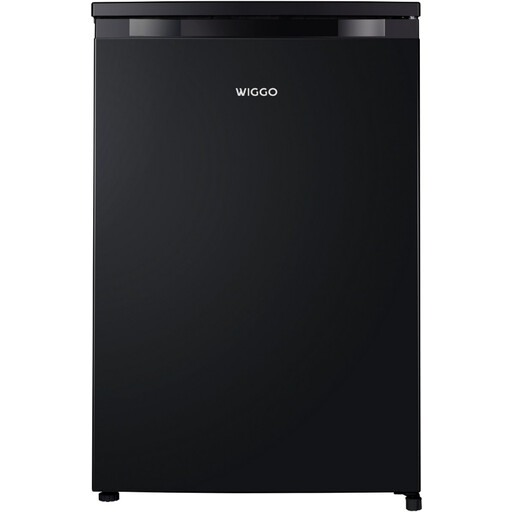
Why it suits this profile: This freestanding tabletop model offers plenty of storage space for a student room, office, small kitchen or as an extra fridge at home.
The fridge and freezer capacities are listed separately. The dimensions, noise level and energy consumption are also available for comparison before purchase.
126-litre net capacity, 17-litre freezer compartment, reversible door, LED lighting and mechanical temperature control.
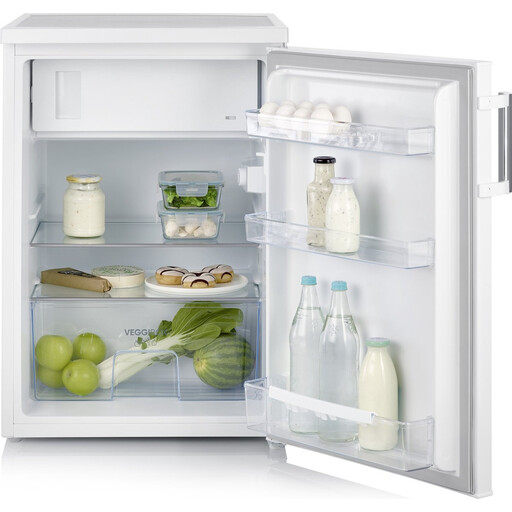
Why it suits this profile: A freestanding fridge with freezer compartment for anyone who values organisation, low noise and energy efficiency for everyday use.
The specifications distinguish between 107 litres of fridge space and 13 litres of freezer space, rather than showing only a rounded total capacity.
Energy class C, 37 dB, LED lighting, salad drawer and a freezing capacity of 2 kg per 24 hours.
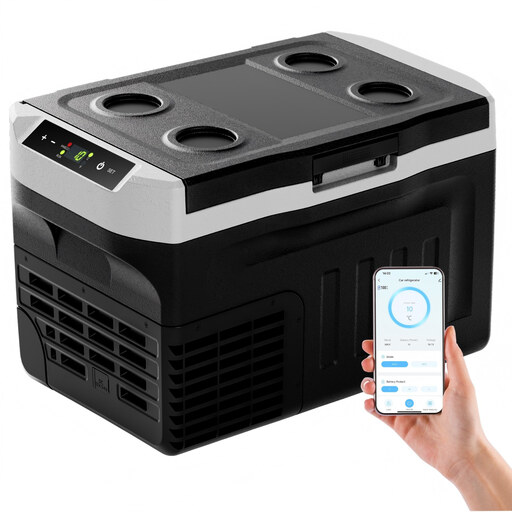
Why it suits this profile: This model is aimed at travellers, motorhome users, lorry drivers and anyone who wants to use the same fridge at home and on the go.
The stated 12/24V DC and 220–240V AC power supply means you are not limited to a car connection. The battery protection can be set to three different levels.
21-litre capacity, compressor range of -20 °C to 20 °C, app control, ECO and MAX modes, and a stated noise level of 42 dB.
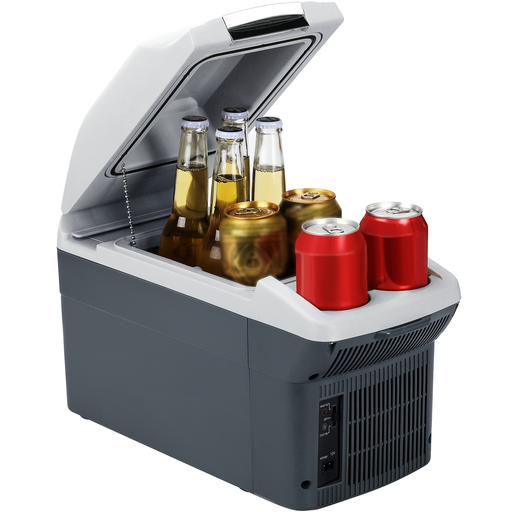
Why it suits this profile: Handy for short car journeys, picnics, camping and travel when a small size matters more than a freezer compartment.
The product description makes it clear that this is a 12V cooling and warming model and that a 220–240V adapter is optional. Check this before planning to use it at home.
9-litre capacity, cooling and warming function, seatbelt slot, carrying strap and approximately 40 dB according to the product information.
We have put together a complete, up-to-date list of products that fully meet these strict selection criteria and the applicable European safety regulations.
Place a household model on a level, stable surface and keep the ventilation clear. After transport, a fridge should be left upright for a while before you plug it in, in accordance with the product instructions. With a compressor fridge, this may take several hours; always follow the manual.
When using a 12V fridge, use the supplied cable and check that the connection is suitable for the vehicle. Do not leave a portable fridge outside in the rain or exposed to direct splashes of water for extended periods. In a motorhome, boat or car, stable positioning is important, particularly while driving or sailing.
This depends on the size, energy label, ambient temperature and how it is used. A household model is usually assessed based on annual consumption in kWh. A portable compressor fridge often states its power consumption, for example approximately 45 W according to certain product descriptions. Actual consumption may vary depending on the temperature setting and whether ECO or MAX mode is selected.
Yes, provided the model is suitable for 12V DC or 24V DC and matches the vehicle’s connection. Also check the battery protection. A basic car cool box may continue drawing power when the engine is switched off. A model with automatic low-voltage shut-off reduces this risk, but check the settings and manual.
Its lifespan depends on build quality, ventilation, transport and maintenance. Keep the ventilation openings clean, avoid unnecessarily tilting a compressor model and clean the seal regularly. A household fridge is designed to remain in one place; a portable fridge is designed to be moved, but it still needs to be transported securely. Also check the statutory guarantee and any additional terms and conditions listed with the product.
