
Builder filming with both hands
You want small parts and moving hands to remain visible while you assemble your model. A movable light that you can soften can help keep each building step clearly in shot.


For a miniature-building lesson at a small table, keeping the light out of shot and providing enough soft illumination for both your hands and your model matter more than simply choosing a high light output. A compact rechargeable light takes up less room, a panel with a diffuser can illuminate a wider work area, and a directional table light suits one small building zone. Always check the mounting, power supply and image in a test recording.
You want small parts and moving hands to remain visible while you assemble your model. A movable light that you can soften can help keep each building step clearly in shot.
Your camera, parts and tools already take up space. Look for a light that can be mounted out of shot and away from your work area, then put away after filming.
If you film at different times or next to a window, adjustable white light and a suitable camera white balance can help keep colours looking consistent.
When filming a miniature-building lesson, visibility of the action, available table space, colour consistency and a stable recording each matter in their own way.
| What to consider | What to look for | Who should prioritise this? |
|---|---|---|
| Visible parts and hands | Test a diffuser or larger light panel while moving your hands through the full action. Check that both parts and hands remain visible. | I want to show each building step without my hands obscuring the model; around 36% of consumers put visibility of the action first. |
| Space and mounting | Check the dimensions, compatible stand or connection, and exactly what is included in the package you choose. | With little room beside my camera and tools, I want to position the light away from my work area; around 29% of consumers prioritise a clear table and suitable mounting. |
| Colour of the parts | Check whether the colour temperature is adjustable and set your camera’s white balance to suit the light in the room. | When I film beside a window or in changing light, I want small parts to retain recognisable colours; around 21% of consumers put colour consistency first. |
| Power and a stable image | Check whether the version you choose runs on a battery or mains power, and record a test clip using your camera settings. | If I don’t want a lesson interrupted by a flat battery or visible flicker, I pay attention to both the power supply and camera settings; around 14% of consumers prioritise uninterrupted recording. |
Suitable if: you clear the table after each lesson or have little room for a lamp stand. Ulanzi lists a built-in battery and a 1/4"-20 threaded connection for the VL81.
Trade-off: a small light panel won’t necessarily illuminate the whole worktop, so test the edges of your building area too and check what support you’ll need.
Suitable if: your hands and parts move across a larger area of the table. NEEWER lists a diffuser and adjustable white light for the NL660.
Trade-off: according to NEEWER, the panel measures 280 × 265 × 48 mm. The version without a stand does not include one, and NP-F batteries are not included.
Suitable if: you mainly want to light one small building area and have room for a suitable diffuser. Godox positions the LC30Bi for tabletop filming.
Trade-off: the light modifier and mounting both affect how wide and soft the light is. Check what’s in the kit, as a battery-powered set-up may require separate NP-F970 batteries.
A connection on the light doesn’t mean a support is included. For example, the NEEWER NL660 is available with or without a stand.
Check what’s included in the exact version you’ve chosen, and decide in advance where the light, support, camera and your hands will go.
A directional light source and a wider panel distribute light differently. Positioning and hand movements also affect what’s visible during each building step.
Record a test clip of a complete building action and review it from the camera’s point of view.
Elgato says the Key Light Mini has been discontinued. Older product descriptions therefore don’t necessarily reflect current availability.
Check the model name and product page for the version you’re considering.
Ulanzi positions the VL81 as a small, rechargeable light for a movable tabletop set-up.
The NEEWER NL660 is a larger bi-colour panel for makers who want to light a wider work area.
Godox designs its LC30D and LC30Bi range for tabletop filming; the LC30Bi has an adjustable colour temperature.
The SmallRig RM75 is a small, rechargeable light that SmallRig says can work particularly well as a local fill light.
Elgato describes the Key Light as an adjustable desk light for a fixed set-up with app control.
This Joybuy selection includes compact or movable video lights; one model is a ring light that clips onto a smartphone. Compare the mounting, power supply and adjustment options for each version with your tabletop set-up.
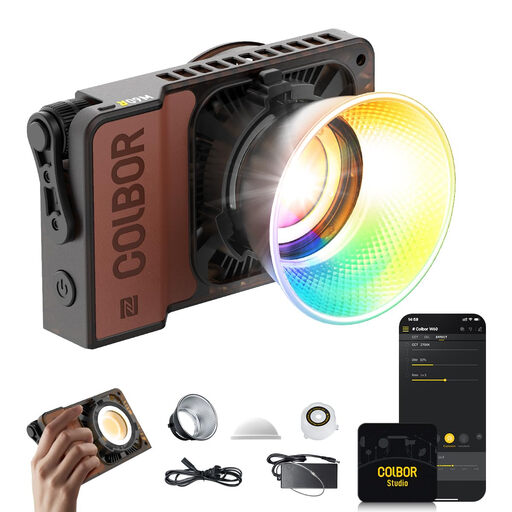 No image available
This portable version may suit you if you’re looking for a movable light with adjustable settings.
The product description lists RGB, a colour temperature of 2700–6500 K and dimming from 0–100%; the product name specifies 60 W and 345 g.
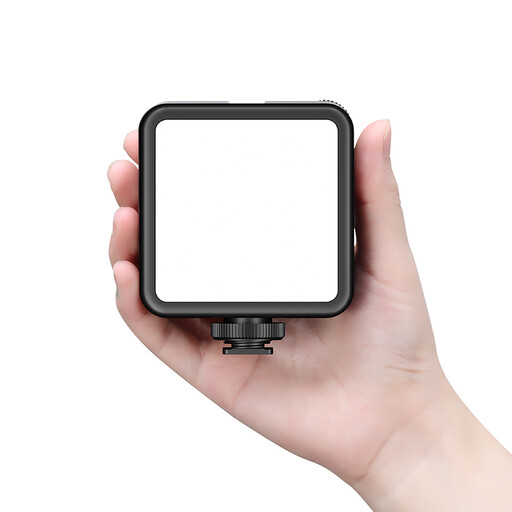 No image available
The rechargeable VL81 may suit you if you’re looking for a compact light for a movable set-up.
The product information warns against looking directly at the LED panel from close range and advises keeping the connections dry.
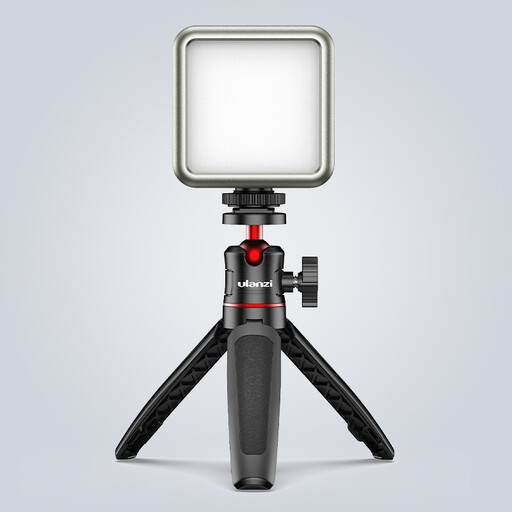 No image available
This compact light may suit you if you’re looking for a movable light source and the described magnetic mounting works with your set-up.
The product name lists 2500–9500 K, dimming, a 2000 mAh battery and a rear magnet. The description recommends charging with a standard 5V adapter and warns against moisture and shining the light directly into your eyes from close range.
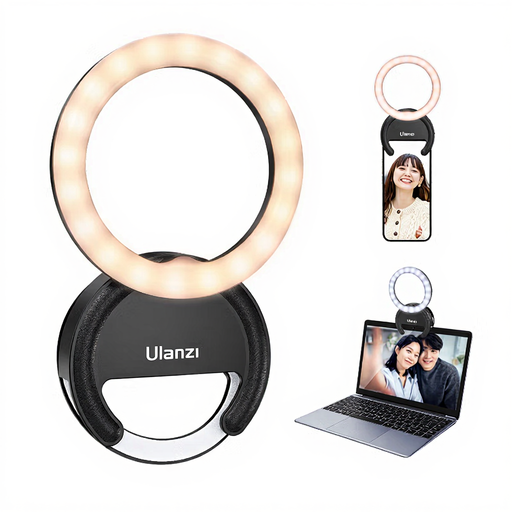 No image available
This ring light may suit you if you want to attach the light to a smartphone; the described mounting is a smartphone clamp.
The product name lists three colour temperatures from 3000–7000 K and five brightness levels. Take the phone attachment into account when choosing your camera angle.
 No image available
This small fill light may suit you if you’re looking for a movable light source with suitable mounting.
The product name lists a 500 mAh battery; the description specifies a magnetic base and a 1/4-inch thread.
Position the light so your model remains visible while you carry out a building action with both hands. Try a diffuser or a different light position, then review a complete test clip; softer light can make shadows less harsh.
A battery makes it easier to move the light, while mains power means your recording doesn’t rely solely on the battery charge. Check the package version you choose: the NEEWER NL660 comes with a mains adapter, but NP-F batteries are not included.
Record a test clip using your own light and camera settings. Nikon explains that flicker can result from a mismatch between camera settings and the light source; Canon Europe explains that the colour temperature of the light affects how the camera sees colours. Set the white balance to suit the light in the scene.
Check whether the version you choose includes the support, diffuser, battery and power supply you need. According to Business.gov.nl, for a standard online consumer purchase, the cooling-off period is generally 14 days from the day after you receive the goods; exceptions may apply. Your statutory rights relating to conformity are separate from any commercial guarantee.
No: CE is not an independent quality mark. Electrical equipment offered for sale in the Netherlands must comply with the applicable European product rules; the requirements depend in part on the version. Business.gov.nl explains that CE marking and an EU declaration of conformity are required where the rules stipulate them.