
Vandaag of morgen in huis

Kwaliteit gegarandeerd

Welkomstaanbiedingen ontgrendelen: GRATIS bezorging | Tot 80% korting | Gratis 30 dagen JoyPlus-proefperiode
Download de app
A mini trampoline for home can be handy for short cardio sessions, gentle jumping exercises or a quick burst of indoor activity. However, not every model will suit your needs at first glance. A low price tells you little about weight capacity, stability or how easy it is to store.
Look out for these three common pitfalls:
Below, you’ll find out which specifications to check before buying a fitness trampoline or indoor trampoline.
Always check the maximum user weight and compare it with the weight of the person who’ll be using the trampoline. Don’t leave only a small margin: clothing, movement and dynamic loads can put extra strain on the frame and suspension.
A trampoline for children with a weight capacity of 25 kg isn’t suitable for adults. A model rated for 70 or 80 kg may suit lighter adults, but offers less capacity than one rated for 120 kg or more. Rebounder trampolines with higher stated weight capacities are also available for more intensive use.
Also make sure there is:
The suspension system affects how the trampoline feels to use and how much maintenance it needs.
A trampoline with elastic bands won’t necessarily be quiet in every home. The floor, footwear, surface and intensity of your jumps all affect the noise level. Use the trampoline on a flat, stable, non-slip floor.
A 36-inch diameter takes up less space, but also gives you a smaller jumping surface. Models measuring 40, 42 or 48 inches offer more room to move, but need more floor space.
A trampoline with a handlebar can be useful for beginners or exercises where you’d like extra support. Check:
A foldable mini trampoline is practical for flats and home offices, but only fold it according to the instructions. After unfolding it, check that all the connections are fully secured.

Why it suits this user: This foldable model has an adjustable handlebar, a diameter of 40 inches and a stated weight capacity of 70 kg. It’s designed for light home workouts in a limited space.
The product description lists 36 steel springs, a foam edge and an adjustable handlebar. Before buying, check that the 70 kg capacity is suitable for the user.
Foldable, pre-assembled and fitted with an adjustable handlebar.
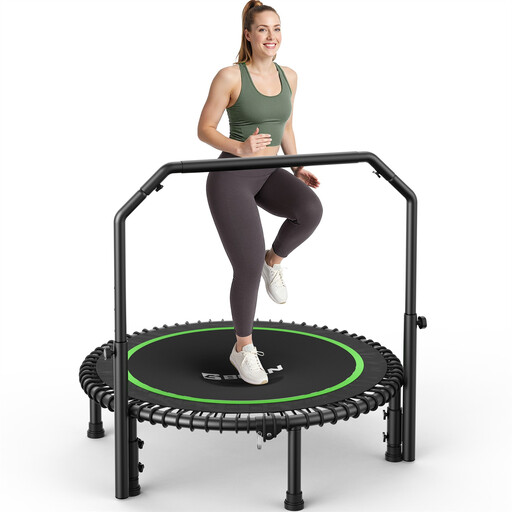
Why it suits this user: The product information lists a steel frame, bungee cords, an adjustable handlebar and a stated weight capacity of 204 kg. This makes it an interesting option for adults comparing models with generous specifications.
The stated weight capacity is clearly listed. Before use, check that the bungee cords and handlebar are securely attached.
102 cm size, adjustable handlebar and bungee cords, according to the product description.
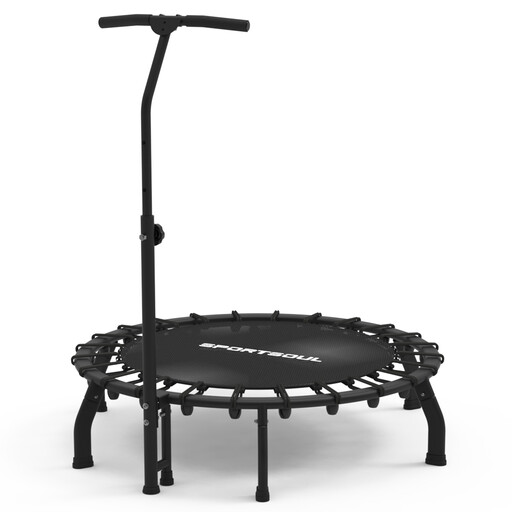
Why it suits this user: This model has a diameter of 42 inches and a stated weight capacity of 120 kg. The product page lists cardio, rehabilitation and family fitness as suitable uses; check with a healthcare professional before doing rehabilitation exercises.
The larger jumping surface and clearly stated weight capacity make it easier to compare with models that have limited specifications.
42 inches, 120 kg weight capacity and a suspension system with elastic bands, according to the product information.
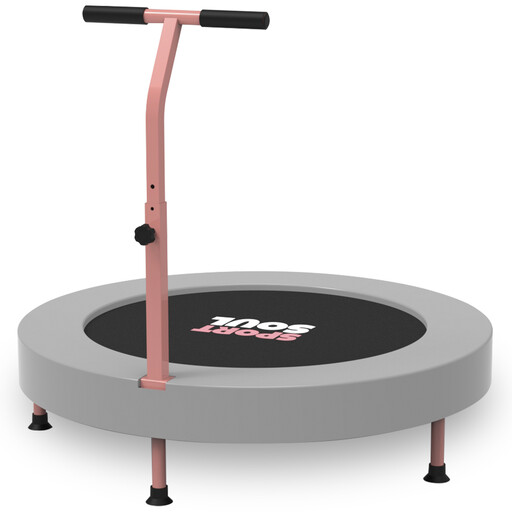
Why it suits this user: This compact trampoline has a stated weight capacity of 25 kg, 24 elastic bands and an adjustable T-shaped handlebar. It’s designed for children and lighter users.
The low weight capacity is clearly stated. Don’t use this model for adults, and always supervise children.
36 inches, foldable design and elastic bands, according to the product description.
Set up your mini trampoline for home on a flat, stable surface, with plenty of space between it and walls, furniture and other obstacles. Before each session, check the frame, jumping mat, springs or elastic bands, and foam edge. Stop using it straight away if you find any damage.
Only one person should use the trampoline at a time. Children should use it only under adult supervision. Clean the frame with a soft, slightly damp cloth and store the trampoline indoors. If you have any health concerns, are recovering from an injury or are undergoing treatment, follow the advice of a doctor or physiotherapist.
We’ve put together a complete, up-to-date list of products that meet these strict selection criteria and the applicable European safety regulations.
That depends on the frame, suspension system and stated weight capacity. Check the components regularly and only use the trampoline within its specified limits. Daily use means you’ll need to pay extra attention to wear on the springs, elastic bands and jumping mat.
A model with elastic bands or bungee cords may be quieter than one with steel springs, according to the product description. In practice, the floor, surface and intensity of your jumps also make a difference. A protective mat underneath the trampoline can help reduce impact noise.
There’s no set lifespan. How often it’s used, the load it carries, how it’s stored and how well it’s maintained all affect how long it remains usable. Stop using the trampoline if the frame, mat, springs, elastic bands or handlebar are damaged.
