
Layout designer with their own screen
You already have a screen and want to bring recipes, photos and text together in a dedicated, compact workspace. Check that the computer connects to your screen and what other input devices you might need.


If you already have a suitable screen, start by looking at a compact desktop with ports and software to suit your workspace. If you need a screen too, compare a separate mini PC with an all-in-one, which has a screen built in. Check the memory, storage, included accessories and requirements of your layout software for the exact configuration you’re considering. A compact case or high-resolution screen alone doesn’t make a complete workspace.
You already have a screen and want to bring recipes, photos and text together in a dedicated, compact workspace. Check that the computer connects to your screen and what other input devices you might need.
You’re starting without a complete workspace and want to weigh up a separate mini PC with a separate screen against a computer with a built-in screen.
You work with lots of images and want to make sure you have enough storage, a screen suited to your work and a separate back-up of your book files.
Choose this option if: you already have a suitable screen or want to choose one separately.
Bear in mind: the screen and any input devices are separate from the computer. Lenovo says that the screen, keyboard and mouse are optional with the ThinkCentre configuration reviewed.
Choose this option if: you don’t have a screen yet and want to consider a computer and screen as one fixed set-up. According to Apple, the iMac M4 reviewed has a built-in 24-inch 4.5K screen.
Bear in mind: you choose the built-in screen as part of the computer, so consider the screen size and connections too.
First, work out what you already have and which layout software you want to use. Then compare the complete set-up and the specifications of the exact configuration.
| What to consider | What should you check? | Who is this important for? |
|---|---|---|
| Layout software and memory | Choose your software and version first. For InDesign 21.3 and later on Windows, Adobe specifies 8 GB RAM as the minimum and recommends 16 GB. Also check the supported Windows version and processor requirements. | If I want to work smoothly on pages and photos, I’ll check the requirements of my own software first. Around 33% of consumers prioritise software compatibility. |
| Screen and complete workspace | Make a list of your screen, keyboard and mouse, then check the display connections and what’s included with the configuration you’ve chosen. | If I don’t have a screen or input devices yet, I want to know what I’ll need for a complete set-up. Around 25% of consumers make this their priority. |
| Photos and back-up | Compare the storage in the exact configuration with the files you have, and plan a separate back-up that you can test restoring from. According to Microsoft Support, Windows File History can save copies to an external drive or network location. | If my cookbook photos and project files are important, I want to be able to save them and restore them. Around 25% of consumers prioritise storage and back-up. |
| Desk space | Measure the space available and decide where the computer, screen and cables will go. A compact computer case doesn’t replace a separate screen. | In a small student room, I want to be able to fit the complete workspace on my desk. Around 17% of consumers start by considering the space available. |
A mini PC and an all-in-one don’t automatically include the same components. The screen, keyboard and mouse are optional with the Lenovo configuration reviewed; the iMac reviewed has a built-in screen.
Check what you already have and compare it with what else you’ll need for a complete workspace.
Files on the same computer aren’t a separate copy. Microsoft Support explains how File History copies can be saved to an external drive or network location.
Decide which project folders you want to copy and test that you can restore a file.
Microsoft says that standard support for Windows 10 ended on 14 October 2025. Microsoft also describes separate options for extended security updates.
Check current support for the exact version of Windows before choosing an older or refurbished computer.
You may need an upgrade or another supported solution.
The options reviewed range from a Mac mini with a separate screen to an iMac with a built-in screen.
The ThinkCentre neo 50q Gen 5 is a compact Windows desktop for which you choose the screen separately.
The Pro Mini 400 G9 is a range of compact Windows desktops; check the features of each configuration.
The ExpertCenter PN55 is a range of compact desktops that can be configured to suit your needs.
This selection includes mini PCs and Mac minis with a separate screen, as well as all-in-one desktops with a built-in screen.
 No image available
An option to consider if you want a compact desktop and prefer to choose your screen separately.
The product description lists a 12-core CPU, 24 GB of memory and a 512 GB SSD.
An external screen is required.
 No image available
An option to consider if you’re looking for a Windows mini PC with a separate screen.
The product name lists an AMD Ryzen 4300U, Windows 11 Pro, 16 GB LPDDR4 memory and a 512 GB SSD.
Listed display connections are HDMI 2.0, DisplayPort 1.4 and USB-C.
 No image available
An option to consider if you want a mini PC with a separate screen and the listed connections suit your set-up.
The product description lists 24 GB LPDDR5 memory, a 512 GB SSD, USB 4.0 and HDMI 2.1.
The description says it supports output to three screens.
 No image available
An option to consider if you want to combine the computer and screen in one fixed desktop set-up.
The product description lists a 27-inch QHD IPS screen with a 120 Hz refresh rate, 16 GB of memory and a 1 TB SSD.
The description also lists 99% sRGB coverage and an included wireless keyboard and mouse set.
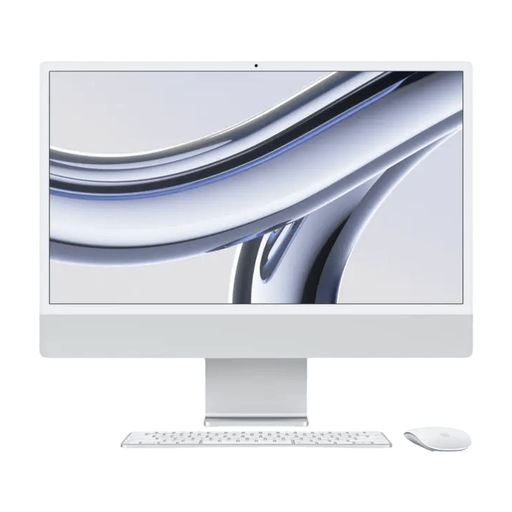 No image available
An option to consider if you want a desktop with a built-in screen.
The product description lists an M3 chip, 16 GB of memory, a 512 GB SSD and a built-in 24-inch 4.5K screen.
No, it isn’t a general requirement. For InDesign 21.3 and later on Windows, Adobe specifies 8 GB as the minimum and recommends 16 GB. Check the requirements for your own software and version.
Ask your printer for its submission specifications first. Adobe explains how to set up bleed in InDesign and export a PDF using the preset recommended by your printer. Your choice of computer doesn’t determine these settings.
Keep a separate copy that you can restore, as well as the files on your computer. Microsoft Support explains how File History in Windows can save copies to an external drive or network location. Check that your project folders are included too.
No. The Dutch government says there’s no fixed statutory warranty period in the Netherlands. What you can expect from a product depends on factors including the product itself and the sales information. If a product is faulty, the retailer is your point of contact.
According to the Dutch government, in many cases you have a 14-day cooling-off period when you buy from a business at a distance. Not every transaction counts as a distance sale, so check which terms apply to your purchase.