
Developers working on large builds
Start with your project’s requirements for memory, storage and platform. Google’s AOSP requirements are an example for that specific build environment, not a general minimum specification for software development.


Start with the requirements of your project, then compare the processor platform, memory, storage and ports of the exact model. A compact business PC may suit an x86 build and a shared workspace, while a Mac mini makes sense for Xcode development. Larger builds may need considerably more memory and free storage. Google’s AOSP requirements are specific to that project and do not indicate how these PCs compare for compile speed.
Start with your project’s requirements for memory, storage and platform. Google’s AOSP requirements are an example for that specific build environment, not a general minimum specification for software development.
Check that the exact PC can connect to the monitors and peripherals available. A compact case alone won’t tell you which ports that model has.
If you use Xcode, you could consider a Mac mini and check that your chosen configuration meets your project requirements and storage needs.
Suitable if: your project runs on the chosen x86 platform and you’re looking for a small PC for your existing workspace.
Consider: check the exact model; product ranges can vary in memory, storage and operating system.
Suitable if: you use Xcode and your project is compatible with macOS and your chosen configuration.
Consider: check compatibility with other build environments. For example, Google’s AOSP requirements specify Linux on a 64-bit x86 system.
Suitable if: your project documentation confirms that you need substantial memory and storage.
Consider: the HP Z2 Mini G1i C69BZEA#ABH model comes with Windows 11 Pro; separately check whether your preferred build environment will work on it.
| What to consider | What should you check? | Who is this important for? |
|---|---|---|
| Build environment | Check the processor architecture and operating system required in your project documentation; compare your own build benchmarks where available. | If I want to know whether my toolchain will run on the PC, project compatibility comes first. Around 36% of consumers prioritise a compatible build environment. |
| Memory and storage | Compare the installed RAM and available SSD space with your project’s requirements. Remember to allow for the operating system and development tools. | For a large project, I want enough room for source code and build files. Around 29% of consumers prioritise memory capacity and build storage. |
| Ports and placement | Compare the number and types of display, USB and network ports with the equipment at your desk; also check how much space is available. | If I’m connecting the PC at a shared workspace, I want to use my monitors and peripherals without any surprises. Around 21% of consumers prioritise placement and connectivity. |
| Development toolchain | Check that the required development environment works with the operating system and configuration. For a Mac mini, also compare the available memory and SSD options. | For projects using Xcode, I want to choose a configuration suited to developing for Apple platforms. Around 14% of consumers put that specific toolchain first. |
A range-wide specification doesn’t automatically tell you how much memory or storage the PC on offer has. ASUS lists up to 96 GB for the NUC 15 Pro range, but individual models can vary.
Make a note of the full model or product number, then check the installed RAM, SSD and operating system of the exact listing.
A higher memory capacity doesn’t prove that a PC will compile your project faster. For the AOSP build consulted, Google specifies at least 64 GB RAM and 400 GB of free disk space; these requirements don’t automatically apply to other projects.
Use your project documentation and, where available, benchmarks from your own build to guide your decision.
The stated SSD capacity isn’t the same as the space left after the operating system, development tools and existing files have been installed or saved.
Check how much space will be available. Google specifies 400 GB of free space for the AOSP build, not just an SSD with that nominal capacity.
The ThinkCentre M75q Gen 5 Tiny is a compact business PC range available in several configurations.
The NUC 15 Pro is a compact PC range worth comparing if configurability is a factor.
The Mac mini is a relevant option if Xcode and Apple platform development are central to your decision.
The Z2 Mini G1i is a compact workstation range for buyers who need a higher-capacity configuration.
The OptiPlex Micro is a compact business desktop range worth comparing for mounting options and support.
These PCs suit compact workspaces and software development. Check whether each model’s configuration works with your project and toolchain.
 Image unavailable
A compact option to consider for development with Apple platform tools. Check that your project is compatible with macOS and this configuration.
Apple M6 chip with 12-core CPU and 12-core GPU, 24 GB memory and 512 GB SSD. For the AOSP build environment, Google specifies Linux on a 64-bit x86 system.
 Image unavailable
A compact mini desktop to compare if you’re looking for a small PC for a shared desk. Check the configuration against your own build requirements.
16 GB LPDDR5X, 512 GB PCIe 4.0 SSD, Intel Graphics, Wi-Fi 7 and Windows 11 Home. The product title also mentions a Seashell finish.
 Image unavailable
A compact desktop to consider for a shared workspace. Check the full specification and ports before comparing it with your existing equipment.
The product information lists a 1-litre case, support for up to three monitors and PCIe 4.0 NVMe storage.
 Image unavailable
A compact PC to compare if you want to connect several monitors. Check that the specifications suit your project and peripherals.
6-core/12-thread processor, 24 GB LPDDR5 RAM, 512 GB PCIe 4.0 SSD and support for output to three monitors. The title lists USB 4.0, HDMI 2.1 and 2.5G Ethernet.
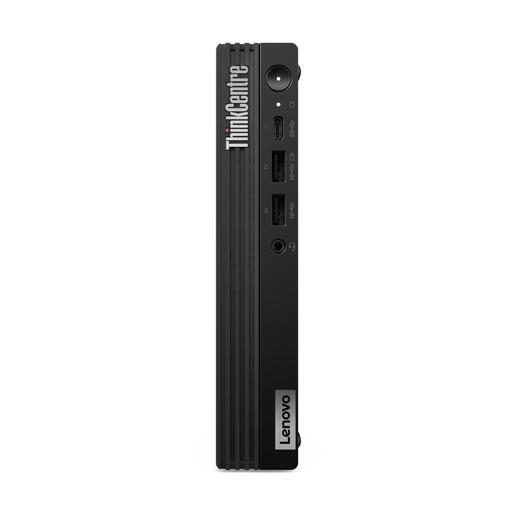 Image unavailable
A compact ThinkCentre to compare for a small workspace. Check that the model meets your project requirements.
16 GB DDR5-SDRAM, 512 GB SSD and Windows 11 Pro. The product description states that the power adapter must be purchased separately.
No, that requirement doesn’t apply to every project. For the AOSP build environment consulted, Google specifies at least 64 GB RAM and 400 GB of free disk space. Check your own project’s build requirements before choosing a memory capacity.
Compare the ports on the exact PC with the monitors and peripherals available, and decide in advance where the PC and cables will go. Lenovo says the ThinkCentre M75q Gen 5 Tiny range supports up to three monitors, but check that the ports suit your equipment.
Not without checking the toolchain and project requirements. Apple describes Xcode as a development environment for Apple platforms; for the AOSP build environment consulted, Google specifies a 64-bit x86 system with Linux.
According to the Dutch government, as a consumer you’re entitled to a product that works as it should, and the seller must resolve any problems. A manufacturer’s guarantee or additional cover is separate from your statutory rights. If you’re offered an extra service, check what additional rights it actually provides.
According to the Dutch government, online distance purchases from a business come with a 14-day cooling-off period. Purchases made online from a private seller aren’t covered by these rules, so check who the seller is and which terms apply to your purchase.