Who is this guide for?

Mixer with existing audio equipment

You already have a DAW or audio interface and want to avoid software, drivers or connections interrupting your workflow. Check the requirements of your own software and interface. For example, Focusrite describes separate audio support for Windows and macOS for the Scarlett 16i16.

Mixer working on a large choir project

You’re working with multiple recording tracks or effects and want to assess the full configuration, not just the processor name. Match the configuration you choose to your own DAW and project; the system requirements Steinberg publishes for Cubase apply specifically to that software.

Choir recording manager

You want to store and share source files, project versions and the final mix. Factor the storage you need and a separate backup into your workflow. Microsoft explains that folders outside the default libraries can be added to File History separately.

What should you look for when choosing?

Ready-to-use Mac mini

A good fit if: your DAW, plug-ins and interface work with the macOS version you choose and your workflow doesn’t depend on Windows.

Keep in mind: Apple Netherlands lists 16 GB of memory and a 256 GB SSD for the M6 base configuration reviewed. Consider whether that storage will suit your software and choir files.

Configurable Windows mini PC

A good fit if: your existing DAW or interface driver relies on Windows and you want to compare configurations based on their actual specifications.

Keep in mind: Lenovo lists support for up to 64 GB of memory and two M.2 SSDs for the ThinkCentre M75q Gen 5 product line. These are not specifications for every configuration on sale.

Windows barebone kit

A good fit if: you want to choose and install the memory, storage and operating system yourself.

Keep in mind: ASUS distinguishes NUC 14 Pro kits without a pre-installed operating system. Check the full model number and factor in the components you’ll need and the time required for installation.

What to consider What should you check? Who is this important for?
DAW and interface compatibility Check the exact DAW version, plug-ins, driver, supported operating systems and connection required. If you want to keep using your existing software and interface, start by checking their support for the system you’ve chosen. Around 36% of consumers say compatibility is their top buying priority.
Processing power and memory Compare the CPU and memory configuration of the model on offer with the requirements of your DAW, effects and session. If you work with multiple tracks or effects, you’ll want to match the full configuration to your session. Around 29% of consumers prioritise processing power for a more complex mix.
Storage and backup Work out how much space you need for source material, project versions and exports; also plan a restorable copy in a separate location. If you want to keep or share recording files and versions, look beyond the space needed for the DAW alone. Around 21% of consumers give storage and file management top priority.
Connections and workspace Check the number and type of ports on the exact configuration and how your interface and peripherals will connect. For a compact setup, you’ll want to know whether your interface and other equipment can all connect at the same time. Around 14% of consumers prioritise their workspace and connections.

Common buying mistakes

  • Comparing a barebone kit as if it’s ready to use straight away

    A kit may not include all the components or a pre-installed operating system. As a result, the final configuration may differ from that of a complete mini PC.

    Check the full model number and which components are included. Allow for installation and any components or operating system you may need to buy.

  • Assuming a 256 GB SSD will automatically be enough

    According to Apple Netherlands, the Mac mini base configuration reviewed has a 256 GB SSD. Whether that’s enough depends on your software, source material and project versions.

    Work out how much space your files will take up and decide how you’ll keep a separate, restorable copy.

    A separate backup needs an additional storage location, such as an external drive or network location.

  • Expecting a faster PC to solve every audio problem

    Audio dropouts can also be linked to the interface, driver, cable, port or settings. The processor isn’t the only possible cause.

    Check the DAW, driver, interface, cable and connection before blaming the processor. Focusrite lists the buffer setting and USB connection as things to investigate.

Brands to compare

Apple

The Mac mini is a macOS option to consider if your software and equipment work with the environment you choose.

  • Apple Netherlands lists 16 GB of memory and a 256 GB SSD for the M6 base configuration reviewed.
  • Consider whether that storage will leave enough room for your project files and working copies as well as your software; these specifications don’t indicate how it will perform on a choir project.

Lenovo

The ThinkCentre M75q Gen 5 is a Windows product line with configurations that can be compared individually.

  • Lenovo lists support for up to 64 GB of memory and two M.2 SSDs for the product line.
  • Lenovo notes that some configurations aren’t available in every region, so check the specifications of the model you’re looking at.

ASUS

The NUC 14 Pro includes mini PC and kit configurations, offering different setup options.

  • ASUS specifications distinguish configurations with Windows 11 Home from kits without a pre-installed operating system.
  • The processor, memory and storage vary by model, so check the full model number before comparing configurations.

Mini PCs at Joybuy

These mini PC configurations are options to consider for mixing a choir recording. For each model, check that the software, storage, connections and included components suit your workflow.

ASUS Ascent GX10 GX10-GG0003BN GB10 mini PC

ASUS Ascent GX10 GX10-GG0003BN GB10, 128 GB LPDDR5x, 1 TB SSD

Assess this configuration against your DAW’s requirements and the space you need for project files.

The product name lists 128 GB of LPDDR5x memory and a 1 TB SSD.

View at Joybuy

FIREBAT A8 mini PC with AMD Ryzen AI 9 365, 24 GB DDR5 and 1 TB SSD

FIREBAT A8, AMD Ryzen AI 9 365, 24 GB DDR5, 1 TB PCIe 4.0 SSD

Compare the listed configuration with the requirements of your own mixing session and check that the connections suit your equipment.

The product name lists USB4, HDMI 2.1 and dual 2.5G Ethernet.

View at Joybuy
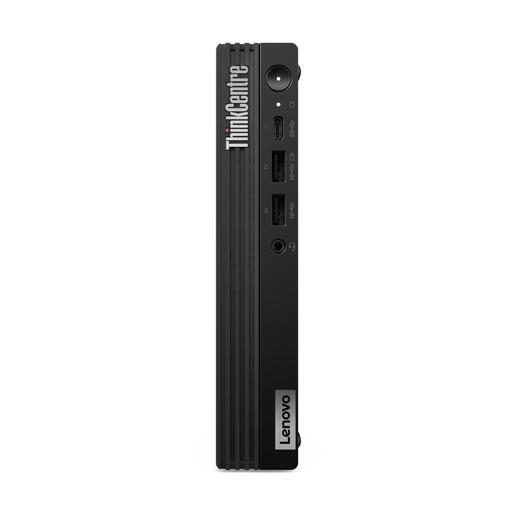
Lenovo ThinkCentre M70q Gen 5 with Intel Core i7-14700T, 16 GB DDR5 and 512 GB SSD

Lenovo ThinkCentre M70q Gen 5, Intel Core i7-14700T, 16 GB DDR5, 512 GB SSD, Windows 11 Pro

Consider this configuration as a Windows option if your DAW and interface work with the listed setup.

The product name lists 16 GB of DDR5 memory and a 512 GB SSD. The product description states that the power adapter isn’t included and must be purchased separately.

View at Joybuy

Frequently asked questions

Do you need a separate audio interface to mix an existing recording?

Not just because you’re using a mini PC. Work out which inputs and outputs you need for listening or recording, if required. If you already use an interface, check its driver, DAW support and connection. For the Scarlett 16i16, Focusrite describes ASIO support on Windows and Core Audio on macOS; this doesn’t mean every interface is compatible.

What can you do if the sound clicks or cuts out while you’re working?

First, check the connected interface and settings. Focusrite recommends, among other things, adjusting the buffer setting and connecting a suitable cable directly to a USB port. This manufacturer advice doesn’t guarantee that a particular mini PC will solve the problem.

How should you store your choir recording while mixing?

As well as your working project, keep a restorable copy on a separate drive or network location. Microsoft describes File History for Windows and notes that folders outside the default libraries need to be added separately, so check whether your DAW project folder is included.

Does a manufacturer’s warranty cover all your rights when buying as a private individual in the Netherlands?

No. ACM ConsuWijzer explains that your statutory guarantee exists alongside any seller or manufacturer’s warranty; if a product is faulty, the seller is your point of contact. Check who the seller is and what additional service terms apply. If you’re buying on behalf of an organisation, check separately which consumer rights apply.

Can the choir play the mix at a showcase and share it online?

Buying a mini PC doesn’t grant music or performance rights. You need permission to use and make copyright-protected music available to the public. Performers’ rights may also be relevant if a performance is recorded. The permissions required for a particular showcase or online publication depend on the repertoire, rights holders and how the recording is used. If the publication contains personal data that can identify someone, also consider the legal basis under the GDPR. Consent is one possible legal basis, but it isn’t automatically the only one.
