
Editor with a growing recording archive
You keep long or numerous harbour recordings and want to store and back up your source material, projects and exports separately, all in an organised way.


Choose a mini PC that works with your editing software and audio interface, then work out how much storage you need for source recordings, projects and exports. A Windows PC may suit the Windows software you already use, while a Mac mini makes sense if your audio setup requires or supports macOS. In either case, plan for a separate backup.
You keep long or numerous harbour recordings and want to store and back up your source material, projects and exports separately, all in an organised way.
You work with multiple tracks or effects and want to match your software and audio equipment requirements to your PC configuration.
You already use Windows or macOS software, and possibly an audio interface. Compatibility with your existing setup matters to you.
First, check that your software and audio interface work with the operating system. Then work out your storage needs and which connections you require.
| What to consider | What should you check? | Who is this important for? |
|---|---|---|
| Storage and backup | Add up your source files, projects and exports; check the SSD in the exact configuration and plan a separate backup destination. | If you keep lots of recordings or long ones, you’ll want enough room for your archive and a separate copy. Around 33% of consumers prioritise storage and backup. |
| Memory and audio projects | Check the requirements for your editing software and plug-ins, and see how much RAM the chosen configuration includes. | If you work with larger projects or multiple tracks, match the configuration to the way you work. Around 27% of consumers prioritise audio project processing. |
| Connections | Compare the ports, connectors and driver support required by your audio interface and external storage with the exact PC configuration. | If you want to keep using your existing audio equipment, the connections and drivers need to work with it. Around 20% of consumers prioritise connectivity and compatibility. |
| Software and what’s included | Check which operating system is included and whether RAM and an SSD come with the configuration you’ve chosen. | If you already use particular programmes, or want to choose your own components, check both the software requirements and exactly what’s in the box. Around 20% of consumers choose mainly based on the platform and configuration. |
Microsoft lists external storage or a network location as options for backing up large or numerous files. An additional SSD in the same mini PC is not, by itself, a separate backup.
According to Steinberg, the storage required for audio recordings can depend on factors including recording duration, sample rate and the number of tracks. So check the requirements of your own software and projects rather than relying on a general processor name alone.
The Mac mini base configuration reviewed has a 256 GB SSD; the Lenovo and HP configurations reviewed each list 512 GB. The stated capacity doesn’t tell you how much space your files and projects will need.
Add up your source recordings, current projects and exports, then compare the total with the specifications for the exact configuration.
Files stored on the same mini PC aren’t a separate copy in another location.
Plan a separate copy and check periodically that you can restore your source recordings and project folders.
A kit may be supplied without a pre-installed operating system. What’s included can vary by configuration.
Check the full model code and what’s included, including whether RAM, an SSD and an operating system are supplied.
Depending on the kit, you may need to buy and install any missing components yourself.
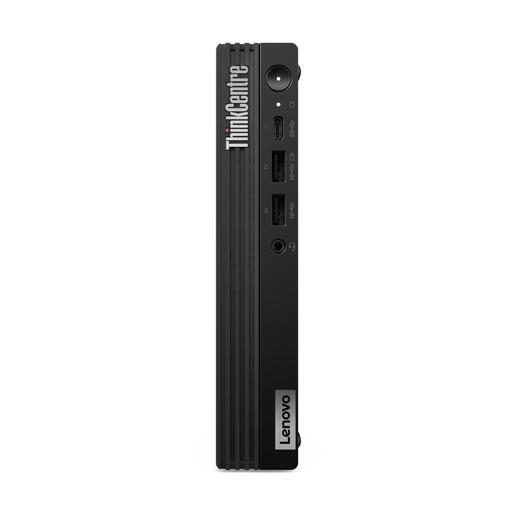
The ThinkCentre M75q Gen 5 is available in compact Windows configurations.
The ProDesk 4 Mini G1i is a compact PC with Windows.
The Mac mini is worth considering if your existing audio workflow requires or supports macOS.
The NUC 15 Pro family includes complete mini PCs and kits.
The UM890 Pro is worth a look if using your own components or having extra connections is important to you.
These Joybuy products are compact Windows PCs with memory and storage installed. Compare the configuration, connections and what’s included with your audio setup.
 No image available
Suitable for a Windows workflow if you’re looking for a compact PC with a pre-installed operating system.
16 GB DDR5 RAM and a 512 GB PCIe 4.0 NVMe SSD.
Windows 11 Home pre-installed; connections include Thunderbolt 4, HDMI, DisplayPort, USB-C and USB-A.
 No image available
A compact Windows mini desktop to compare with the software and connection requirements of your audio workstation.
Intel Core Ultra 5 325, 16 GB LPDDR5X memory and a 512 GB SSD.
Windows 11 Home and two Thunderbolt 4 ports.
 No image available
A compact Windows PC to compare with the connections and storage needs of your audio projects.
16 GB DDR5 memory and a 512 GB SSD; the description lists two M.2 storage slots.
Windows 11 Pro. According to the product description, the charger is not included and must be bought separately.
Add up the size of your source recordings, current project files and exports, then compare the total with the storage capacity of the exact configuration. Set aside separate storage for a backup; Microsoft lists external or network storage as an option for large or numerous files.
Microsoft describes File History as a way to copy files to an external drive or network location. Check that the folders containing your source recordings and projects are included; you may need to add folders that aren’t in the default libraries.
Compare your interface’s connection, operating system requirements and driver requirements with the exact mini PC. Steinberg explains that you can select an ASIO driver for audio equipment in Cubase; this doesn’t mean that every interface will work with every Windows PC.
According to the Government of the Netherlands, you’re entitled to a product that meets requirements. For distance purchases, you generally have a 14-day cooling-off period; check whether the rules for consumer distance selling apply to your purchase.