
iOS and Android developers
If you want to test locally on both platforms, first check whether you need Xcode. Apple describes Xcode simulators and physical devices as part of a Mac testing setup.


For local testing with Xcode, choose a Mac. For Android testing without Xcode, a compact Windows desktop may be enough, while testing across both platforms means accounting for the requirements of each. Simulators do not fully replace physical devices, and a smaller PC will not automatically reduce the number of plug sockets you need: remember to include the power supply for your monitor and test phones. Check the exact configuration, the adapter and connections included, and whether that version must carry the CE marking under the applicable EU rules (Apple Developer, Android Developers and Your Europe from the European Union).
If you want to test locally on both platforms, first check whether you need Xcode. Apple describes Xcode simulators and physical devices as part of a Mac testing setup.
If you use Android Studio and several virtual devices, it’s worth matching your installed memory and available storage to the number of emulators you run. Android Developers recommends around 4 GB of memory per concurrent AVD.
If you use a desktop, monitor and possibly physical phones at one workstation, plan the entire power and connection setup. Brandweer Nederland points out that heat from equipment needs room to escape.
Choose this option: if building or testing locally with Xcode is part of your work. Also check that the Xcode and macOS versions you want to use are compatible.
Bear in mind: according to Apple Developer, a simulator does not reproduce every feature or performance aspect of a physical device.
Choose this option: if Android is your local testing platform and you don’t need Xcode on this computer.
Bear in mind: check the installed memory, storage, USB connections and whether an adapter is included for the specific version.
Choose this option: if you need to check how an app behaves on a real device or don’t constantly use several local emulators.
Bear in mind: physical devices need connections and may require their own charging setup. Android Developers also recommends testing on a real device.
| Consideration | What should you check? | Who is this most relevant to? |
|---|---|---|
| Platform compatibility | Check whether you need Xcode, Android Studio or both locally, and whether the software versions are compatible with the computer you’ve chosen. | If I want to work locally with Xcode, my computer needs to support that development environment; around 29% of consumers rank iOS compatibility as their top buying priority. |
| Emulator capacity | Compare the number of emulators you’ll run at once with the memory and storage actually installed. Android Developers recommends around 4 GB of memory per concurrent AVD. | When I use several Android emulators at once, I focus on having enough memory and storage; around 29% of consumers prioritise emulator capacity. |
| Power and connections | Check the adapter, the mains plugs for the monitor and devices, available USB connections and room for ventilation. USB ports are not automatically suitable for charging. | With few plug sockets, I want to know in advance how the computer, monitor and test devices will all be connected; around 28% of consumers prioritise the complete power and connection setup. |
| Testing on physical phones | Decide how many devices you’ll connect at once and whether USB or supported wireless debugging suits your workflow. | If I need to check app behaviour on real phones, I plan for the necessary connections and any charging points; around 14% of consumers prioritise testing on physical devices. |
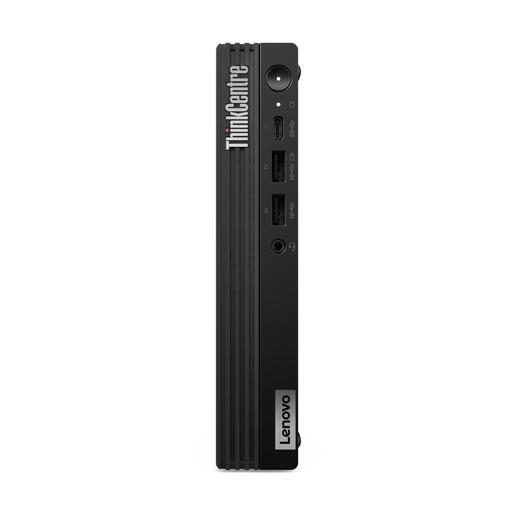
A compact computer does not automatically eliminate the need to power your monitor and test phones. A Joybuy listing for a ThinkCentre M70q Gen 5 says the adapter must be bought separately; this does not necessarily apply to every version.
Make a list of the mains plugs you’ll need in advance and check what’s included with the exact configuration on offer.
The MSI Cubi 5 12M-001BEU is described as a barebone. For this version, you’ll still need to add memory, storage and an operating system.
Check which components are actually installed and what you’ll need to buy before you can use the desktop.
The necessary components are separate purchases: memory, storage and possibly an operating system.
Apple says that simulators do not reproduce every feature or performance aspect of physical devices. Android Developers recommends testing Android apps on a real device before release, too.
Plan separately for tests that require physical hardware, and remember to allow for the necessary connections.
A Mac is a relevant option when local Xcode work determines your choice of platform.
The ThinkCentre M70q Gen 5 is a business Windows mini PC range, with configurations that can differ in areas such as connectivity.
The Dell Pro Micro QCM1250 is a compact Windows desktop range.
The Cubi 5 12M range includes compact PC versions, including barebones for those who want to install their own components.
These Joybuy products are compact Windows desktops for Android testing setups; for local testing with Xcode, you’ll need a Mac. For the version you choose, also check whether the applicable EU rules require CE marking and whether it is present.
 No image available
A compact Windows desktop option for Android testing. Check that the connections and configuration suit your setup.
Intel Core Ultra 5 325; 16 GB LPDDR5X; 512 GB PCIe 4.0 SSD; Windows 11 Home.
 No image available
A compact Windows desktop option to compare for Android testing. Check the installed memory, storage and available connections for the exact version.
 No image available
A compact Windows desktop option for Android testing. Check that the version suits the size of your emulator and monitor setup.
AMD Ryzen 5 7640HS; 24 GB LPDDR5; 512 GB PCIe 4.0 SSD; USB 4.0 and HDMI 2.1; supports output to three displays.
 No image available
A compact Windows desktop option for Android testing. Check that the ports suit your wired devices and peripherals.
Intel Core i7-14700T; 16 GB DDR5; 512 GB SSD; Windows 11 Pro. The power adapter must be bought separately for this version.
Not using the Xcode setup described here: Apple describes simulators and connected physical devices running on a Mac. If you choose a Mac, also check that the Xcode and macOS versions you want are compatible.
No. Android Studio can use an emulator. For a physical Android device, Android Developers describes USB and, on supported versions with the right configuration, wireless debugging. Google also recommends testing on a real device before release.
Keep the ventilation openings clear and make sure heat can escape from the whole setup. Brandweer Nederland stresses that computers also need room to release heat.
No. According to the Dutch government, the Netherlands has no fixed statutory warranty period; a manufacturer’s warranty is an additional benefit. If a product is faulty, the retailer is your point of contact, and the rights that apply depend on the purchase and the circumstances.
CE marking is required when the desktop falls under harmonised EU rules that require it. Your Europe from the European Union stresses that the marking is a declaration by the manufacturer, not an independent certificate. The WEEE symbol relates to the separate collection of discarded equipment, with some exceptions to the marking requirement.