
Writer with a small desk
You mainly write text and want the screen, keyboard and computer to fit on your desk together.


If you already have a suitable screen, a mini PC lets you keep using it or choose a different screen size. If you don’t have a screen yet, an all-in-one combines the computer and screen. You’ll still need to measure the screen and stand, and allow space for a keyboard and mouse. Choose the memory and storage to suit your needs, whether you’ll mainly be writing or also storing and editing lots of travel photos locally.
You mainly write text and want the screen, keyboard and computer to fit on your desk together.
As well as writing, you work with travel photos and consider how much local storage you need, along with your back-up and screen options.
You want to keep using your current monitor and are looking for a compact computer with a suitable display connection.
Start by considering your complete setup: choose a mini PC if you already have a suitable screen or want to decide on the screen size yourself, and consider an all-in-one if you want to choose the computer and screen together. Then compare the memory and storage configuration with the kind of writing you do and how many photos you want to keep locally.
| What to consider | What should you check? | Who is this most relevant to? |
|---|---|---|
| Space for your complete setup | Measure the available width and depth, then compare them with the full screen and stand—not just the computer case. | I want to leave enough room for my travel journal and input devices; around 33% of consumers prioritise the space available on their desk. |
| Photo storage and back-up | Estimate how many photos you want to keep locally, and plan a separate back-up as well. | I keep lots of travel photos locally and also want a separate back-up; around 20% of consumers prioritise storage and back-up. |
| Using an existing screen | Check your monitor’s input and the display output on the exact computer configuration, including the cable you’ll need. | I want to keep using my current monitor and need a computer that connects to it; around 20% of consumers prioritise reusing a screen. |
| Configuration to suit your work | Think about whether you’ll mainly be writing, or also editing photos or using several programmes at once; compare the specifications of the exact configuration. | I mainly write text and want to choose a configuration to suit that; around 14% of consumers prioritise writing as their main need. |
| What’s included | Check what comes with the configuration you’ve chosen and allow for anything else you need, such as a screen or input devices. | I want to know in advance what I’ll need to complete my workstation; around 13% of consumers prioritise the components needed for their complete setup. |
A compact computer case doesn’t tell you how much space the screen, stand and input devices will take up. Apple Netherlands says the Mac mini supports external screens, so choosing a screen is still part of planning your setup.
Measure or sketch out your complete setup before choosing a screen and computer.
If you don’t already have a screen or input devices, you may need to choose and buy them separately.
Lenovo’s product page for configuration F0JC0015NY lists a keyboard and mouse, but also says they are optional and available separately.
Before ordering, confirm exactly what’s included with the specific product number.
You may still need a separate keyboard and mouse.
A larger internal drive is no substitute for a separate back-up of your files.
Plan your back-up at the same time as choosing your computer. The Consumers’ Association advises disconnecting an external drive after backing up.
Depending on what you choose, a back-up will require external storage or an online solution.
The Mac mini is a compact desktop without a built-in screen, designed for people who want to use their own monitor.
The IdeaCentre AIO Gen 10 (24-inch AMD) is an all-in-one option that lets you choose the computer and screen together.
The HP OmniStudio range offers all-in-one configurations for people who want to choose the computer and screen together.
This selection includes mini PCs for use with a separately chosen screen, as well as all-in-one desktops with a built-in screen. Compare the listed configuration with your screen choice, the work you do and how much photo storage you want locally.
 No image available
A mini PC option for people who want to choose a separate screen and need plenty of local storage for files.
Specifications: 128 GB RAM, 4 TB SSD and NVIDIA DGX OS. The stated dimensions are 15 × 15 × 5,05 cm.
 No image available
A mini PC for people who want to use an existing or separately chosen screen and factor in local photo storage.
Specifications: 16 GB RAM, 512 GB SSD, Wi-Fi 6 and support for three 4K screens.
 No image available
A mini PC for people who want to choose their own screen and take the stated local storage capacity into account.
Specifications: Ryzen AI 9 365 (10-core/20-thread), 24 GB DDR5 RAM, 1 TB PCIe 4.0 SSD, support for four 4K screens, USB4 and HDMI 2.1.
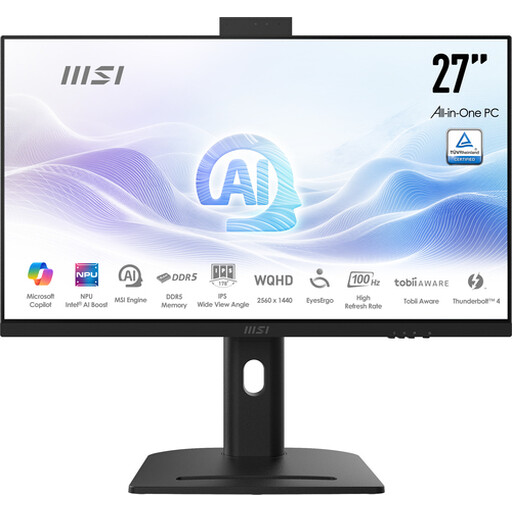 No image available
An all-in-one option for people who want to choose the computer and screen together and have room for a 27-inch screen in their setup.
Specifications: 2560 × 1440 pixels, 16 GB DDR5 RAM and 1 TB SSD.
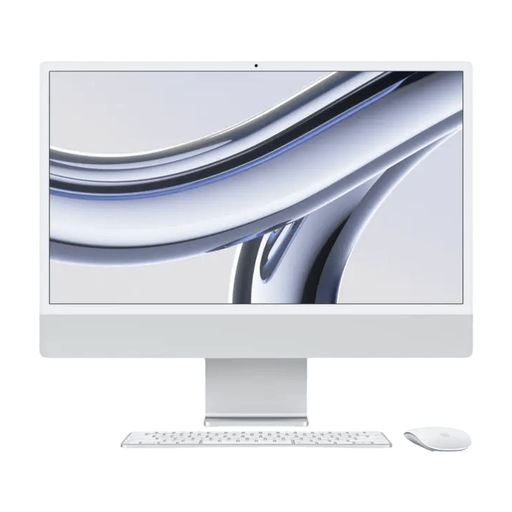 No image available
An all-in-one option for people who want to choose the computer and screen together and are considering 512 GB of internal storage for their files.
Specifications: 24-inch screen, 16 GB RAM, 512 GB SSD and a screen resolution of 4480 × 2520 pixels.
Not if you mainly write text. First decide whether you’ll also be editing photos or videos. The Consumers’ Association buying advice referred to is about laptops, not a performance test of these desktops.
Compare your monitor’s input with the display output on the exact mini PC, and check that you have the right cable. Apple Netherlands lists HDMI and Thunderbolt, among other connections, for the Mac mini M6 examined. That doesn’t mean every monitor can be connected without a suitable cable.
Keep a separate back-up of your work files, for example on an external drive or online. The Consumers’ Association advises disconnecting an external drive after backing up.
The Dutch government says that you’re entitled to a product that works properly when you make a purchase, and distinguishes statutory guarantee from any manufacturer’s or seller’s guarantee. So don’t assume the duration or extent of your statutory rights based only on a manufacturer’s guarantee stated on a product page.
According to the Dutch government, distance purchases from a business often come with a 14-day cooling-off period, and the seller must tell you about it. Check the terms of your specific purchase, as this doesn’t apply to every type of transaction.