
Baking one large tart for the school fair
You want to bake the tart in your chosen tin in one go, so focus on whether the tin will actually fit—not just on the oven’s capacity in litres.


Start with the dimensions of your tart tin and check that you can fit it into the oven and take it out again; the capacity in litres alone won’t tell you whether it will fit. A larger oven can be useful for bigger batches, while a compact model may suit you if you’re happy to use smaller tins or bake in extra batches. You’ll also need to make separate arrangements to transport and store the tart safely.
You want to bake the tart in your chosen tin in one go, so focus on whether the tin will actually fit—not just on the oven’s capacity in litres.
You want to keep the number of baking rounds down, so you’re comparing usable oven space, the baking tray and the space available on your worktop.
You can adapt the size of your tart and are looking for a compact appliance, while considering the smaller tin it can accommodate and the possibility of extra baking rounds.
First compare your tin size with the usable interior space, then consider how much you can bake per round and the available heating settings. The mushroom and leek tart with hazelnuts recipe we consulted calls for a shallow tart tin of around 30 cm; check whether your own tin will fit too.
| What to consider | What to look for when buying | Who this matters to |
|---|---|---|
| Will the tart tin fit? | Compare the diameter and height of your tin with the stated suitable tin size or usable oven space. | If I want to use my own tart tin, I need to know that it will fit and that there’s enough room to get it in and out. Around 33% of consumers say tin fit is their main concern. |
| How much can you bake in one round? | Compare the baking tray or interior dimensions and the available rack space with the number of tins you want to use. | If I’m baking several batches for the sale, I need to match the available space to my schedule and the number of rounds. Around 27% of consumers prioritise the capacity they need per baking round. |
| Which baking settings are useful? | Check the temperature range and which heating settings are available individually; follow your own recipe and the instruction manual. | If I’m following a specific recipe, I need to check that the oven offers the required temperature and heating method. Around 20% of consumers prioritise baking functions. |
| Will the oven fit on your worktop? | Measure the space available and check the placement instructions; also find out what size tin will fit in a compact model. | If I have limited worktop space, I need an appliance I can fit without losing sight of the tart size. Around 20% of consumers say space and the associated spending trade-off are their main concern. |
An oven with a large capacity won’t necessarily fit your tin. The recipe we consulted calls for a tin of around 30 cm, while Rommelsbacher lists tins up to 20 cm for the BG 950.
Measure your tin and check the suitable tin size or usable interior space before comparing models.
You may need a different baking tin or extra baking rounds.
The recipe we consulted calls for around 35 minutes in the oven. Rommelsbacher lists a 30-minute timer for the BG 950, as well as a continuous setting.
Check how your model’s timer works and follow the doneness checks in your own recipe.
You may need to keep a closer eye on the oven or adjust how you use it during a baking round.
The NVWA emphasises that food must be prepared, stored and sold safely and hygienically. Your choice of oven won’t determine how you store the tart at school.
Agree with the school in advance how the tart will be chilled and how buyers will be given allergen information.
You may need a way to keep the tart cool during transport and serving, as well as an agreed procedure.
The OV-3640 is a spacious freestanding oven worth comparing if you need a larger tin or more baking space.
The OV457B is a mid-sized option to compare if you’re looking for fan-assisted cooking and top and bottom heat.
The TO 2068 is a more compact option if you use a round tin and check the stated tin diameter.
The BG 950 is a small oven worth comparing if you’re using a smaller tin or adapting the size of your tart.
These Joybuy products offer different oven sizes and baking functions to compare. Whatever you choose for your tart, check the tin size, room for placing it in the oven and the instructions for your chosen model.
 No image available
The convection function makes this model worth comparing if you want to bake with circulating air; check for yourself whether your tart tin will fit.
Joybuy lists a 35-litre capacity, a four-level rack, an LED display and a thermometer.
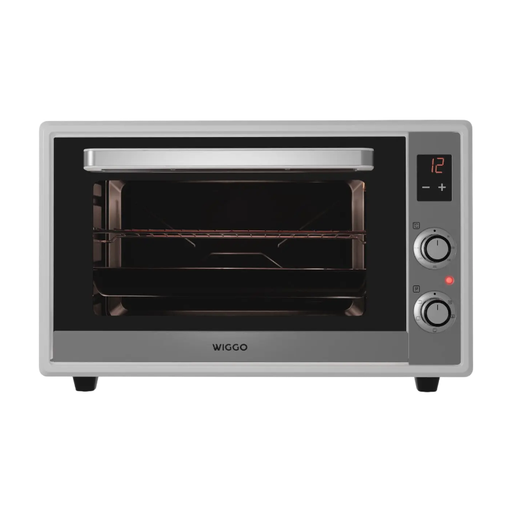 No image available
The stated capacity may appeal if you’re looking for a spacious oven; check the interior dimensions and the space available before deciding.
Joybuy lists a 65-litre capacity, six cooking functions including baking, a turbo fan and a 90-minute timer. The product has a power rating of 2000 W and a stainless steel finish.
 No image available
This model is worth comparing if you’re looking for several heating methods; its capacity alone won’t confirm that your tart tin will fit.
Joybuy lists a 30-litre capacity, top and bottom heat, fan-assisted cooking and a grill, with an adjustable temperature of up to 230 °C. The product information also mentions two hotplates.
 No image available
The stated baking settings make this model worth comparing with recipes that use different heating methods; check that your tin is a suitable size.
Joybuy lists a 45-litre capacity, fan-assisted cooking, top and bottom heat, and 2000 W. The product name specifies the white finish.
 No image available
This oven is worth comparing if you’re considering a combined oven with a baking programme; check that the selected setting is suitable for your recipe.
Joybuy lists 21 programmes, a dual-cook function and a baking programme with a temperature range of 30–230 °C. The product name also mentions a rotisserie, dehydrator, 1800 W and space for a 13-inch pizza.
Start with the tin specified in your own recipe. The recipe we consulted calls for a tin of around 30 cm; Rommelsbacher lists tins up to 20 cm for the BG 950, while Severin states that the TO 2068 can accommodate tins up to 30 cm in diameter. Also check the height and whether there’s room to get the tin in and out of the oven.
Don’t assume so without a storage plan. The NVWA sets a maximum of 7 °C for chilled perishable products. The Netherlands Nutrition Centre advises cooling leftover savoury tart quickly, storing it covered in the fridge and not leaving it out of the fridge for more than two hours.
According to the NVWA’s step-by-step guide, you don’t need to register if you sell food once a year; if you sell food several times a year, the guide says that registration and a food safety plan are required. You still need to work safely and hygienically. Establish who the seller is and how often they sell; the frequency of the school sale won’t automatically be determined by your circumstances.
Check the ingredients in the recipe you actually make and tell buyers about any allergens present. The NVWA says that businesses and institutions must provide information about allergens in non-prepacked food; agree with the school who will provide this information during the sale. Don’t rely on the ingredients in a sample recipe if you’re making something different.
Follow the instruction manual for the model you’ve bought. Inventum’s manual warns that accessible parts can get hot and says to use oven gloves when putting food in and taking it out. Also check your model’s instructions for cleaning.