
Baker making lots of portions for sale
Wants to bake the planned number of biscuits in a manageable number of batches, so compares usable baking-tray size rather than just the oven’s capacity in litres.


Choose a mini oven based on how many biscuits fit on the baking tray and how many batches you can bake before the school bake sale. The oven’s capacity in litres alone won’t tell you how much shortbread you can bake in one batch. A larger oven may suit you if you’re planning lots of batches and have enough space, while a compact model is a good choice if you’re happy to bake smaller batches and possibly make more of them. Check the external dimensions and the recommended clearance, and bake a test tray using your recipe first.
Wants to bake the planned number of biscuits in a manageable number of batches, so compares usable baking-tray size rather than just the oven’s capacity in litres.
Wants successive trays to brown consistently using the same recipe, and looks for oven settings and a timer to help keep track of baking time.
Needs to be able to position the oven safely in line with the placement instructions, and may be happy to bake smaller batches.
Start with the number of biscuits you want to bake per batch, then compare the oven settings and the space the appliance needs.
A good fit if: you’re planning several batches and have enough worktop space; compare the baking tray and the available oven settings.
The trade-off: a roomier oven takes up more space, and multiple shelf positions don’t prove that two trays of shortbread will bake evenly at the same time.
A good fit if: worktop space is your main limitation and you have time to bake smaller batches.
The trade-off: the baking tray may fit fewer biscuits per batch, so plan to bake more batches if needed.
A good fit if: you want to compare a larger oven capacity and have enough room for the appliance and the recommended clearance.
The trade-off: check the external dimensions and compare the supplied baking tray with the size of your biscuits.
| What to consider | What should you check? | Who should pay particular attention? |
|---|---|---|
| Biscuits per batch | Compare the dimensions of the supplied baking tray with the size of your biscuits, and leave space between them. | I want to know before the sale how many biscuits fit on one tray with space between them; around 36% of consumers prioritise the number per batch. |
| Consistent batches | Check the available oven settings, temperature control and timer; bake a test tray using your recipe first. | I want successive trays to brown consistently using the same recipe; around 29% of consumers give consistent batches top priority. |
| Safe positioning | Compare the external dimensions with your worktop and follow the clearance specified in the manual for your chosen model. | If my worktop is tight on space, the oven needs to fit in line with the instructions and I can accept smaller batches; around 21% of consumers focus mainly on the space needed for positioning. |
| Features to suit your needs | Compare the supplied baking tray and oven settings with your baking plan and how often you want to use the oven. | I want to choose features that suit my baking plan, without extras I don’t need; around 14% of consumers prioritise features that suit their needs. |
The capacity describes the oven space, not how many biscuits will fit on the baking tray with room between them.
Check the dimensions of the supplied tray and picture your biscuits spaced out on it before you buy.
A recipe for conventional top and bottom heat won’t automatically give you the right setting for a fan oven. The Netherlands Nutrition Centre advises using a lower temperature for a fan oven than for a conventional oven.
Follow the oven setting in your recipe, use the corresponding setting and check how the first batch is browning.
An oven that physically fits on your worktop isn’t necessarily positioned as instructed in the manual. The Inventum OV307B manual warns that the appliance and accessible parts get hot.
Read the placement instructions for the exact model and allow for the recommended clearance.
The NVWA states that sellers must inform customers about allergens present in food.
Record the ingredients and allergens for each recipe, and agree with the school how buyers will receive that information.
The OV307B is a 30-litre freestanding oven for anyone looking for a supplied baking tray and a choice of fan-assisted or conventional top and bottom heat.
The TO 2058 has a capacity of 42 litres and is worth comparing if you’re looking for a roomier oven and multiple shelf positions.
The 112754 is a 45-litre mini oven with a baking tray, for anyone with enough worktop space.
The OV-3615 is a compact 10-litre oven for small batches and limited worktop space.
The BG 950 is a 10-litre oven with top and bottom heat, suitable for small batches.
These products are options to compare for their oven and baking features when making shortbread; check the baking tray, interior space and placement instructions for each model.
 No image available
The toaster oven description makes this an option to compare for oven baking; check that the baking tray and interior space are suitable for your biscuits.
The product name states 1200 W.
 No image available
The mini oven description makes this an option to compare if you’re looking for more oven space; check the baking tray and the space the appliance needs.
The product name states 2000 W and 45 L.
 No image available
This oven is an option to compare if you’re planning several batches; check that the baking tray and recommended clearance suit your kitchen.
The product name states 1800 W and 35 L. Allow for the clearance recommended for this model.
 No image available
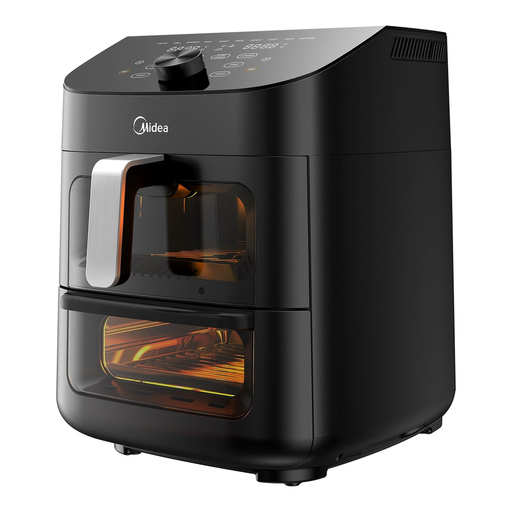
The product name mentions a separate oven compartment; check that the oven space and baking tray can accommodate the number of biscuits you want to bake per batch.
The product name states 6,4 L for the air fryer and 4,4 L for the oven.
 No image available
The product name describes an oven with a baking programme; check the baking tray, interior space and dimensions for positioning to make sure they suit your shortbread plans.
The product name states 30 L.
Follow the temperature and oven setting in your recipe. Good Food’s shortbread recipe recommends 170 °C for a conventional oven or 150 °C for a fan oven, with a baking time of 15–20 minutes. These are recipe settings, not universal settings for every mini oven or biscuit size. Check how a test tray is browning.
The NVWA states that sellers should inform customers about allergens in prepared or sold food. For unpackaged products, the NVWA says information can be provided on a card or verbally, subject to certain conditions; for pre-packed products, allergen information should be clearly shown on the label. Agree with the school how ingredient information will be made available and which school rules apply.
The NVWA says a HACCP food safety plan is required for anyone who prepares and sells food more than once a year. For sales at markets and events, the NVWA also outlines rules for working safely and hygienically, whether the seller is a business or an individual. Agree arrangements for the specific school bake sale with the school; this information alone doesn’t establish whether the plan requirement applies to a one-off event.
Follow the manual for the exact model and take hot surfaces into account. The Inventum OV307B manual warns that the appliance and accessible parts get hot, and gives instructions for use by children aged 8 and over; don’t assume those model-specific instructions apply to another appliance.
Let the oven cool down and read the manual for your chosen model before cleaning it. For the Inventum OV307B, the manufacturer recommends, among other things, using a soft, damp cloth on the inside and says the supplied accessories are dishwasher-safe.