
Baking a casserole when space is limited
You want to bake a sauerkraut casserole, but may need to put the oven away after use. Measure both your dish and the space where the oven can be placed safely while in use.


Choose a mini oven that fits your own oven dish and has enough ventilation space around it during use, as specified in the instructions. A compact model is easier to store, but may be too small for a casserole serving several people; a larger model takes up more space. Then compare the heating settings: top and bottom heat, and possibly a grill setting, may be useful for baking and browning the top, but they don’t prove how well a particular model will cook your recipe.
You want to bake a sauerkraut casserole, but may need to put the oven away after use. Measure both your dish and the space where the oven can be placed safely while in use.
You use a larger or deeper oven dish and don’t want a compact oven to dictate the portion size. A larger model may offer more room, but it also takes up more space.
You want to heat the casserole and brown the top. So check the heating settings, not just the stated capacity in litres.
| What to consider | What to look for | Who is this important for? |
|---|---|---|
| Will the oven dish fit? | Measure the dish, including the handles, and check the model’s usable internal dimensions and shelf positions. | If I want to bake my sauerkraut casserole in a dish with handles, I want to know in advance whether it will fit. Around 36% of consumers say fitting their dish is their main buying concern. |
| Space for use and storage | Measure the space for use and storage; follow the ventilation requirements in the instructions. | I want to be able to put the oven away after use, while also leaving the required space around it when baking. Around 29% of consumers prioritise limited space for use and storage. |
| Heating settings | Check whether the model has top and bottom heat, a fan-assisted setting or a grill setting. | If I want a browned top, I look for a grill setting and check the instructions for my recipe. Around 21% of consumers say heating and browning settings are their main buying concern. |
| Cleaning and terms | Check which parts can be removed and how they can be cleaned according to the instructions. | I want to know how much cleaning is involved and what terms apply after purchase. Around 14% of consumers prioritise maintenance and additional terms. |
A capacity in litres doesn’t tell you whether your oven dish will fit in terms of width and height, including its handles.
Measure your dish first, then compare it with the confirmed internal dimensions and shelf positions of the exact model.
If the dish doesn’t fit, you may need a different oven dish.
A freestanding oven gives off heat, which needs to escape; its external dimensions don’t tell you whether a spot is safe for baking. Brandweer Nederland highlights the importance of ventilation for appliances that give off heat.
Follow the positioning and ventilation instructions in the manual, and keep a separate place for storing the oven once it has cooled down.
A grill heats mainly from above. When reheating leftovers, it’s important that the casserole also gets thoroughly hot inside.
Use the setting according to the oven and recipe instructions. The Voedingscentrum advises heating leftovers all the way through until steaming hot.
The Inventum OV207B is a 20-litre freestanding oven for anyone considering a medium-sized model with several cooking settings.
The Tristar OV-3615 is a 10-litre oven for anyone preparing a small portion who also values easy storage.
The Severin TO 2058 is a 42-litre oven for anyone considering a larger dish and with room for the appliance.
The Princess 112754 is a 45-litre oven for anyone who needs room for a larger casserole and has space for its external dimensions.
Ariete describes a range that includes both compact ovens and larger models, so compare the details of the specific model you’re considering.
These Joybuy models range from compact ovens to larger options. Compare the stated dish sizes and dimensions with your own oven dish, the space available and the ventilation requirements for use.
 No image available
A larger oven to consider if you use a bigger oven dish and have enough space.
45 litres; top and bottom heat, fan-assisted cooking and a grill. Keep the ventilation openings clear during use.
 No image available
A medium-sized option to consider if you use a baking tin up to 25 cm and want a choice of heating settings.
22 litres; the description lists baking tins up to 25 cm and top and bottom heat. Place the oven on a flat, heat-resistant surface with enough ventilation.
 No image available
A compact option to consider if you use a small dish and have limited storage space.
10 litres; the description lists baking tins up to 20 cm and top and bottom heat. The temperature can be set from 80 to 230 °C, and the timer runs for up to 30 minutes. Place the model on a flat, heat-resistant surface.
 No image available
A larger oven to consider if your dish needs more room and you can leave the required space around the appliance.
35 litres; top heat, bottom heat and a combination of the two. Leave at least 10 cm of space around the oven and 30 cm above it; don’t use the oven in an enclosed cupboard.
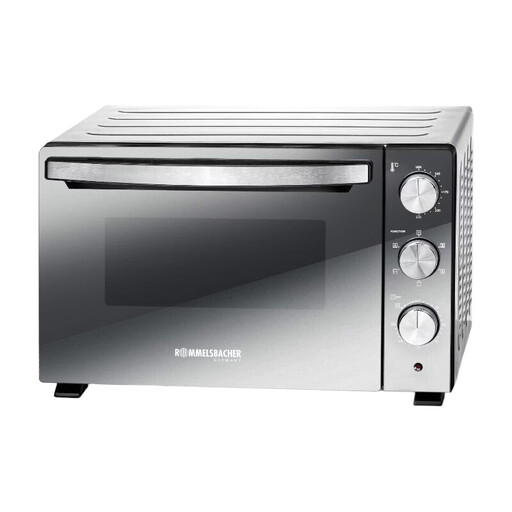 No image available
An oven to consider if you want to combine baking and browning with different settings and have room for a larger appliance.
30 litres; top and bottom heat, fan-assisted cooking and a grill. The stated external dimensions are 50,5 × 40,3 × 33 cm. It must be cleaned by hand.
No. The litre capacity tells you the stated volume, but not whether your dish will fit. Measure the dish, including the handles, and compare it with the usable internal dimensions and positioning instructions for the exact model.
Don’t assume so. Brandweer Nederland points out that heat from appliances needs to escape. Follow the positioning and ventilation instructions in the manual; storing and using the oven are different situations.
A grill setting can brown the top of a casserole. Follow the oven and recipe instructions and check the dish; a browned top doesn’t prove that chilled leftovers are hot all the way through. The Voedingscentrum advises heating leftovers until steaming hot.
Electrical consumer products placed on the market in the EU must meet the applicable CE marking requirements; the Dutch government (Rijksoverheid) lists electrical appliances among the products covered. Check the marking on the item being offered. If a product is faulty, you have rights against the seller under the conditions of the statutory guarantee; a manufacturer’s warranty is separate.
For an online consumer purchase, ACM ConsuWijzer says you generally have a statutory cooling-off period of up to 14 days after delivery, with some exceptions. Check the terms that apply to your purchase. A faulty product is a different matter from returning an item during the cooling-off period.