
Party host baking lots of twists
You want to make enough twists for your guests over several batches. That’s why the usable baking tray matters more than the stated capacity in litres alone; compare its dimensions with your pastry strips.


For a birthday party, a mini oven with a larger usable baking tray is handy if you want to bake plenty of twists in each batch. For smaller portions and limited worktop space, a compact model may be enough. Choose the oven setting and temperature to suit your recipe, and compare the tray with your shaped pastry strips, as the oven’s capacity in litres won’t tell you how many will fit at once. Also measure the space you’ll need and check the marking and product details of the exact model you’re buying.
You want to make enough twists for your guests over several batches. That’s why the usable baking tray matters more than the stated capacity in litres alone; compare its dimensions with your pastry strips.
You want to be able to select the oven setting and temperature specified in your recipe. Koopmans gives different settings for puff pastry twists and breadsticks, so check the recipe you’re using.
You’re looking for a compact appliance, but you’ll also need to allow for the clearance specified in the manual for your chosen model. Brandweer Nederland recommends plugging high-power appliances directly into a socket wherever possible.
When choosing an oven for twists at a birthday party, the main things to consider are the usable baking tray, your recipe’s settings and a suitable spot for the oven.
| What to consider | What should you look for? | Who is this most important for? |
|---|---|---|
| Number of twists per batch | Compare the usable tray dimensions with the length of your shaped twists and the space you need to leave between them. Don’t use the capacity in litres to estimate how many will fit at once. | For a busy birthday party, I want to bake enough twists in each batch so I don’t have to change trays as often. Around 33% of consumers prioritise the number of twists they can bake per batch. |
| Oven setting and recipe temperature | Check that the exact model lets you select the setting and temperature in your recipe. For puff pastry twists, Koopmans recommends around 15–20 minutes at 220 °C with conventional heat or 200 °C with fan-assisted heat. | I want to follow the setting and temperature in my recipe without confusing conventional heat with fan-assisted heat. Around 27% of consumers give recipe settings top priority. |
| A safe spot on the worktop | Measure the available space and follow the placement and connection instructions in the manual for the exact model. Brandweer Nederland recommends plugging high-power appliances directly into a socket wherever possible. | With a crowded worktop, I want to know in advance where the oven will fit safely and how much clearance it needs. Around 20% of consumers prioritise safe placement. |
| Cleaning and aftercare | Check which accessories are included and how to clean them according to the model’s manual. Compare any extended warranty with your existing statutory rights. | After a party, I want to be able to remove crumbs easily and know who to contact if something goes wrong. Around 20% of consumers prioritise cleaning and aftercare. |
Capacity in litres doesn’t tell you how many long, twisted strips of pastry will fit on the baking tray. The stated tray dimensions may also refer to its external size rather than the usable baking surface.
Compare the usable tray dimensions with your shaped twists before planning how many batches you’ll need.
A recipe may give different settings for conventional and fan-assisted ovens. The Rommelsbacher BG 950 is described as having top and bottom heat, with no fan setting listed.
Choose the setting and corresponding temperature specified in your recipe, and check that the exact model lets you select them.
The Joybuy listing and manufacturer’s details differ on the capacity and timer of the Rommelsbacher BG 1055/E. The stated oven settings and timer for the BG 1805/E also differ.
Check the full model code and key details against the manufacturer’s information before choosing a version.
The OV207B is an example of a freestanding oven with a stated capacity of 20 litres.
The TO 2067 is a mini oven with a capacity of around 20 litres and top and bottom heat.
According to Tristar, the OV-3652 is a 20-litre oven with convection and top and bottom heat.
The 112751 is a freestanding oven with convection and a stated capacity of 32 litres.
The BG 950, BG 1055/E, BG 1550 and BG 1805/E range from compact models with top and bottom heat to larger models with circulating air.
These Joybuy picks include larger mini ovens with fan-assisted heat and models with top and bottom heat. For each version, compare the settings with your recipe, check how much space you’ll need and confirm the applicable CE marking on the model you’re buying.
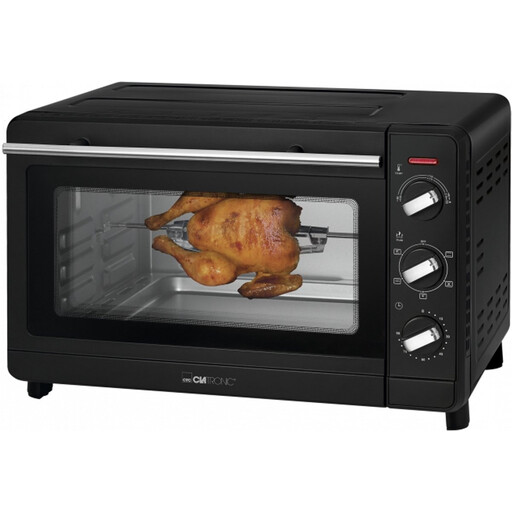 No image available
An option if your recipe calls for top and bottom heat or fan-assisted heat; compare the usable baking tray with the size of your twists.
30 L; 1500 W. Place the oven on a stable, heat-resistant surface and away from flammable materials, following the product instructions.
 No image available
An option if your recipe calls for fan-assisted heat or top and bottom heat; check that the settings on the exact version match your recipe.
1200 W. Follow the product instructions on using a stable, heat-resistant surface and allowing enough ventilation; surfaces get hot during use.
 No image available
An option if your recipe uses conventional oven heat; the product information lists separate top and bottom heat settings, as well as a combined setting.
35 L; 1800 W. The product instructions require at least 10 cm of clearance on all sides and 30 cm above the oven; don’t place it in an enclosed cupboard.
 No image available
An option if your recipe calls for top and bottom heat or fan-assisted heat; check which setting your recipe specifies.
Follow the product instructions for placing the oven on a flat, heat-resistant surface and allowing enough ventilation.
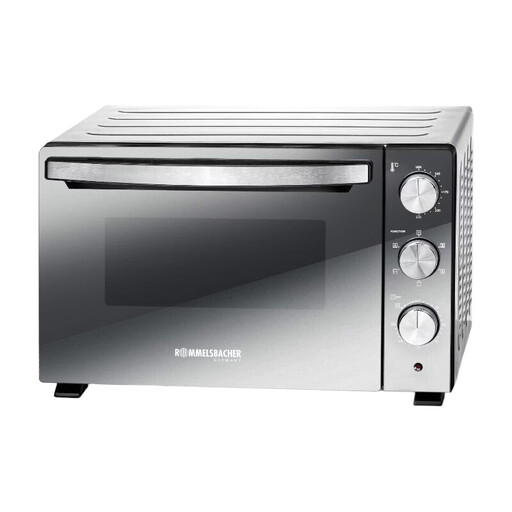 No image available
An option if your recipe calls for fan-assisted heat or top and bottom heat; check the settings and temperature for the exact version.
The product information gives conflicting minimum temperatures, so don’t rely on a minimum temperature without checking it for your version. Also follow the instructions on hot surfaces and keeping the oven away from flammable materials.
No. Follow the oven setting and temperature in the recipe you’re using. For puff pastry twists, Koopmans recommends around 15–20 minutes at 220 °C with conventional heat or 200 °C with fan-assisted heat; a breadstick recipe may give different settings. Keep an eye on how they’re baking.
Follow the clearance, surface and connection requirements in the manual for your exact model. Brandweer Nederland recommends plugging high-power appliances directly into a socket wherever possible, and fully unwinding any extension cable reel you use.
CE marking is compulsory in the Netherlands for electrical consumer products covered by the requirement, according to the Nederlandse Voedsel- en Warenautoriteit. It isn’t an independent assessment of how well an oven bakes; check the product information and marking on the exact version you’re buying.
The Voedingscentrum advises leaving food that spoils quickly out of the fridge for no more than 2 hours and setting your fridge to 4 °C. Whether this advice applies to your twists depends on the filling and its storage instructions.
Not necessarily. According to the Dutch government, there is no fixed statutory warranty period in the Netherlands; your statutory rights if a product is faulty are separate from any paid extended warranty. Compare the terms of the extended warranty with the rights you already have.