
Weekend baker making one tray
If you’re baking a small batch of bites, measure them and the supplied baking tray before choosing a very compact oven. Koopmans recommends baking small puff pastry bites in a preheated oven for around 15–25 minutes.


A compact oven may be enough for one small batch, provided the baking tray is large enough for your bites. For larger batches, the usable tray size and oven space matter more than capacity in litres alone. First, choose an oven setting that suits your recipe, and check that there’s enough room around the appliance for heat to escape where you plan to place it. Check the specific product listing to make sure the appliance carries the required CE marking.
If you’re baking a small batch of bites, measure them and the supplied baking tray before choosing a very compact oven. Koopmans recommends baking small puff pastry bites in a preheated oven for around 15–25 minutes.
If you want to bake more bites per batch, compare the usable baking tray size and the shelf positions. The capacity in litres doesn’t tell you how many bites will fit on the tray.
A compact exterior can make it easier to find a spot, but leave space around the oven so heat can escape. The Dutch Fire Service recommends leaving room for the heat given off by electrical appliances.
Start with the oven setting and temperature in your recipe. Then work out how many bites need to fit on the baking tray, and finally check the space you have available.
| What to consider | What to look for | Who should prioritise this? |
|---|---|---|
| Oven setting and temperature | Check the available settings and temperature range against your recipe or pastry packaging. | If I want to follow the puff pastry instructions, I need to be able to set the specified oven mode and temperature. Around 36% of consumers say recipe settings are their top buying priority. |
| Bites per batch | Compare the dimensions of the supplied baking tray with the size of your prepared bites; capacity in litres doesn’t tell you the tray’s surface area. | When I’m baking for guests, I want to know whether the bites will fit on the tray or if I’ll need to bake several batches. Around 29% of consumers choose mainly according to their preferred batch size. |
| Worktop placement | Compare the appliance’s external dimensions with the space available, and follow the ventilation and placement instructions for the model. | If my worktop space is limited, the oven needs to fit and be safe to use there. Around 21% of consumers prioritise a suitable position with good ventilation. |
| Cleaning, electricity and servicing | Check which crumb-collection features are removable; compare electricity use per cooking session if that information is available, and read the service terms. | If easy cleaning, running costs or servicing matter most to you, your priorities will differ from those of someone choosing solely for oven space. Around 14% of consumers make these practical and service considerations their top priority. |
The oven’s capacity doesn’t tell you the size of the supplied baking tray. A small tray may mean you’ll need to bake several batches.
Compare the tray size with the dimensions of your bites, and check which accessories are included.
Recipes may specify different settings for conventional heat than for fan-assisted cooking.
Follow the instructions on the packaging or in the recipe, and adjust the fan setting when advised.
Even a compact oven needs room to release heat; a tight space may not meet the placement instructions.
Measure the available space and follow the ventilation requirements in the manual for your chosen model.
An extra warranty isn’t the same as your rights if a product turns out to be faulty.
Check what the additional cover includes, and contact the retailer if a product is faulty. The Government of the Netherlands explains your statutory rights in the Netherlands.
These brands illustrate different sizes and heating settings; specifications alone don’t prove that puff pastry will bake evenly.
Tristar describes the OV-3610 as a 10-litre oven with conventional heat, a baking tray and a temperature range of 90–230 °C.
Severin describes the TO 2067 as a 20-litre oven with four shelf positions and adjustable top and bottom heat.
Inventum lists the OV207B as having a capacity of 20 litres, with conventional oven settings and fan-assisted cooking.
Tefal describes the Optimo OF464810 as a 33-litre oven with conventional settings and fan-assisted cooking.
Rommelsbacher describes the BG 950 Speedy as a 10-litre oven for baking tins up to 20 cm in diameter, with top and bottom heat.
This selection includes mini ovens and air fryer ovens with different cooking capacities and heating settings; compare these with the setting and temperature in your recipe.
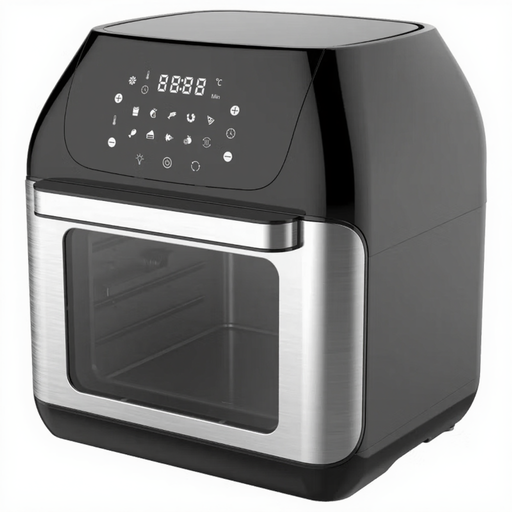 No image available
A compact air fryer oven to consider if you’re looking for a small batch size and a fan-assisted function.
The product information lists a capacity of 12 litres, a viewing window, interior light, nine programmes and a timer of up to 90 minutes.
 No image available
This larger oven is worth comparing if you’re looking for more cooking space and a choice of heating settings.
The product information lists a capacity of 45 litres, top and bottom heat, fan-assisted cooking and an integrated hob.
 No image available
An oven worth comparing if you want a choice of both top and bottom heat and fan-assisted settings.
The product information lists a capacity of 22 litres, space for a baking tin up to 25 cm, a 60-minute timer and an enamelled baking tray. The five heating settings include top and bottom heat, as well as combinations with fan-assisted cooking; the temperature can be set up to 230 °C.
 No image available
The compact cooking space may suit a small batch; check beforehand that the bites will fit on the tray.
The product information lists a capacity of 10 litres, top and bottom heat, a temperature range of 80–230 °C, a 30-minute timer, a crumb tray and space for baking trays up to 20 cm. Rommelsbacher recommends preheating due to the risk of food burning during the warm-up phase.
 No image available
This small fan-assisted option may suit a batch if its temperature range covers the setting you need.
The product information lists 360° fan-assisted cooking, a temperature range of 80–200 °C, a stainless steel basket, a viewing window and rotary controls. You can’t set the 210 °C fan temperature specified in the particular Koopmans recipe; other recipes may call for different settings.
First, follow the instructions for your pastry or recipe. Koopmans recommends using a preheated oven for small puff pastry bites; for the BG 950, Rommelsbacher specifically recommends preheating to prevent food burning during the warm-up phase.
Not without checking the recipe. The Netherlands Nutrition Centre generally recommends a lower setting for fan-assisted cooking; one specific Koopmans recipe gives 225 °C for conventional electric baking and 210 °C for fan-assisted cooking. These temperatures apply to that recipe and aren’t a general setting for all puff pastry.
Make sure heat can escape, following the instructions for your chosen model. Let the oven cool down and follow the cleaning instructions for the baking tray and crumb-collection feature; the Dutch Fire Service recommends leaving room for the heat given off by electrical appliances.
No. According to the Government of the Netherlands, there’s no fixed statutory warranty period in the Netherlands. If a product is faulty, you can contact the retailer; an additional warranty doesn’t replace your statutory rights.
The Netherlands Food and Consumer Product Safety Authority (NVWA) states that CE marking is required for electrical products. Check the marking on the actual appliance being offered.
A golden-brown exterior doesn’t prove that raw chicken in the filling is cooked through. The Netherlands Nutrition Centre advises cooking chicken thoroughly until it’s completely white inside, and keeping raw chicken separate from cooked food.