
Cooking for several guests
You want to bake enough portions at once and check in advance whether your filled dish will fit in the oven.


Start by checking the dimensions of your filled baking dish and how many portions you need: the oven’s capacity in litres alone won’t tell you whether the dish will fit. Then compare the oven settings with your recipe and measure the available space, including the ventilation clearance specified in the manual. A larger oven gives you more room inside, but it also takes up more worktop space.
You want to bake enough portions at once and check in advance whether your filled dish will fit in the oven.
You’re looking for a smaller freestanding oven and also need to allow room for heat to escape.
You may want to prepare the dish earlier, so you’re also considering storage, reheating, controls and cleaning.
First, measure your dish and decide how many portions you want to make. Then compare the oven settings and the space available for installation; also check what cleaning and aftercare involve.
| What to consider | What should you check? | Who is this important for? |
|---|---|---|
| Dish and portions | Measure the filled dish, including the handles. Compare its dimensions with the usable interior space, door opening and shelf position. | If I’m baking for several guests, I want to know whether my dish will fit all at once. Around 36% of consumers give dish size and portions top priority. |
| Oven settings | Check the adjustable temperature, top and bottom heat, any fan setting and the timer on the exact model. | If I want to follow my own recipe, I need to be able to set the oven accordingly. Around 29% of consumers focus mainly on oven settings, temperature and the timer. |
| Positioning and connection | Compare the external dimensions with the space available and the ventilation requirements in the manual. Check the socket too. | If I have limited space, I want to leave enough room for safe use and heat to escape. Around 21% of consumers prioritise positioning and connection. |
| Cleaning and aftercare | Check which parts can be removed and follow the cleaning instructions. Compare the manufacturer’s guarantee or repair service as additional support. | If I want to clean the oven after a meal with friends and know where to turn if something goes wrong, maintenance and aftercare matter. Around 14% of consumers give these points top priority. |
For its recipe for two, the Netherlands Nutrition Centre recommends 180 °C and a baking time of 45–60 minutes. This is an example for that recipe, not a fixed setting for every nut loaf. So, check the instructions for your own recipe and the oven manual too. The Netherlands Fire Service advises allowing heat from appliances to escape; leave the clearance specified in the manual. The NVWA states that the applicable CE marking is compulsory for electrical consumer products. This marking is not an independent baking test of a particular product.
The capacity in litres doesn’t tell you whether a filled, oblong dish will fit through the door or sit properly on the shelf.
Measure the dish, including any parts that stick out, and compare its dimensions with the usable interior space, door opening and shelf positions of the exact model.
If the dish doesn’t fit, you may need to use a different one or bake in several batches.
An oven gives off heat. The dimensions of the casing alone don’t tell you how much clearance is needed to position the appliance as instructed in the manual.
Measure the space again, allowing for the ventilation requirements of the model you’ve chosen, and check the connection.
A manufacturer’s guarantee or paid service plan is separate from your statutory rights. The Dutch government says the retailer is your point of contact for statutory guarantees; there is no fixed statutory guarantee period in the Netherlands.
Check exactly what an additional guarantee or service plan covers before paying for it.
A paid service plan may come with extra costs without giving you any additional rights that are relevant to your situation.
The 30-litre OV307B and 45-litre OV457B give you options to compare for different dish sizes and available space.
The 33-litre Optimo OF464810 is worth comparing if you’re looking for features including a conventional oven setting, a fan setting and a timer.
The 42-litre TO 2058 is worth considering if you need a larger dish and have enough room for the casing and ventilation.
The 22-litre BGS 1400 is a more compact option to compare if your dish is small enough.
This selection includes mini ovens, freestanding ovens and air fryer ovens for baking or roasting. Compare the listed capacities and features with your dish, recipe and available space.
 No image available
This could be useful if you want to cook different parts of a meal separately; check whether your nut loaf dish will fit in one of the cooking compartments.
The product description lists a capacity of 23 litres, two separate cooking compartments that can run in sync, and 15 programmes.
 No image available
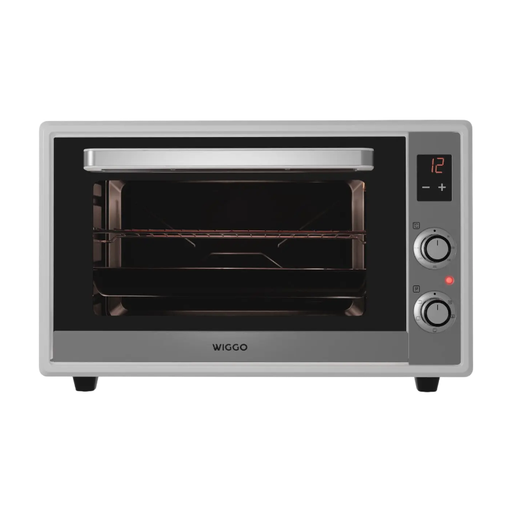
A larger freestanding oven to compare if you need a bigger dish; also measure the space needed for the casing and ventilation.
The product description lists a capacity of 65 litres, six cooking functions, a 90-minute timer and external dimensions of 40 × 60 × 49 cm.
 No image available
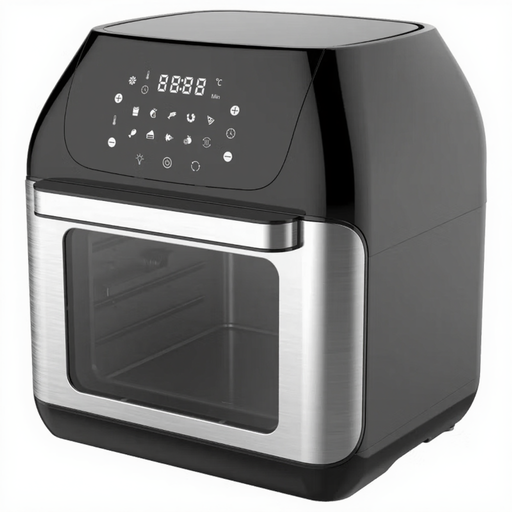
A compact oven option to consider if your dish is small enough; check the dimensions before making your choice.
The product information lists a capacity of 12 litres, a timer of up to 90 minutes and a rotisserie function.
 No image available
The listed temperature setting includes the 180 °C used in the Netherlands Nutrition Centre’s example recipe; also compare the capacity and dish size with what you plan to cook.
The product information lists a capacity of 6,5 litres, a temperature range of 80–200 °C, a timer of up to 60 minutes and circulating hot air.
 No image available
An option to compare if you want several oven settings; check that your dish fits and follow the positioning instructions.
The product information lists a capacity of 30 litres, a temperature range of 100–230 °C, top and bottom heat, and a fan setting.
Follow the instructions in your own recipe. For a recipe for two, the Netherlands Nutrition Centre recommends 180 °C and 45–60 minutes in a small oven dish; those settings won’t necessarily work for a larger nut loaf or one made with different ingredients.
It depends on the positioning instructions for the model you’ve chosen and the ventilation clearance available. The Netherlands Fire Service advises that heat from appliances must be able to escape; check the manual before choosing a spot.
For cooked leftovers, the Netherlands Nutrition Centre advises cooling them within two hours, storing them covered in the fridge and eating them within two days. When reheating, heat leftovers all the way through until piping hot, and don’t reheat them more than once.
The Dutch government says you can contact the retailer about your statutory rights. There is no fixed statutory guarantee period in the Netherlands; what you can expect from a product depends, among other things, on the product itself and the sales information. A manufacturer’s guarantee may offer additional rights.
Yes. The NVWA states that CE marking is compulsory for electrical consumer products. The marking is the manufacturer’s declaration that the product meets the applicable requirements; on its own, it is not an independent test of the baking results or confirmation of a particular offer.