
Cook with a favourite baking tin
You mainly want to know whether your existing tin of nut mixture will fit in the oven. So, as well as checking the capacity in litres, look at the usable interior dimensions.


Start by checking the outside dimensions of your baking tin against the usable interior space of the mini oven; capacity in litres alone won’t tell you whether it will fit. Then choose an oven setting and timer to suit your recipe, and check that the appliance will fit on your worktop with the recommended clearance around it.
You mainly want to know whether your existing tin of nut mixture will fit in the oven. So, as well as checking the capacity in litres, look at the usable interior dimensions.
You’re looking for oven settings and a timer to suit your recipe’s cooking time, so you know when to check on your dish.
You’re weighing up the oven’s external dimensions against the clearance required around a freestanding oven, as set out in the manual.
First compare your tin with the oven’s interior, then consider the settings your recipe needs and where you plan to put the oven.
| What to consider | What to look for | Who should prioritise this? |
|---|---|---|
| Will the tin fit? | Measure your tin, including any protruding edges, and compare its width, depth and height with the model’s usable interior dimensions and shelf positions. Capacity in litres alone won’t confirm that it will fit. | If you want to use your existing tin for nut bread, you’ll want to make sure it fits on a suitable shelf. Around 36% of consumers put tin fit first. |
| Settings and timer | Check the temperature, available heat settings and maximum timer duration. The Netherlands Nutrition Centre’s nut bread recipe uses 180 °C and takes 45–60 minutes; these settings won’t suit every recipe. The Princess 112741 has a timer of up to 60 minutes. | If you want to make lunch to a specific recipe, you’ll need to be able to match the oven settings and timer to it. Around 29% of consumers prioritise recipe settings. |
| Position and ventilation | Compare the external dimensions with your worktop and follow the manual for the exact model. The Inventum OV307B manual requires 10 cm of clearance all round; don’t assume the same applies to other ovens. | If you have limited worktop space, you’ll want to know whether the oven will fit while still leaving the recommended clearance for ventilation. Around 21% of consumers look at this first. |
| Cleaning and service | Check which parts, such as a crumb tray, are included and what the manufacturer says about the model’s warranty or repair service. | If you use the oven regularly, you’ll want to know which removable parts you can clean and what support the manufacturer offers. Around 14% of consumers prioritise maintenance and service. |
Capacity in litres won’t tell you whether the usable width, depth and height are sufficient for your baking tin.
Measure the tin, including any protruding edges, and compare its dimensions with the model’s oven space and shelf position.
The Netherlands Nutrition Centre’s example recipe takes 45–60 minutes to bake. The Princess 112741’s timer runs for up to 60 minutes, so check how to operate it during cooking and keep an eye on your dish towards the end.
Follow the settings for the recipe you’re using and check the dish as it approaches the end of its cooking time.
An oven needs room to release heat. The required clearance depends on the model.
Before buying, check the external dimensions and the placement instructions in the manual for that specific oven.
The OV207B has a stated capacity of 20 litres; the OV307B has a capacity of 30 litres. Inventum describes both models as freestanding fan ovens.
The Princess 112741 is a convection oven with a stated capacity of 20 litres.
According to the specification sheet, the TO 2056 has a capacity of 30 litres and a 120-minute timer. The TO 2067 is a separate 20-litre model.
Tomado describes the TEO3000B as a freestanding oven with a capacity of 30 litres.
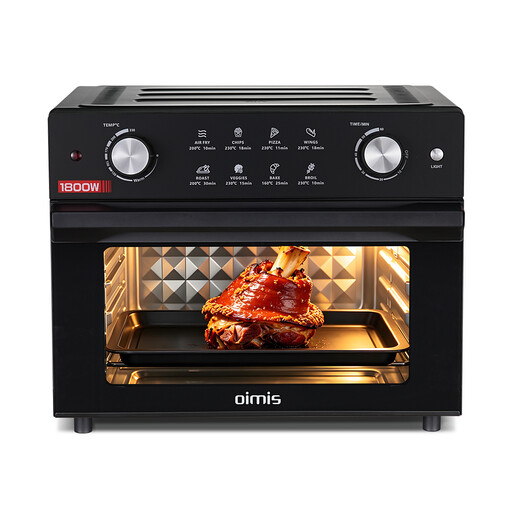
This selection includes freestanding mini ovens and oven/air fryer combinations for baking or roasting.
 No image available
The description mentions baking and roasting, with a removable divider that creates one oven space.
Capacity: 23L.
 No image available
The product description mentions an oven function for baking and roasting in a combination appliance.
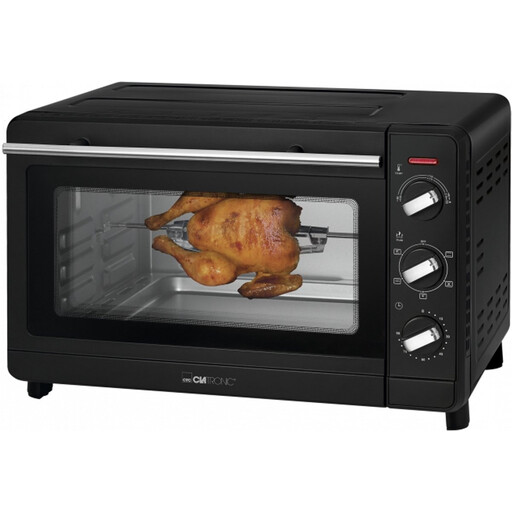
Capacity: 30 litres. The description mentions temperature and time controls operated by two dials.
 No image available
The timer is listed as running for up to 60 minutes, making it suitable for cooking times within that range.
Temperature range: 80–200 °C. The product name specifies a stainless steel finish.
 No image available
The product description mentions top and bottom heat, plus a fan for baking and roasting.
Temperature setting: 100–230 °C. Timer: up to 90 minutes.
 No image available
The product description mentions baking, grilling and roasting in a freestanding oven.
Capacity: 45 litres. Listed functions: top heat, bottom heat and fan-assisted cooking.
No. The Netherlands Nutrition Centre gives a temperature of 180 °C and a cooking time of 45–60 minutes for its own nut bread recipe; follow the instructions for any other recipe. When switching from conventional heat to fan-assisted cooking, the Netherlands Nutrition Centre advises using a lower setting and checking the food towards the end of cooking.
Follow the manual for the exact model and keep the ventilation openings clear. The Inventum OV307B manual requires 10 cm of clearance all round; this distance doesn’t automatically apply to other ovens. The Netherlands Fire Service stresses that appliances need room to release heat.
Leave any leftovers to cool, cover them and put them in the fridge within two hours, as advised by the Netherlands Nutrition Centre. This advice applies to prepared food, not packaged nut bread from the bread aisle.
A manufacturer’s warranty is in addition to your statutory rights. ACM ConsuWijzer explains that the retailer must resolve the issue free of charge if a product breaks sooner than you could reasonably expect under normal use. There is no single fixed expiry date for statutory rights that applies to every product.
Electrical equipment covered by the European Low Voltage Directive, with an AC voltage of 50–1,000 V, must carry the CE marking before it is placed on the EU market. This is a general requirement; check the marking and product information for the item you’re planning to buy.