
Baking a cake for a special occasion
Your main concern is whether your own cake tin will fit, with enough room above the mixture for it to rise. Allerhande uses a 25 cm cake tin for its lemon cake.


Start by checking the dimensions of your cake tin and the instructions in your recipe. Then choose a mini oven with usable interior space, a cooking setting and a timer to suit them. A compact oven takes up less room, but the capacity in litres alone won’t tell you whether your tin will fit. Also check the placement instructions and the CE marking on the appliance you’re considering; the NVWA states that CE marking is compulsory for electrical consumer products.
Your main concern is whether your own cake tin will fit, with enough room above the mixture for it to rise. Allerhande uses a 25 cm cake tin for its lemon cake.
You want to set the cooking mode and time to suit your recipe, and check on your cake as it bakes. Recipes can vary in temperature and cooking time.
You’re looking for a compact oven, but also need to leave the recommended ventilation clearance around it. For example, Tomado’s manual specifies 10 cm of clearance all around the TEO3000B.
For a cake for a special occasion, the fit of your tin, your recipe’s settings and the space on your worktop all matter. Allerhande’s lemon cake recipe calls for a 25 cm tin, 160 °C and 55–60 minutes; follow the instructions for the recipe you’re using.
| What to consider | What should you look for? | Who is this important for? |
|---|---|---|
| Fit of the cake tin | Measure your tin, including any protruding edges, and check the usable interior width, shelf position and clearance above the mixture. | I want to use my own tin and leave room for the cake to rise; around 36% of consumers make this their top priority. |
| Cooking setting and timer | Check that the oven has the setting and timer you need for the recipe you’ll actually be following. | Those who want to match the oven settings to their recipe and check on their cake while it bakes often prioritise this; around 29% of consumers rank control over baking as their top priority. |
| Space and ventilation clearance | Measure the available space and check the clearances specified in the manual for the exact model. | If worktop space is limited, you’ll want to know whether the oven will fit with the required clearance around it; around 21% of consumers put placement first. |
| Accessories and service | Check whether you already have a suitable cake tin, which accessories are included and who the seller is if you need to make a warranty claim. | I want to weigh up the cost of the oven and any baking tin I need without losing sight of whether the tin will fit; around 14% of consumers make the purchase cost their top priority. |
The capacity in litres doesn’t tell you how much usable width and height there is at the shelf position you’ve chosen. A tin that looks small enough on paper may still not fit properly.
Measure your own cake tin and compare it with the usable interior space. Remember to leave room above the mixture for the cake to rise.
A supplied baking tray isn’t necessarily the tin your recipe calls for. Check what comes with the oven and whether your own cake tin will fit inside.
Compare your tin’s dimensions with the oven before you choose.
A manufacturer’s warranty doesn’t replace the seller’s responsibility for a faulty product. The Dutch Government states that there is no fixed statutory warranty period in the Netherlands.
Keep your proof of purchase and contact the seller if there’s a fault. Treat the manufacturer’s terms as additional cover.
Inventum offers the freestanding 20-litre OV207B and 30-litre OV307B; according to Inventum, both models have top and bottom heat.
The TEO3000B is a 30-litre oven with top and bottom heat; Tomado lists a timer of up to 120 minutes.
According to the manufacturer, the Tristar OV-3640 is a 60-litre freestanding oven with top and bottom heating.
Severin says the 42-litre TO 2058 is suitable for cakes, among other things, with top and bottom heat adjustable separately or together.
This selection features freestanding ovens for baking. Compare your cake tin’s dimensions with the usable interior space and follow the placement instructions for the exact model.
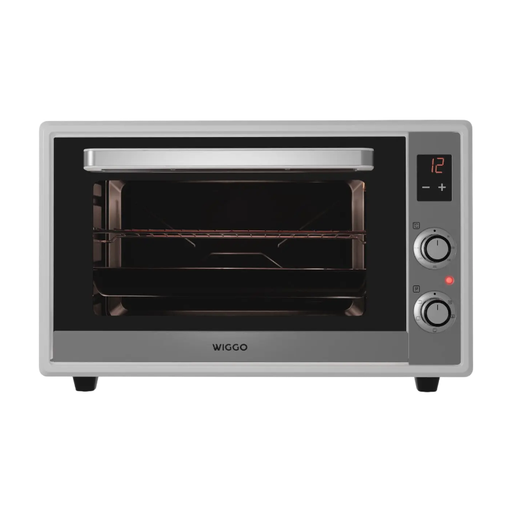 No image available
Its stated capacity makes this a spacious option to consider if your tin and available space are a good fit. Before buying, check the usable interior dimensions and ventilation clearance.
The product name lists a capacity of 65 litres and a power rating of 2000 W.
 No image available
Consider this model if you’re looking for a freestanding oven and the available space proves suitable for your cake tin. Check the interior dimensions and shelf position to be sure.
The product name lists a capacity of 45 litres and a power rating of 2000 W.
 No image available
This capacity can help you compare oven sizes, but it doesn’t tell you on its own whether your cake tin will fit. Also check the clearance specified in the manual.
The product name lists a capacity of 35 litres and a power rating of 1800 W.
 No image available
A compact oven could be a good option if worktop space is limited. Check your tin’s dimensions and the clearance required for the exact model.
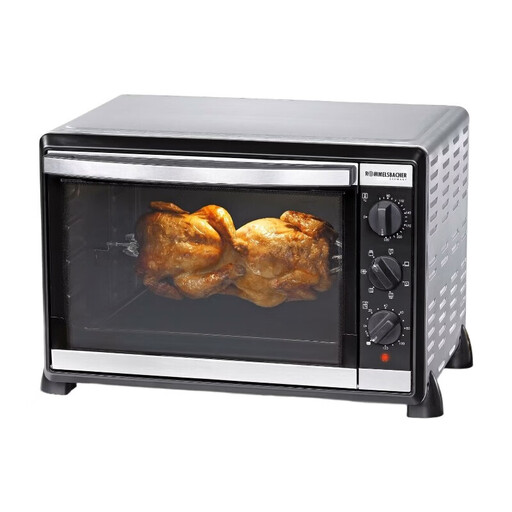 No image available
Consider this model if you’d like to use the listed rotisserie and grill functions as well as bake. Check that the oven fits in your available space and that your cake tin fits inside.
Not necessarily: start by following the temperature and cooking setting in your recipe. Allerhande specifies 160 °C, while the Good Food recipe calls for 180 °C or 160 °C with a fan. Check which settings your mini oven offers.
According to the Allerhande recipe, the cake is ready when a skewer comes out of the centre dry and clean. Cooking times can vary from oven to oven, so use this test as well as following the recipe instructions.
Follow the manual for the exact model. Tomado specifies 10 cm of clearance all around the TEO3000B and says that the ventilation openings must not be covered. This measurement doesn’t automatically apply to other ovens.
According to the Dutch Government, in many cases you have 14 days to change your mind when buying online from a business. There is no fixed statutory warranty period in the Netherlands; if a product is faulty, contact the seller. Check the terms that apply to your purchase.
Yes. The NVWA states that CE marking is compulsory for electrical consumer products. This general product requirement doesn’t confirm that an individual item for sale has been checked, so look for the marking on the product you’re buying.