
Anyone baking several batches for guests
Compare the usable baking tray area and consider how many biscuits you want to bake per batch, with space between them.


When choosing an oven for baking jam biscuits for guests, focus on the usable baking tray dimensions and how much space the biscuits need when spaced apart. The capacity in litres won’t tell you how many biscuits will fit in each batch. A more compact oven may take up less worktop space, but you may need to bake more batches. Also check the oven settings and the clearance specified in the manual for your chosen model.
Compare the usable baking tray area and consider how many biscuits you want to bake per batch, with space between them.
Measure the space for the oven, but also allow for the clearance specified in the manual.
Check whether the model offers top and bottom heat, and whether fan-assisted cooking would be a useful extra for you.
A good fit if: you’re short on space and don’t mind baking the biscuits in more batches. Tristar lists the OV-3620 as having a 19-litre capacity and a baking area of 29,5 × 25,0 cm.
Bear in mind: Tristar doesn’t list a convection function, so check how many biscuits will actually fit on the tray.
A good fit if: you want extra baking space without going straight for a large oven. Inventum lists the OV307B as having a 30-litre capacity, a baking tray, top and bottom heat, and fan-assisted cooking.
Bear in mind: the capacity in litres doesn’t tell you how many biscuits will fit on the tray. Inventum specifies a minimum distance of 10 cm from walls.
A good fit if: you bake larger quantities and have enough space. Princess lists the 112754 as having a 45-litre capacity, fan-assisted cooking, top and bottom heat, and a baking tray.
Bear in mind: its external dimensions are 58 × 43,3 × 37 cm. You’ll also need to follow the model’s placement instructions.
A jam biscuit recipe from Rutger Bakt calls for preheating the oven and using a baking tray lined with baking paper. So start by comparing the usable tray size, then look at the oven settings and how much space the appliance needs, including the specified ventilation clearance.
| What to consider | What to look for | Who is this important for? |
|---|---|---|
| Biscuits per batch | Compare the dimensions of the supplied baking tray with your preferred layout, leaving space between the biscuits. | When I’m baking for guests, I want to know how many biscuits will fit on the tray with space between them; around 40% of consumers prioritise the number per batch. |
| Oven setting and temperature | Check whether the model has top and bottom heat, fan-assisted cooking or both, and follow the recipe and manual when choosing the setting. | I want to match the oven setting to the recipe rather than assume an extra feature is automatically better; around 30% of consumers focus mainly on the choice of baking setting. |
| Space and placement | Measure the external dimensions and allow for the clearance specified in the manual for the exact model. Inventum specifies a minimum distance of 10 cm from walls for the OV307B. | If my worktop is short on space, the oven still needs to fit with the specified clearance; around 20% of consumers make the available space the main priority. |
| Cleaning and service | Compare the cleaning instructions, any removable parts and the terms of any additional manufacturer’s warranty. | I want to be able to deal with any spilt jam after baking and know who to contact if something goes wrong; around 10% of consumers focus mainly on maintenance and service. |
The capacity in litres doesn’t tell you the usable surface area of the baking tray. If the tray isn’t big enough for your preferred layout, you may need to bake more batches.
Check the dimensions of the supplied tray and compare them with the space your biscuits need.
Baking more batches takes extra time. Also check that the supplied tray suits your preferred layout.
An oven may fit on your worktop but still not have the clearance required by the manual. For the Inventum OV307B, the manufacturer specifies a minimum distance of 10 cm between the oven and walls.
Before buying, check the placement instructions for the exact model you want to set up.
For the Rommelsbacher BG 1055/E, the manufacturer lists a capacity of 18 litres and a 60-minute timer, while one product listing states 10 litres and 30 minutes. That difference could matter if you’re planning to bake several batches.
Before deciding, compare the full model code, capacity, timer and accessories with the manufacturer’s specifications.
According to ACM ConsuWijzer, your statutory warranty rights are separate from any warranty offered by the manufacturer or seller.
Check what an additional warranty covers, and contact the seller if the product is faulty.
An additional warranty may cost extra. Compare its terms with your statutory rights before paying for it.
According to Inventum, the OV307B combines a 30-litre capacity with top and bottom heat, fan-assisted cooking and a supplied baking tray.
According to Tristar, the OV-3620 is a 19-litre oven with a baking area of 29,5 × 25,0 cm.
Princess lists the 112754 as having a capacity of 45 litres, fan-assisted cooking, top and bottom heat, and a baking tray.
Severin’s product sheet describes the TO 2058 as an oven for baking and toasting, with a capacity of around 42 litres. It has fan-assisted cooking and top and bottom heat, which can be used separately or together.
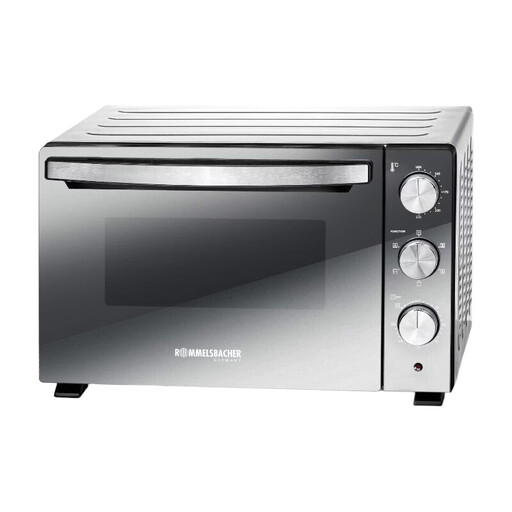
Rommelsbacher describes the BG 950 as a 10-litre oven and the BG 1055/E as an 18-litre model with circulating air as an extra option.
These product picks include freestanding and compact appliances with baking functions, for anyone weighing up oven settings, baking space and available room.
 No image available
An option to compare if you’re looking for top and bottom heat and an adjustable cooking time.
35 L capacity, 1800 W, three heating functions, a 90-minute timer and a supplied baking tray. Allow at least 10 cm of clearance on all sides and 30 cm above the oven. Don’t use it in an enclosed cupboard.
 No image available
An option if you want a choice of heating settings for baking.
22-litre capacity, five heating settings, temperature control up to 230 °C and a 60-minute timer. The description lists top and bottom heat, fan-assisted cooking, a supplied baking tray and baking tins up to 25 cm in diameter.
 No image available
An option to compare if you want a choice of top and bottom heat and fan-assisted cooking.
30-litre capacity and external dimensions of 50,5 × 33 × 40,3 cm. The description lists top and bottom heat, fan-assisted cooking and manual cleaning.
 No image available
An option if you want to compare an appliance with a specified baking programme against freestanding ovens.
30-litre capacity, 21 presets, a Bake preset and a temperature range of 30–230 °C. External dimensions are 456 × 430 × 365 mm. Clean the interior after each use and keep the appliance away from flammable materials.
 No image available
A compact option to compare if you bake small batches and want top and bottom heat.
10-litre capacity, a temperature setting of 80–230 °C and a 30-minute timer. The described baking tin size is up to 20 cm, so bear this in mind when planning your biscuit layout.
Not without checking the setting for your recipe and oven. Rutger Bakt’s recipe uses 170 °C; Consumentenbond explains that fan-assisted cooking is often used at around 20 degrees lower than top and bottom heat. This is general guidance, not a guaranteed setting for every recipe or model.
Place the oven on a suitable, sturdy surface and follow the clearance instructions in the manual for the exact model. For the Inventum OV307B, the manual specifies a minimum distance of 10 cm from walls. This distance doesn’t automatically apply to other models.
Follow the cleaning instructions for your model and let hot parts cool down safely before cleaning them. Inventum recommends cleaning the OV307B with a soft, damp cloth and a little washing-up liquid; Princess lists a removable crumb tray for the 112754.
According to ACM ConsuWijzer, you’re entitled to a product that works properly when used normally. If the product is faulty, the seller must provide a solution free of charge in line with the applicable terms. Statutory warranty rights are separate from any manufacturer’s warranty, and in the Netherlands there isn’t simply one fixed expiry date that applies to every product.
Yes. The Netherlands Food and Consumer Product Safety Authority states that CE marking is required for the relevant electrical products. The manufacturer is responsible for meeting the applicable safety requirements; CE marking alone doesn’t tell you how well an oven bakes jam biscuits.