
Workshop leader running back-to-back sessions
Wants to plan the number of baking batches around the size of the dough, the number of participants and the time available.


Choose an oven based on the recipe and the number of flatbreads that will actually fit on the baking tray or stone at once; capacity in litres alone won’t tell you that. A baking and toast oven, stone oven and tabletop oven each support different ways of working, while pita or naan may be better cooked in a hot pan. Before you buy, also check the available space, power connection and product documentation for the exact model.
Wants to plan the number of baking batches around the size of the dough, the number of participants and the time available.
Wants participants to shape and cook small flatbreads at the same time, and is comparing a shared baking tray with a tabletop oven.
Needs to position the oven with enough room for heat to escape and a suitable power connection.
Choose this option: if you want to bake several small flatbreads per batch or demonstrate different recipes.
Keep in mind: measure the usable baking tray and your dough portions; capacity and heat settings don’t tell you how many flatbreads will fit at once.
Choose this option: if you want to demonstrate a small batch and your dough fits on the included tray.
Keep in mind: a smaller capacity doesn’t tell you how many flatbreads will fit; check the usable surface area.
Choose this option: if you mainly want to demonstrate cooking a thin flatbread on a hot stone.
Keep in mind: check that the recipe is suitable for the stone and that the exact model has enough space and a suitable power connection.
Choose this option: if participants each want to cook a small piece of dough rather than make one larger flatbread in a shared oven.
Keep in mind: the number of spatulas doesn’t tell you how many portions will cook at once or what size will fit.
Choose this option: if your recipe cooks pita or naan in a pan, or pan cooking is part of the workshop.
Keep in mind: a mini oven won’t automatically cook food in the same way as the recipe.
| Consideration | What should you check? | Who should consider this? |
|---|---|---|
| Baking surface and throughput | Measure the rolled-out dough portions and the usable area of the tray or stone. Plan your batches using the timings in your own recipe. | If I’m running several groups back to back, I want to know how many portions will actually fit at once and how many batches I’ll need. Around 36% of consumers prioritise baking throughput. |
| Heat suited to the recipe | Choose the recipe first, then compare its cooking method with top and bottom heat, fan cooking, a stone or a pan. | If I want to teach a specific baking method, I want the heat source to suit the recipe. Around 29% of consumers give recipe and baking method the highest priority. |
| Positioning and power connection | Check the external dimensions, the model-specific clearance needed for heat to escape, the plug and the available power connection. | If I’m setting up several baking stations in a limited space, I want to know in advance where each appliance can be positioned safely. Around 21% of consumers prioritise their workspace layout. |
| Cleaning and service | Check which parts can be removed and follow the cleaning instructions. Bear in mind that a manufacturer’s warranty is separate from your statutory rights against the retailer. | After repeated use, I want to be able to clean the parts properly and know who to contact if something goes wrong. Around 14% of consumers give cleaning and service the highest priority. |
The Inventum manual specifies 10 cm of clearance all around the OV207B; this is model-specific guidance, not a fixed measurement for every mini oven. The Fire Service recommends plugging high-power appliances directly into a wall socket wherever possible, rather than using a cable reel or extension lead.
The usable space varies depending on the baking tray, stone and size of the dough. A larger capacity alone won’t tell you how many flatbreads you can cook per batch.
Measure the rolled-out dough and the baking surface you can actually use.
Pita, naan and thin flatbreads may need different cooking methods. A high maximum temperature doesn’t prove that an oven is suitable for every recipe.
First decide which bread and technique participants will learn, then choose an oven or pan.
A freestanding oven may need extra clearance for heat to escape, as specified in the manual for that particular model.
Read the manual and check the available space and power connection before buying.
Freestanding baking and fan ovens, with models suited to baking tray use and a range of oven settings.
Mini ovens, including models that fit a round baking tin and have separately switchable top and bottom heat.
Compact baking and toast ovens, including models for small demonstration batches.
Electric pizza ovens, including a model designed for baking on a stone.
Pizzarette tabletop ovens, worth considering when participants are cooking small portions of dough individually.
This selection includes stone ovens and mini ovens for workshops where flatbreads are cooked using different oven methods. Measure the usable baking surface and check that your chosen model suits your recipe and workspace.
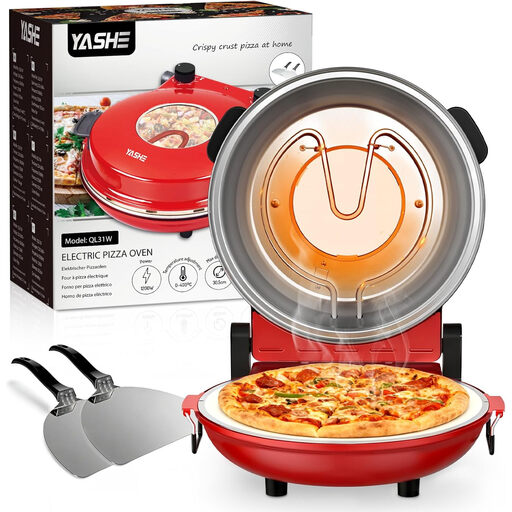 No image available
A stone oven to consider if your recipe is suited to baking on a ceramic stone.
1200 W; 30 cm ceramic stone; top and bottom heat; built-in timer and viewing window.
Surfaces can get very hot during use; wear heat-resistant gloves and keep the appliance away from flammable materials.
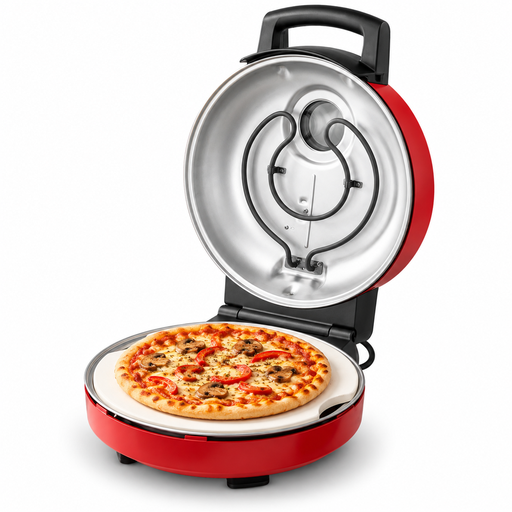 No image available
An option for recipes baked on a ceramic pizza stone; check that its size suits your dough.
1500 W; removable 32 cm ceramic stone; maximum temperature 400 °C; adjustable thermostat, viewing window and 30-minute timer.
 No image available
A toaster oven to consider if your workshop recipe needs oven heat; check the baking space you’ll need beforehand.
1200 W.
The oven, hotplates and accessible surfaces can get very hot during use.
 No image available
A mini oven to consider if your workshop recipe calls for different oven settings; measure the space available in your workspace.
2000 W; 45-litre capacity; white.
Place the appliance on a stable, heat-resistant surface and don’t cover the ventilation openings.
 No image available
A mini oven to consider if your workshop recipe calls for an oven; check the internal space and baking tin you’ll need.
No. Allerhande’s pita and naan recipes describe cooking them in a hot cast-iron pan. Only choose an oven if it suits the recipe and method you want to use in your workshop.
Follow the clearance and power connection requirements for each model. Inventum specifies 10 cm of clearance all around the OV207B. The Fire Service recommends plugging high-power appliances directly into a wall socket wherever possible, rather than using a cable reel or extension lead.
A manufacturer’s warranty is an additional promise; your statutory rights against the retailer are separate. According to ACM ConsuWijzer, the retailer is responsible for providing a solution if a product develops a fault under normal use. How long you can reasonably expect the product to last is also taken into account.
The NVWA says that businesses producing, processing or selling food must work with a food safety plan based on HACCP or an applicable hygiene code. There are also rules on allergen information for unpackaged food sold or supplied to customers. These requirements apply to the activity, not as general product specifications for an oven.
A CE marking is no substitute for checking the product information for the exact model. For electrical appliances covered by the relevant EU rules, the manufacturer must assess the applicable requirements and draw up an EU declaration of conformity before applying the CE marking. So check the documentation for the model you’re considering.