
Baking a small batch
You want to know whether your rolled-out flatbread will fit on the baking tray, without choosing an oven that’s unnecessarily large.


Choose a mini oven based on the usable surface area of the baking tray or stone, not just its capacity in litres. Then compare the temperature and heating settings with your recipe: a pizza stone, for example, doesn’t guarantee that your pita will puff up. Remember to allow for the clearance specified in the manual, and check for the CE marking on the actual appliance.
You want to know whether your rolled-out flatbread will fit on the baking tray, without choosing an oven that’s unnecessarily large.
You’re comparing the temperature and baking surface required by your recipe with what the oven offers, for example when making farinata or pita.
You have a small kitchen, so as well as checking the oven’s external dimensions, you’ll need to allow space for ventilation.
| What to consider | What to look for when buying | Who should prioritise this? |
|---|---|---|
| Usable baking surface per batch | Compare the size of your rolled-out dough with the usable surface area of the baking tray or stone, and check that it will fit through the oven door. | If I want to bake a small batch in one go, it needs to fit on the tray. Around 36% of consumers are mainly concerned with how many flatbreads they can bake per batch. |
| Temperature and heating setting | Compare the recipe temperature and baking method with the stated maximum temperature and settings for the exact model. | When I’m following a specific flatbread recipe, I want to know whether the oven can provide the required heat and baking method. Around 29% of consumers prioritise the recipe requirements. |
| Positioning in a small kitchen | Measure the available space and follow the clearance and connection instructions in the manual for the exact model. | If I have limited worktop space, I need to make sure the oven will fit with the required clearance. Around 21% of consumers are mainly concerned with finding a suitable spot on the worktop. |
| Energy use, cleaning and servicing | Where information is available, compare energy use per cooking session on a like-for-like basis, and check which parts can be removed. | If I bake regularly, I also want to know what’s involved in cleaning and using the oven. Around 14% of consumers prioritise running costs and maintenance. |
An oven’s capacity doesn’t tell you how many rolled-out flatbreads will fit on the baking tray at once. If they won’t fit side by side, you may need to bake another batch.
Measure your dough and check the usable dimensions of the baking tray or stone for the exact model.
King Arthur Baking’s pita recipe calls for direct heat from a preheated stone or steel and an oven temperature of 500 °F. The recipe creator also notes that pita doesn’t always puff up.
Before choosing an oven, compare the recipe instructions with its maximum temperature and the directions for use.
A freestanding oven needs to release heat, and its manual may specify clearance on all sides. The Fire Service advises against obstructing heat from appliances.
Measure the available space, including the clearance specified in the manual, and keep ventilation openings clear.
The Tristar OV-3610 is a 10-litre option for anyone looking for a very compact freestanding oven with a baking tray.
The Inventum OV207B is a 20-litre option for anyone who wants to switch between conventional heat and fan-assisted cooking.
The Severin TO 2068 is a 20-litre option for anyone looking to compare models that include a pizza stone.
The Tefal Optimo OF444810 is a 19-litre option for anyone looking for multiple settings and a stated maximum temperature of 240 °C.
The Princess 112713 is a 20-litre option for anyone who wants to use top and bottom heat separately or together.
The selection ranges from compact mini ovens to larger oven combinations. Compare the usable baking tray dimensions with your recipe temperature, and check that the actual appliance carries the required CE marking.
 No image available
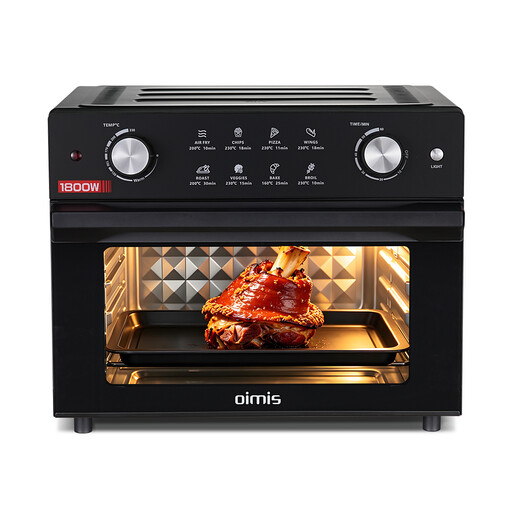
The product description mentions pizza cooking and a size suitable for a 13-inch pizza.
Capacity: 30 L. Power: 1800 W. Mechanical temperature and timer controls and a glass viewing window are listed.
 No image available
The description mentions baking with different heating methods; bear in mind that a larger model will take up more space.
Power: 2000 W. The product description lists six functions, including top heat, bottom heat, convection and grill.
The instructions specify a stable, heat-resistant surface and say that the ventilation openings must be kept clear.
 No image available
A baking tray is included; check that its size suits the amount of dough you want to bake in each batch.
Capacity: 22 L. The description lists five heating settings, a temperature of up to 230 °C and baking tins up to 25 cm in diameter.
King Arthur Baking’s pita recipe requires 500 °F with a preheated stone or steel; the stated maximum temperature of 230 °C isn’t high enough.
 No image available
This compact oven could suit a small batch, provided the dough fits on the baking tray, which measures up to 20 cm.
Capacity: 10 L. Temperature range: 80–230 °C. Top and bottom heat are listed.
King Arthur Baking’s pita recipe requires 500 °F with a preheated stone or steel; the stated maximum temperature of 230 °C isn’t high enough.
 No image available
The description lists baking and pizza functions; check that the baking tray is large enough for your batch.
Capacity: 30 L. Temperature range: 30–230 °C. The product description lists 21 programmes and a power rating of 1800 W.
King Arthur Baking’s pita recipe requires 500 °F with a preheated stone or steel; the stated maximum temperature of 230 °C isn’t high enough.
No, that isn’t guaranteed just because it’s a mini oven. King Arthur Baking’s recipe calls for direct heat from a preheated stone or steel and an oven temperature of 500 °F. Compare those requirements with the temperature and accessories of the exact model; the recipe creator notes that pita doesn’t always puff up.
Follow the manual for the exact model rather than relying on one general clearance measurement. The manual for the Inventum OV207B specifies 10 cm of clearance on all sides. The Fire Service advises allowing appliances to release heat.
No. Wattage is the stated power rating, not the measured electricity used for a complete cooking session. Milieu Centraal recommends comparing ovens by their electricity use per session or per year, where possible.
According to ACM ConsuWijzer, the seller is responsible for the statutory guarantee if a product doesn’t do what you could reasonably expect. This is separate from any manufacturer’s guarantee; what you can expect depends on the circumstances.
CE marking is compulsory for electrical products covered by the relevant product regulations, according to the Netherlands Food and Consumer Product Safety Authority. Check the marking on the actual appliance you’re considering.