
Baking one tart
You want your tart tin to fit and the oven to have the setting specified in your recipe. Heel Holland Bakt recommends using the recipe’s baking setting as your starting point.


Start by choosing your recipe and measuring your tart tin. Then work out how many batches you’ll need and how much worktop space you have. Heel Holland Bakt stresses that you should follow the baking setting specified in your recipe. Compare it with the oven’s functions, and bear in mind that a larger capacity may also need more worktop space.
You want your tart tin to fit and the oven to have the setting specified in your recipe. Heel Holland Bakt recommends using the recipe’s baking setting as your starting point.
You’re planning several batches for the school fête and want to compare the usable baking space, baking tray and timer with your schedule.
You’re looking for a freestanding oven that fits on your worktop, with enough clearance around it as specified in the manual for your chosen model.
Start with your baking tin and the setting specified in your recipe. Then work out how many batches you’ll need and whether the oven will fit on your worktop with the recommended clearance around it.
| What to consider | What to look for | Who is this important for? |
|---|---|---|
| Baking setting and temperature | Check which settings the exact model offers and compare them with the baking setting and temperature in your recipe. | I want to bake the pastry base and filling according to my recipe, rather than switching baking settings without checking. Around 33% of consumers prioritise following a recipe closely. |
| Tin and baking space | Measure your tart tin and compare its outer dimensions with the usable oven space or baking tray; plan how many batches you’ll need. | I want to know whether my tin will fit and how many batches I’ll need for my sales plan. Around 27% of consumers say baking space is their main concern when buying. |
| Positioning on the worktop | Measure your worktop, compare the oven’s outer dimensions and follow the manual’s instructions on the surface and clearance around it. | With limited worktop space, I want to know how much room the oven will take up, including the required ventilation clearance. Around 20% of consumers prioritise the worktop space available to them. |
| Timer and cleaning | Compare the timer with your recipe’s baking time and check which baking tray, crumb tray or handle is included. | I want to plan several batches and make cleaning practical afterwards. Around 20% of consumers focus mainly on ease of use and cleaning. |
The capacity won’t tell you whether your tin will fit on the rack. Rommelsbacher specifies baking tins up to 25 cm for the BG 1055/E; for other models, check the usable space against your own tin.
Measure the tin, including any projecting rim, and compare it with the model specifications. If it doesn’t fit, you may need a different tin or extra baking batches.
Fan-assisted and conventional heat (top and bottom heat) are different baking methods. Heel Holland Bakt recommends following the setting in the recipe. Whether to blind-bake also depends on the pastry base and filling specified in the recipe.
Choose your recipe first, then check which settings are available. Stick to the specified time and temperature, and check the oven temperature with an oven thermometer if needed.
For the Rommelsbacher BG 1055/E, the manufacturer specifies an 18-litre capacity and a 60-minute timer with a continuous setting. The Joybuy listing specifies a 10-litre capacity and a 30-minute timer.
Before buying, check which product version and specifications apply to the listing so you can compare the capacity and timer with your tin and recipe.
A mini oven won’t keep a tart chilled after baking. For perishable food sold at markets and events, the NVWA specifies storage below 7 °C. Check with the school which rules apply at the venue.
Agree in advance how the tart will be stored and transported. Depending on the circumstances, you may need suitable refrigeration.
According to Inventum, the OV457B is a 45-litre freestanding oven with top and bottom heat and fan-assisted cooking.
According to Tristar, the OV-3640 is a 60-litre oven for anyone looking to compare models with more baking space.
According to Princess, the 112754 is a 45-litre freestanding oven with fan-assisted cooking and top and bottom heat.
According to Rommelsbacher, the BG 1055/E is a compact 18-litre mini oven for baking tins up to 25 cm in diameter.
According to Severin, the TO 2058 is a 42-litre oven with separately or jointly controlled top and bottom heat and fan-assisted cooking.
A selection of Joybuy mini ovens for baking. Compare each model’s listed features and positioning requirements with your recipe, tart tin and available worktop space.
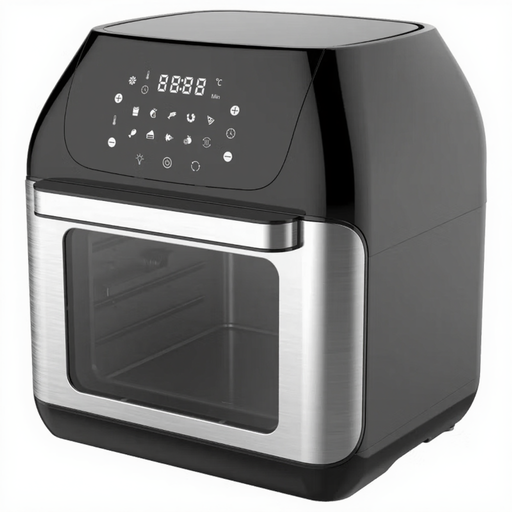 No image available
Consider this compact appliance if the cake programme listed suits your recipe; check that the available setting and tin size are suitable.
The product name specifies 12 L and 1500 W.
 No image available
Compare the baking settings listed in the product information with your recipe, and measure the space available before choosing this oven.
The product name specifies a 4-in-1 model. When positioning it, allow for the ventilation described and use a heat-resistant surface.
 No image available
The capacity could be useful if your tin and schedule call for more space. Check the settings on the exact model and make sure you have enough worktop space.
The product name specifies 45 L and 2000 W. Follow the positioning and ventilation instructions for this appliance.
 No image available
Compare the listed baking settings with your recipe and check that your tin will fit in the oven before you choose.
The product name specifies 35 L and 1800 W. When positioning it, allow for the ventilation clearance specified for this model.
 No image available
A compact option to compare if your tart tin fits within the stated dimensions. Check the product details for the suitable tin size and baking setting.
Before deciding, check the interior dimensions and accessories of the exact version.
Not necessarily: follow the baking setting in your own recipe. Heel Holland Bakt explains that fan-assisted cooking and conventional heat (top and bottom heat) are different baking methods. Only adjust the temperature if your recipe gives instructions to do so.
That depends on the recipe and filling. Heel Holland Bakt explains that blind-baking is used for pastry bases that need to bake for longer than the filling. Follow the remaining steps in your recipe rather than adapting it yourself.
Arrange suitable refrigeration for transport and sale in advance, and check the requirements with the school. For perishable food sold at markets and events, the NVWA specifies storage below 7 °C. The Voedingscentrum advises returning opened crème pâtissière to a 4 °C fridge promptly; don’t determine the storage life of the whole tart based on just one ingredient.
Customers must be able to get information about the allergens present before they buy. According to the NVWA, information about unpackaged products can be provided in writing or verbally, subject to the specified conditions. Check the ingredients and agree with the school on how the information will be made available.
Not automatically based on this scenario alone. The NVWA describes a food safety plan as compulsory for anyone who prepares and sells food several times a year. Even for a one-off sale, it’s still important to prepare, store and sell food hygienically. Agree the arrangements with the school.