
Batch baker preparing several lunchboxes
You want to make enough thin crackers in each batch, so you’re comparing the usable baking tray area rather than just the oven capacity.


Choose a mini oven based on the usable area of the supplied baking tray and the space the appliance needs, including clearance for ventilation. A larger tray can be useful for bigger batches, while a compact model may mean baking smaller portions or in several batches. For the specific electrical appliance, also check that it has the required CE marking: the Dutch Government explains that this is required for appliances placed on the market in the EU.
You want to make enough thin crackers in each batch, so you’re comparing the usable baking tray area rather than just the oven capacity.
You make smaller batches and need to leave enough ventilation space for the exact model, as well as checking its external dimensions.
You want to match the temperature and oven setting to your recipe, and check that thin dough is browning evenly as it bakes.
Start by checking the size of baking tray you need. Then make sure the oven fits on your worktop with the specified ventilation clearance; choose the temperature, oven setting and timer to suit your recipe.
| Buying concern | What to look for | Who is this important for? |
|---|---|---|
| Baking tray area | Compare the dimensions of the supplied tray with the amount of dough you want to spread out in each batch. | If I’m preparing several lunchboxes in advance, I want enough room on the tray for plenty of thin crackers in each batch. Around 36% of consumers prioritise the baking area available per batch. |
| Safe positioning | Measure the width, depth and height, and read the ventilation requirements for the exact model. | If my worktop is short on space, I want to know whether the oven can be positioned there safely, not just whether it fits. Around 29% of consumers consider safe positioning their main buying concern. |
| Temperature, setting and time | Compare the settings and timer with your recipe. Albert Heijn Allerhande gives 180 °C and around 30–35 minutes for one cracker recipe; this is an example from a recipe, not a general baking setting. | If I want to follow a recipe, I look at the temperature, oven setting and time I can select. Around 21% of consumers prioritise these controls. |
| Cleaning and aftercare | Check the cleaning instructions, included accessories and the seller’s and manufacturer’s warranty terms. | If I use the oven often, I want to know how to remove crumbs and what aftercare applies. Around 14% of consumers put maintenance and aftercare at the top of their list of buying concerns. |
Oven capacity doesn’t tell you how much cracker dough will fit on the supplied baking tray. When the dough is spread thinly, the usable tray area determines how much you can bake in each batch.
Compare the dimensions of the baking tray actually supplied with the amount you want to bake.
An oven may physically fit under a cupboard but still not have enough clearance to be positioned as instructed. Rommelsbacher specifies 4 cm of clearance at the sides and 1 m above the BG 1055/E, and says this model is not suitable for built-in use.
Read the positioning instructions for the exact model before choosing a spot. Don’t automatically apply the BG 1055/E’s measurements to other ovens.
The Joybuy listing for the Rommelsbacher BG 1055/E gives a capacity of 10 litres and a 30-minute timer, while the manufacturer lists a capacity of 18 litres and a 60-minute timer for this model.
Before buying, check the full model name and the key specifications of the version on offer.
The OV207B is one to compare if you’re looking for a choice of oven settings.
The OV-3615 is an example to consider for smaller batches when a compact size is the priority.
The BG 950 and BG 1055/E show the different sizes and timer settings available from the same brand.
The Optimo OF444810 is a useful comparison if you want to use different oven settings for things other than crackers, too.
The 112754 is worth comparing if you also want to use the oven for larger dishes.
This selection includes freestanding mini ovens and an air fryer oven to compare for crackers and other home baking. For each specific electrical appliance on offer, check that it has the required CE marking; the Dutch Government explains that this is required for appliances placed on the market in the EU.
 No image available
An option if you want to toast and grill as well as bake.
The product name lists 4-in-1 and 1200W.
 No image available
An option to compare if you want to use the oven for larger dishes as well as crackers.
The product name lists 45L and 2000 W.
 No image available
A model to compare if you’re looking for a freestanding mini oven for crackers.
Before choosing a recipe, check the oven settings and the baking tray size of the version on offer.
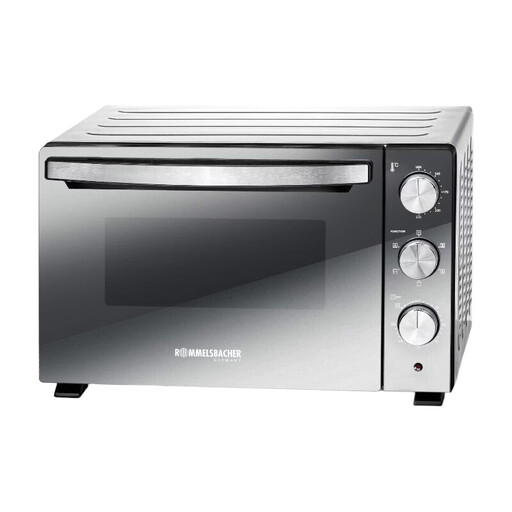 No image available
A model to compare if you’re looking for a freestanding oven for crackers and other baking.
Before choosing a recipe, check the oven settings and the baking tray size of the version on offer.
 No image available
An option if you’re considering an air fryer oven for baking as well as a conventional mini oven.
The product name lists 30L, 21 Presets and 1800W.
No. Baking trays and oven settings can vary. The Albert Heijn Allerhande recipe spreads the mixture over a large baking tray and gives a temperature of 180 °C and a baking time of around 30–35 minutes; with a smaller tray, you may need to bake in batches.
Only if the instructions for the exact model allow it and the required clearance is maintained. For the BG 1055/E, Rommelsbacher specifies 4 cm of clearance at the sides and 1 m above. The manufacturer also says the model must not be built in; don’t apply these measurements to other ovens.
Leave the crackers to cool first, then store them in a cool, dry place in an airtight container. Voedingscentrum gives this storage advice for crackers; perishable toppings need to be kept chilled separately.
Yes. The Dutch Government explains that electrical appliances placed on the market in the EU must have a CE marking. Check the marking on the specific product on offer; it isn’t an independent baking test.
No. ACM ConsuWijzer explains that a statutory guarantee is separate from a manufacturer’s warranty, and that the seller remains responsible if a product doesn’t perform as you could reasonably expect under normal use.