
Cooking with a small oven dish
You’re making one small lentil dish after a trip to the market and want to know whether the dish and its layer of mashed potato will fit in the mini oven.


Choose a mini oven based on its usable internal space and the external dimensions of your oven dish, not just its capacity in litres. For cottage pie, the right heating settings matter for warming the dish and browning the mash. A larger model will also take up more worktop space. Before buying, check the manual, the space required for installation and the exact model you’re considering.
You’re making one small lentil dish after a trip to the market and want to know whether the dish and its layer of mashed potato will fit in the mini oven.
You want to heat the filling and brown the mashed potato, so you’re comparing the heating settings.
You want to know in advance where a freestanding oven could go, so you’re comparing its dimensions and installation instructions.
First, measure your dish, then check which oven settings suit the way you’ll cook. Finally, compare the oven’s external dimensions and installation instructions with the space available on your worktop.
| What to consider | What should you check? | Who is this most important for? |
|---|---|---|
| Dish fit and portions | Measure the dish, including its handles, and the height of the filled dish. Compare these measurements with the usable internal space and shelf position. | I want my dish to fit with its handles, rather than relying on the capacity in litres alone; around 36% of consumers put dish fit first. |
| Heating and browning | Check the manual to see which top-heat, bottom-heat and, if applicable, fan-assisted settings are available on the exact model. | If I want to heat the filling and brown the mashed potato, I check which settings are available for the job; around 29% of consumers give heating options top priority. |
| A safe spot on the worktop | Compare the exact model’s external dimensions and installation instructions with the space available. | I want to know in advance whether the appliance will fit on my worktop with the clearance specified in the manual; around 21% of consumers consider safe positioning their main priority. |
| Cleaning and servicing | Check which parts are removable, how they should be cleaned and what the warranty terms are. | I also think about what happens after cooking: cleaning the parts and knowing who to contact if something goes wrong; around 14% of consumers put maintenance and servicing first. |
A capacity figure doesn’t confirm that your dish, its handles and the layer of mash will fit in the oven.
Measure your dish and compare its dimensions with the usable internal space and shelf position of the exact model.
For the cottage pie recipe described by the Netherlands Nutrition Centre, you use an oven dish and brown the topping under the grill; a rotisserie or pizza stone isn’t part of the recipe.
Start by choosing an oven that fits your dish and has suitable heating settings. Treat extra accessories as optional: parts you don’t use can take up storage space and need cleaning.
A warranty period stated by the manufacturer doesn’t replace your statutory rights against the retailer. ACM ConsuWijzer explains the difference.
Keep your proof of purchase. If something goes wrong, check both the product terms and your statutory rights against the retailer.
According to Inventum, the OV207B is a compact 20-litre oven with six programmes, including top and bottom heat and fan-assisted cooking.
According to Severin, the TO 2068 has a capacity of around 20 litres and several heating options.
According to Tristar, the OV-3620 is a 19-litre oven with top and bottom heat.
According to Princess, the 112751 has a capacity of 32 litres, making it worth considering if you want to use a larger dish.
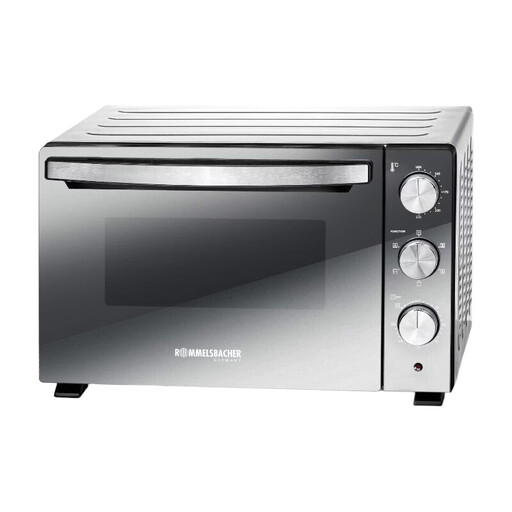
According to Rommelsbacher, the BG 1055/E is a compact 18-litre oven with top and bottom heat and fan-assisted settings.
This selection includes compact and larger freestanding ovens with heating settings for warming and browning a baked dish. Compare the dish dimensions, oven functions and available installation space for each model.
 No image available
The listed top and bottom heat and grill settings are well suited to warming and browning a baked dish.
The description lists a 30-litre capacity, several oven functions and a temperature range of 100–230 °C. The appliance combines an oven with two hotplates; its stated external dimensions are 50 × 42 × 35 cm.
 No image available
The listed top and bottom heat, plus combinations with fan-assisted cooking, give you heating options to compare for your recipe.
The description lists a 22-litre capacity, five heating settings and baking dishes up to 25 cm in diameter. That measurement doesn’t confirm that a rectangular oven dish will fit.
 No image available
The description lists top and bottom heat, fan-assisted cooking and a grill: functions you can compare for the different stages of the recipe.
The capacity is 30 litres. According to the description, it needs to be cleaned by hand.
 No image available
Top and bottom heat are worth considering if you want to bake or warm a small dish.
According to the description, the oven has a capacity of 10 litres, a temperature range of 80–230 °C and space for baking trays up to 20 cm.
 No image available
The listed top and bottom heat, fan-assisted cooking and grill are heating options to compare for a baked dish.
It has a capacity of 45 litres and six oven functions. This model has a hotplate on top of the appliance; its stated product dimensions are 46,5 × 59 × 36 cm. Check these measurements and the installation instructions before deciding where to put it.
No, you don’t need a rotisserie to make cottage pie in an oven dish. The Netherlands Nutrition Centre’s recipe describes grilling the topping to brown it, but uses minced meat, so adapt the method for your lentil filling.
Follow the installation instructions in the manual for the exact model, and don’t rely on the external dimensions alone. The Inventum OV207B manual warns that parts can get hot and says to use oven gloves when putting food in or taking it out.
The Netherlands Nutrition Centre advises cooling cooked food within two hours, storing it covered in the fridge and eating leftovers within two days. Reheat leftovers until they’re piping hot all the way through, and don’t reheat food that has already been reheated.
For an online consumer purchase, you’ll generally have a 14-day cooling-off period from delivery; check the applicable terms. Separately, statutory consumer rights apply if a product doesn’t do what you could reasonably expect when used normally. The retailer is your point of contact for a solution.
Electric appliances placed on the market in the Netherlands must comply with the applicable European product regulations. The manufacturer must ensure the relevant requirements are met and affix the required CE marking. A CE statement on its own doesn’t confirm that a specific product listing meets all the requirements.