
Bakers with a favourite cake tin
You want to know whether your tin and the rising cake will fit in the oven. The Consumers’ Association recommends checking the internal dimensions and comparing them with your largest oven dish.


A mini oven is a suitable choice for baking coffee cake in a shared kitchen only if your cake tin fits inside the usable oven space and you can plug in and use the appliance in a suitable place. Measure your tin, allow room for the cake to rise, and follow the oven setting in your recipe. The capacity in litres alone won’t tell you whether your tin will fit.
You want to know whether your tin and the rising cake will fit in the oven. The Consumers’ Association recommends checking the internal dimensions and comparing them with your largest oven dish.
You want to be able to position, plug in and put the oven away after use without blocking the required heat ventilation. Check the model’s positioning instructions and agree where the appliance can be used.
You want to bake cakes and perhaps prepare other dishes too. The Consumers’ Association lists conventional top-and-bottom heat as a common setting for cakes. Check which settings the specific model has and follow your recipe.
Choose this if: you’ve confirmed your tin fits and usually bake one cake at a time.
The trade-off: a small capacity may leave less room around the tin. Check the usable internal dimensions and height.
Choose this if: you want to cook other oven dishes as well as cakes, and would like a choice of oven settings.
The trade-off: extra settings aren’t needed for every cake recipe. Follow the recipe temperature for the setting you choose.
Choose this if: the shared oven is available and has room for your tin and recipe.
The trade-off: you’ll still need to agree when you can use it, but you won’t have to put another hot appliance on the worktop.
To check whether your tin will fit, compare it with the usable internal space. The Consumers’ Association advises against relying on capacity in litres alone.
| What to consider | What should you check? | Who is this important for? |
|---|---|---|
| Will the cake tin fit? | Measure the tin and compare it with the usable internal dimensions. Leave room above the mixture. | I want to know whether my tin will fit with room for the cake to rise; around 33% of consumers say the fit of the tin is their top priority. |
| Which oven setting? | Check the settings on the exact model and follow the instructions in your recipe. | I want to choose the setting specified in my recipe; around 27% of consumers prioritise having the right baking setting. |
| Positioning and connection | Measure the available space and check the model’s positioning and connection instructions. | In a shared kitchen, I want a suitable place and connection; around 27% of consumers make this their top priority. |
| Cleaning and storage | Check which accessories are included and how they can be cleaned according to the manual. | After baking, I want to clean and store the accessories easily; around 13% of consumers prioritise easy storage. |
The capacity in litres or stated maximum tin diameter won’t tell you whether your cake tin will also fit in terms of width, depth and height, with enough room for the mixture.
Measure your tin and compare its dimensions with the usable internal space and shelf height of the exact model.
Even a small oven gives off heat and needs to be positioned and connected appropriately.
Check the positioning instructions and agree where the oven can go and how it can be connected in the shared kitchen. The Netherlands Fire Service recommends plugging high-power appliances directly into a wall socket wherever possible, rather than using a cable reel or extension block.
Any manufacturer’s warranty is separate from your statutory rights. According to ACM ConsuWijzer, you have a statutory warranty as well as any retailer’s or manufacturer’s warranty.
Find out what your statutory rights mean in your circumstances and exactly what any additional warranty covers.
Inventum describes the OV207B as a freestanding 20-litre oven with top and bottom heat and a fan-assisted setting.
According to Tristar, the Tristar OV-3610 is a compact 10-litre mini oven.
According to Princess, the Princess 112713 is a conventional 20-litre mini oven.
According to Severin, the Severin TO 2067 is a baking and toasting oven with a capacity of around 20 litres and top and bottom heat.
These Joybuy products are ovens and oven combinations with a baking function. Always check the usable internal space and positioning instructions against your own cake tin.
 No image available
A possible choice if you’d like to bake using two separate cooking chambers; check the internal space for your cake tin.
23 L; two cooking chambers that can operate in sync; 15 programmes; LED touchscreen.
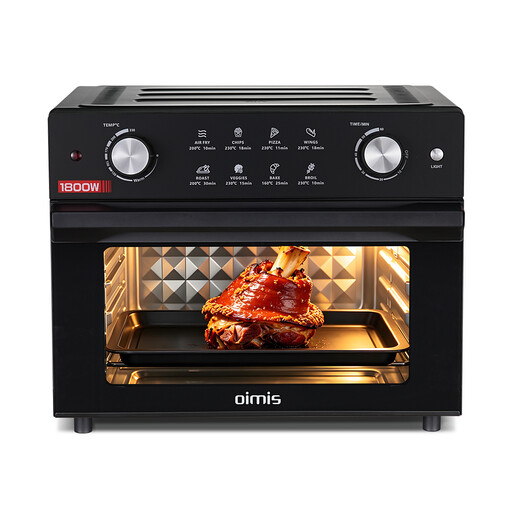 No image available
Worth considering if you want manual controls for oven cooking; check your cake tin’s dimensions separately.
Manual controls with separate temperature and time dials; viewing window; stated power 1800 W.
 No image available
A possible choice if you want to compare top and bottom heat with a fan-assisted setting for baking; measure your cake tin and the available space.
30 L; temperature setting from 100–230 °C; top and bottom heat and fan-assisted cooking; baking, toasting and grilling functions; 1200 W.
 No image available
An option to consider if you want an oven with top and bottom heat and an adjustable cooking time; check that your cake tin will fit.
35 L; 1800 W; top and bottom heat; timer up to 90 minutes.
 No image available
A possible choice if you want to compare different oven settings; also check the height of your tin and the space above the mixture.
22 L; five heating settings, including top and bottom heat with fan assistance. The product information lists baking tins up to 25 cm in diameter.
You can’t tell from the capacity alone. Compare your cake tin’s dimensions and height with the usable internal space, and leave room above the tin.
Top and bottom heat is a common setting for cakes. If the model has several settings, follow your recipe and the manual’s instructions for the setting you choose.
Allow heat to escape as directed in the instructions for the specific model, and check that a suitable space and connection are available. The Netherlands Fire Service recommends plugging high-power appliances directly into a wall socket wherever possible, rather than using a cable reel or extension block.
A mains-powered mini oven that falls within the scope of the relevant EU rules for electrical equipment must comply with those rules. Business.gov.nl says that equipment covered by these rules must have, among other things, a CE marking and an EU declaration of conformity. Check the documentation for the specific model.
In the Netherlands, you have statutory warranty rights in addition to any manufacturer’s warranty. According to ACM ConsuWijzer, a product must do what you could reasonably expect of it when used normally. Under the applicable terms, the seller is responsible for providing an appropriate solution free of charge.