
Baker preparing lots of portions to sell
You need to have plenty of cheese scones ready on time, so you’ll want to compare the baking surface and the number of batches required.


Start with the usable baking surface and how many batches you can bake before the school sale; the capacity in litres won’t tell you how many scones fit on one baking tray. A compact oven can save space, while a larger baking surface takes up more room and doesn’t automatically mean you’ll get the same results when baking on several levels at once. Check that the oven setting suits your recipe, and also consider safe positioning, hygienic food handling and allergen information for the sale.
You need to have plenty of cheese scones ready on time, so you’ll want to compare the baking surface and the number of batches required.
You can bake smaller batches, but the oven and the clearance needed for safe positioning must both fit in your kitchen.
You want to follow a recipe using conventional heat or an adjusted fan setting, so you’re comparing the oven’s features.
A good fit if: you have limited worktop space and can bake the scones in smaller batches.
Bear in mind: the baking tray and the space between scones determine how many fit in each batch, not just the oven’s capacity.
A good fit if: you expect to bake several batches but don’t have room for a larger freestanding oven.
Bear in mind: measure the oven’s external dimensions as well as the space available for safe use.
A good fit if: you mainly need a large baking surface and have enough room for a bigger appliance.
Bear in mind: a large baking tray doesn’t prove that scones will bake evenly on several levels at once.
| What to consider | What should you check? | Which consumers? |
|---|---|---|
| Enough scones per batch | Compare the usable baking tray with the size of your cut-out scones and the spacing you want between them. Then work out how many batches you’ll need. | If I want to bake lots of portions on time, I want to know how many will actually fit on the tray. Around 40% of consumers prioritise having enough baking capacity. |
| A safe spot on the worktop | Measure the space available and check the manual for positioning instructions and the clearance required around the appliance. | With limited worktop space, I want to know in advance whether the oven will fit in the chosen spot and can be used safely there. Around 30% of consumers focus mainly on the space available for positioning. |
| A setting that suits the recipe | Check that the oven has the heating method specified in your recipe. Good Food recommends 200 °C for a conventional oven or 180 °C for a fan oven in its recipe. | If I’m following a recipe that specifies a particular heating method, I want to be able to select that setting and bake a test batch first. Around 20% of consumers prioritise having a suitable baking setting. |
| Cleaning and future use | Check which parts are removable or washable, and whether the other features suit how you’ll use the oven after the sale. | If I want to keep using the oven afterwards, I look at how easy it is to maintain and whether its features suit those uses. Around 10% of consumers prioritise this. |
The percentages show how priorities compare among consumers in this cheese scone and school sale scenario; they are not a measured breakdown of the market.
Oven capacities vary, but it’s the size of your scones together with the usable baking surface that determines how many fit on one tray.
Before planning the number of batches, mark out the scones on the baking tray with the spacing you want between them.
The recipe consulted gives different temperatures for conventional and fan ovens. According to Tristar, the Tristar OV-3610 has no convection function.
Check the oven setting and bake a test batch first using the setting that suits your recipe.
A larger baking surface needs more space, and parts of an oven that you can touch may become hot. This is separate from the food safety and allergen information that matter when selling food.
Measure the space, follow the manual and agree arrangements for using the oven and selling the scones with the school.
The OV207B is a compact 20-litre oven with several oven settings.
The OV-3610 is a compact 10-litre model; at 60 litres, the OV-3640 is a very different size, with a larger baking surface.
The TO 2056 is a medium-sized 30-litre oven with a baking tray and adjustable heating options.
The 112761 is a 55-litre freestanding oven for anyone considering a larger appliance and baking tray.
The Optimo OF444810 has a capacity of 19 litres and several settings, including a pastry setting.
This selection of Joybuy products includes compact ovens and larger oven appliances for different batch sizes. Compare the baking tray dimensions, settings and appliance size listed with your recipe and the worktop space available.
 No image available
The oven function may suit anyone considering a combination appliance; check the baking tray and settings against your recipe.
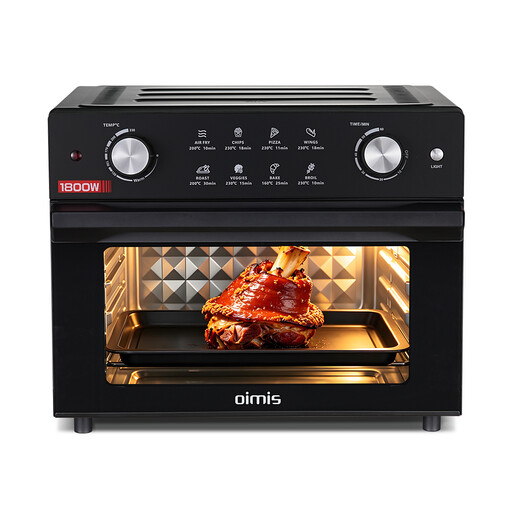
The product information lists a 30-litre capacity, 21 presets, 360° air circulation, 1800 W and space for a 13-inch pizza.
 No image available
The larger capacity and several heating methods are worth comparing if you need more baking space; also measure the space for the appliance.
The product information lists a 45-litre capacity, 2000 W, convection, grill, rotisserie and conventional top and bottom heat.
 No image available
The included baking tray and different heating settings are worth comparing with your recipe and the baking surface you need.
The product information lists a 22-litre capacity, five heating settings, a thermostat up to 230 °C, a timer and a baking tray included.
 No image available
This compact model may suit smaller batches; the stated baking tray size makes it important to plan how many scones you can bake in each batch.
The product information lists a 10-litre capacity, conventional top and bottom heat, an adjustable range of 80–230 °C and a baking tray up to 20 cm.
 No image available
An oven with an integrated hob is a different set-up from a separate mini oven; consider whether the combination suits how and where you’ll use it.
The product information lists a 45-litre capacity, 3534 W, convection, conventional top and bottom heat and an integrated hob. The product name states 60 cm and a five-year warranty.
Start by following the heating method in your own recipe. For cheese scones around 8 cm across, Good Food recommends 200 °C in a conventional oven or 180 °C in a fan oven, with a baking time of 15–20 minutes; smaller or differently shaped scones may need a different baking time. Check they’re cooked through during a test batch.
Arrange your cut-out scones, with the spacing you want between them, on the usable baking tray. Then work out how many batches you’ll need; the capacity in litres isn’t enough on its own.
Don’t assume so just because it’s called a ‘mini’ oven. Follow the positioning and connection instructions for your chosen model, and agree its use with the school sale organiser. For example, the Severin TO 2056 manual warns that surfaces you can touch can become very hot and specifies a correctly installed earthed socket; these instructions apply to that model.
Check the ingredients in the recipe you actually use and make sure customers can get the allergen information before buying. The NVWA says that for prepacked products, this information should be on the label. For unpackaged sales, it can be provided on a card or verbally, for example, as long as it’s made clear that customers can ask for it.
Prepare, store and sell the scones safely and hygienically. The NVWA states that a HACCP food safety plan is required for anyone who prepares and sells food more than once a year; this doesn’t necessarily mean the same plan is required for a one-off sale. Also check whether the school has any requirements of its own.