
Baking for a neighbourhood get-together
You want to make enough cheese scones for your guests, so usable baking tray space and the number of batches are your main considerations.


Start by working out how many cheese scones you want to serve and how many batches you’re happy to bake: the size of the baking tray tells you more than the oven’s capacity in litres alone. Then choose an oven with the settings and temperature your recipe calls for, and check that it will fit on your worktop with enough room for ventilation. A larger oven may mean fewer batches, but it also takes up more space.
You want to make enough cheese scones for your guests, so usable baking tray space and the number of batches are your main considerations.
You want to match the oven setting and temperature to your cheese scone recipe.
You need somewhere to put a freestanding oven, while leaving enough room for heat to escape.
For cheese scones at a neighbourhood get-together, it’s helpful to work out how many batches you’ll need first, then check the oven size, settings and available worktop space.
A good fit if: you want to bake lots of scones and have enough room for the baking tray and the oven’s external dimensions. According to the manufacturers, the Inventum OV457B and Princess 112754 each have a 45-litre capacity and come with a baking tray.
Keep in mind: capacity in litres doesn’t tell you how many scones will fit on the tray with space between them; the appliance also takes up more room.
A good fit if: you’re happy to bake in a few batches and want an oven with a fan setting and a baking tray. Tomado lists the TEO3000B as having a 30-litre capacity.
Keep in mind: the size of the baking tray and the space around the scones determine how many you can bake per batch, not the oven’s capacity alone.
A good fit if: limited worktop space matters more to you than keeping the number of batches down. According to Tristar, the OV-3620 has a 19-litre capacity and comes with a baking tray.
Keep in mind: you may need more batches for a larger group; this model isn’t listed as having a fan function.
| What to consider | What should you check? | Who is this important for? |
|---|---|---|
| Baking space per batch | Measure the baking tray and allow for the spacing your recipe calls for. | When I’m baking for a group, I want to know how many scones will realistically fit on the tray at once. Around 36% of consumers put baking capacity per batch first. |
| Oven settings and temperature | Check the settings and adjustable temperature range for the exact model; follow your recipe and the oven manual. | If you want to follow a recipe closely, it helps to have a suitable setting and temperature. Around 29% of consumers give these recipe settings top priority. |
| Positioning and ventilation | Compare the external dimensions with the space you have available, and follow the manual’s guidance on the surface and clearance. | If I’m short on worktop space, I want to know in advance where the oven can stand safely and release heat. Around 21% of consumers put positioning first. |
| Running costs and aftercare | Compare energy use only on a like-for-like basis, and check the service and warranty terms. | If I want to keep using the oven after the get-together, I want to know how energy use and support factor into my decision. Around 14% of consumers focus mainly on running costs and aftercare. |
An oven’s capacity doesn’t tell you how many shaped scones will fit on the supplied baking tray with space between them. You may need to bake more batches than you expect.
Check the baking tray dimensions and plan the number of batches around your recipe and the size of your scones.
Allow extra baking time if you need to bake more batches.
The Tristar OV-3620 is listed as having top and bottom heat, while other models described here also offer a fan function. The setting you choose determines which recipe instructions you can follow.
Check the functions for the full model number and choose the setting that suits your recipe.
An oven needs more than just enough space to fit: heat also needs to escape. So you may need more room for a suitable position than the appliance itself takes up.
Measure the space and check the model-specific requirements for the surface and ventilation before you buy.
You may need to rearrange your setup to meet the positioning requirements.
Inventum lists the OV457B as a 45-litre freestanding oven with a fan function, top and bottom heat, and a baking tray.
Princess lists the 112754 as a 45-litre freestanding oven with a fan function and top and bottom heat.
Severin lists the TO 2058 as a 42-litre oven with top and bottom heat and a fan function, which can be used separately or together.
Tomado lists the TEO3000B as a 30-litre freestanding fan oven with top and bottom heat and a baking tray.
Tristar lists the OV-3620 as a compact 19-litre oven with top and bottom heat and a baking tray.
This selection includes compact appliances and freestanding ovens for baking. Check whether each model’s baking space, features and positioning suit your cheese scones and get-together.
 No image available
The baking function and two separate compartments may suit you if you want to plan different dishes to cook at the same time.
Capacity: 23 litres. The description lists two synchronisable compartments.
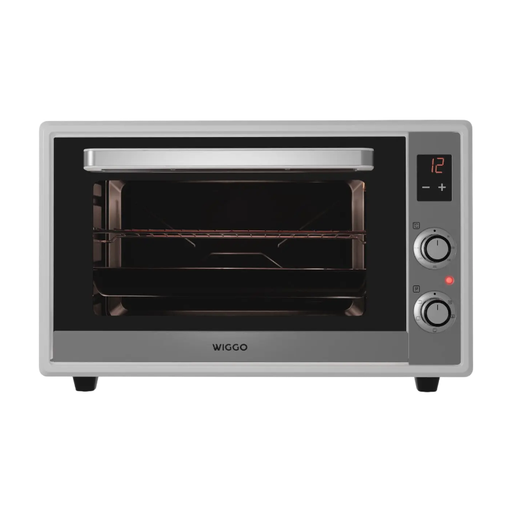 No image available
This freestanding oven may suit you if you’re looking for a larger capacity and have room for the appliance.
Capacity: 65 litres; six cooking functions; mechanical timer up to 90 minutes; optional turbo fan. External dimensions: 60 × 49 × 40 cm.
The exterior can become very hot during use. Keep flammable materials away and check the positioning and ventilation requirements.
 No image available
This freestanding oven may suit you if you’re looking for a larger capacity and several heating functions.
Capacity: 65 litres; six cooking functions; turbo fan; temperature range: 50–250 °C.
The product information warns that surfaces can get hot and advises keeping the ventilation openings clear and children away from the appliance.
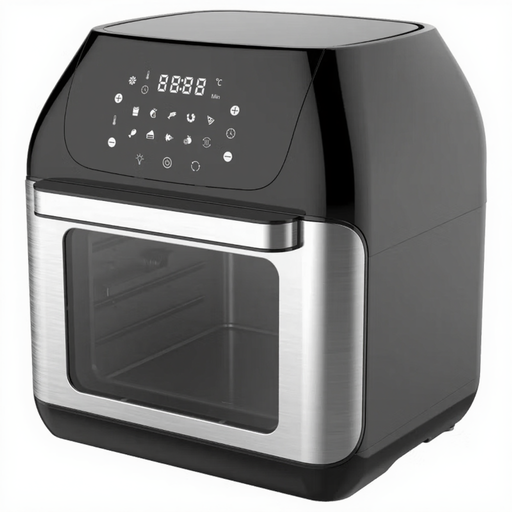 No image available
This oven-shaped appliance with a fan function may suit you if you’re looking for a smaller capacity.
Capacity: 12 litres; power: 1500 W; timer up to 90 minutes.
 No image available
The listed heating options and temperature range are useful if you want to match the oven to your recipe.
Capacity: 30 litres; top heat, bottom heat and fan function; temperature range: 100–230 °C.
Place the appliance on a stable, heat-resistant surface with enough ventilation; surfaces get hot during use.
Follow the temperature, baking time and oven setting in your recipe. Check that your chosen model can be set to the required temperature, and follow the instructions for the setting specified in your recipe.
Don’t go by the external dimensions alone: heat needs to escape. The fire service advises allowing heat from appliances such as ovens to dissipate; follow the manual for your chosen model to find out how much clearance it needs.
Yes. The Netherlands Food and Consumer Product Safety Authority states that CE marking is compulsory for electrical products. Check the marking and product details on the specific appliance; CE marking alone doesn’t tell you how well an oven bakes.
No. According to the Dutch government, there’s no fixed statutory warranty period in the Netherlands: you’re entitled to a product that works properly, and if there’s a problem, the seller must provide a solution. A manufacturer’s warranty is separate.
According to the Netherlands Nutrition Centre, cover leftovers, let them cool and put them in the fridge within two hours of preparation. Foods that need to be kept chilled, such as soft cheese and cold meats, should be refrigerated as soon as possible.