
Baker with limited worktop space
You’re looking for a freestanding oven for biscotti, but first you need to compare its external dimensions and safe positioning requirements with your kitchen.


First, measure the space where the oven will go and the usable baking tray size you’ll need for both rounds of baking. In Rutger Bakt’s cantuccini recipe, the dough logs are baked first, then the sliced biscuits are baked again, so a smaller oven may mean baking in more batches. Before buying, also check the installation instructions and the CE marking on the specific appliance.
You’re looking for a freestanding oven for biscotti, but first you need to compare its external dimensions and safe positioning requirements with your kitchen.
You want enough usable baking tray space for the dough logs and the second bake. The oven’s capacity in litres doesn’t tell you how much will fit on the tray.
You want to be able to use convection and choose a different heating setting when your recipe calls for it.
First measure the available space and the baking tray; then compare the oven settings and the information about use and aftercare.
| What to consider | What to look for when buying | Who it matters most to |
|---|---|---|
| Space around the oven | Measure the worktop and surrounding area; compare the external dimensions and read the installation instructions for the exact model. | I need to fit the oven in and leave the required clearance around it. For around 36% of consumers, where it will go is the top priority. |
| Usable baking tray | Compare the tray size with the dough logs and slices in your recipe; plan to bake in several batches if needed. | If I want to plan both rounds of baking on the tray, I compare its dimensions with my dough logs and sliced biscuits. Batch size is the top priority for around 29% of consumers. |
| Oven settings | Check the manual for the exact model to see which settings are available on their own or in combination. | I want to be able to choose convection and use a different heating setting if needed. This is the most important buying priority for around 21% of consumers. |
| Running costs and aftercare | Compare energy consumption on a like-for-like basis; the stated power rating alone doesn’t tell you how much energy a comparable cooking session will use (Milieu Centraal). | I bake regularly and want to compare energy use fairly and know what support is available if something goes wrong. Running costs and aftercare matter most to around 14% of consumers. |
Oven capacity isn’t the same as usable baking tray space. For biscotti, you use the tray for the dough logs and then again for the sliced biscuits.
Compare the tray size with your recipe and measure the space available outside the oven too.
The required clearance can vary from model to model; the casing alone doesn’t tell you whether the intended spot is suitable.
Before buying, read the installation instructions for the exact model and keep flammable materials away from hot appliances, as advised by Brandweer Nederland.
For the Rommelsbacher BG 1055/E, the manufacturer states a capacity of 18 litres, while a Joybuy listing for this model code says 10 litres.
Compare the full model code, manual and baking tray size before deciding whether the oven suits your recipe.
Inventum describes the OV207B as a 20-litre freestanding oven with convection and six settings.
According to the manufacturer, the BG 1055/E has a capacity of 18 litres and circulating air, with combinations of top and bottom heat.
According to Severin, the TO 2058 is a larger 42-litre freestanding oven.
According to the Dutch brand page, the OV-3625PR has a capacity of 28 litres and a convection function.
The French manufacturer’s page lists the Optimo OX444810 as a 19-litre oven with convection and six cooking settings.
This selection includes compact freestanding ovens, a built-in combination oven and larger ovens. Check whether each model’s size and heating settings suit your recipe and kitchen.
 No image available
A compact option to consider if you’re looking for a freestanding oven with several heating settings.
The description lists a capacity of 22 litres, five settings including convection and top and bottom heat, a temperature setting of up to 230 °C, a 60-minute timer and an included baking tray.
 No image available
The stated baking tray size makes this model worth considering for small batches, but compare the tray with both stages of your recipe first.
The description lists a capacity of 10 litres, external dimensions of 38,5 × 27 × 23 cm and a baking tray of up to 20 cm. Top and bottom heat, a temperature setting of 80–230 °C and a 30-minute timer are also listed.
 No image available
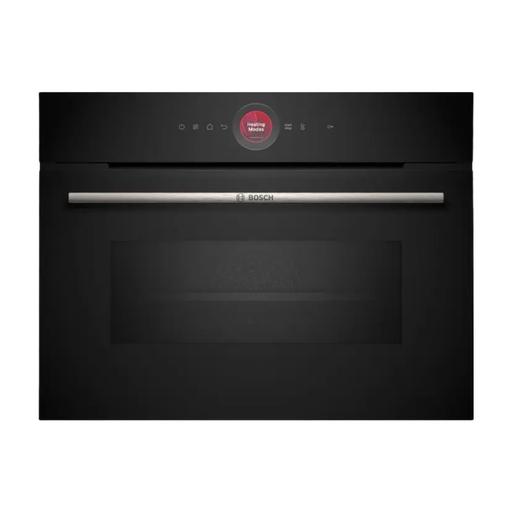
Only consider this model if you have a suitable built-in space; it isn’t a freestanding oven for the worktop.
The product description lists convection and a maximum temperature of 230 °C. The stated niche dimensions are 45,5 × 56 × 55 cm.
 No image available
A larger oven may be a good option if you often bake bigger batches and have enough space for the appliance.
The product name lists a capacity of 45 litres and 2000 W. The description mentions convection, top and bottom heat, and grill.
 No image available
If you’re considering this type of oven for biscotti and other recipes, check the baking function and the available space.
The product name lists a capacity of 30 litres. The description mentions a baking function, 360° air circulation, a temperature range of 30–230 °C, 21 presets and six accessories.
In Rutger Bakt’s cantuccini recipe, the dough logs are baked first, then the sliced biscuits are baked again. When choosing an oven, allow for both arrangements on the baking tray and follow your recipe for the temperature and baking time.
You can only tell by checking the installation instructions for the exact model. Measure the clearance around the oven and keep flammable materials away from hot appliances, as advised by Brandweer Nederland.
No. Milieu Centraal recommends comparing ovens by their energy consumption per use or per year; the stated power rating alone doesn’t show how much energy they use for a comparable cooking session.
According to the Dutch government, the seller must provide a solution if a product is faulty. The Netherlands has no fixed statutory guarantee period; a manufacturer’s guarantee is in addition to your statutory rights.
For many eligible distance purchases from a business, you have a 14-day cooling-off period, according to the Dutch government. Before buying, check the seller’s information and any applicable exceptions.
CE marking is compulsory for electrical products covered by Dutch rules on electrical equipment, according to the NVWA. Check the marking on the specific appliance being offered; the general rule doesn’t confirm that an individual listing complies.