
Bakers with limited worktop space
You want to know whether the oven can be positioned safely, with enough room for heat to escape. The Dutch Fire Service advises leaving ventilation space around appliances.


First, measure the space on your worktop, including the ventilation clearance specified in the manual. Then compare the usable baking tray area with the length of your dough log and the sliced biscuits. A more compact oven takes up less space but may mean baking in extra batches; a larger model offers more baking space but has a bigger footprint.
You want to know whether the oven can be positioned safely, with enough room for heat to escape. The Dutch Fire Service advises leaving ventilation space around appliances.
You want to fit the dough log and, later, the sliced biscuits onto the baking tray as practically as possible. Koken met Kennis describes dough logs measuring 25 cm.
You want to adjust the settings for the two stages of baking. Inventum, Tristar and Severin list different oven settings for the models mentioned.
Start by checking that you have a safe place for the oven and that the tray is the right size. Then see whether the oven settings and practical features suit your recipe.
Suitable for A small, safe space, if you’re happy to bake in several batches when needed.
Trade-off A small exterior doesn’t guarantee a suitable baking tray; check the ventilation clearance too.
Suitable for Anyone who prioritises a longer dough log or fewer separate batches over the smallest possible footprint.
Trade-off The larger casing needs more worktop space, as well as the clearance specified in the manual.
Suitable for If you already have an oven and don’t want another appliance on your worktop.
Trade-off Without details about your oven, its baking results can’t be compared with those of the mini ovens mentioned here.
| What to consider | What should you check? | Who is this important for? |
|---|---|---|
| Safe positioning | Measure the width and depth of the space, and follow the ventilation instructions in the manual for the exact model. | If I have limited worktop space, I want to know whether the oven can be positioned with enough clearance. Around 36% of consumers put safe positioning first. |
| Usable baking tray | Compare the tray size with your dough log, recipe and preferred number of biscuits per batch. | If I’m baking a larger batch of biscotti, I want to know what will fit on the tray for both stages of baking. Around 29% of consumers give tray space top priority. |
| Heat and settings | Check the heating settings, temperature control and timer available on the exact model. | If I want to follow the settings in my recipe, I look at the options for both stages of baking. Around 21% of consumers prioritise adjustable heat. |
| Parts and service | Check which baking tray is included, how the manufacturer recommends maintaining the oven, and which retailer to contact if something goes wrong. | If I want clarity about parts, maintenance and help with any problems before buying, these factors influence my choice. Around 14% of consumers prioritise these practical considerations. |
An oven gives off heat that needs to escape. A space that seems just big enough for the casing may therefore be unsuitable.
Before buying, check the positioning instructions for the exact model and measure the required clearance too.
If there isn’t enough room, you may need to find another place for the oven.
Biscotti are baked first as a dough log, then as slices on a baking tray. The oven’s capacity in litres alone doesn’t tell you whether the tray will suit your recipe.
Compare the usable tray size with the dough log and the number of slices you want to bake in each batch.
If the tray isn’t suitable, you may need to bake extra batches or adjust the recipe quantity.
Severin lists the TO 2052 as a 9-litre, 800 W model without a fan-assisted function, while a Joybuy product title for this model states 12 litres, 1500 W and fan-assisted cooking. These differences make it important to check the specific version.
Before deciding, compare the model and technical details in the listing with the manufacturer’s information.
According to Inventum, the OV207B is a 20-litre freestanding oven for anyone weighing up the interior capacity against the worktop space required.
The OV-3610 is a 10-litre oven worth comparing if the exterior size is a key consideration.
According to Severin, the TO 2052 is a 9-litre oven to consider if a small oven cavity is important to you.
Ariete describes the Vintage 3919/24 as a 10-litre conventional oven for small batches.
This selection includes freestanding mini ovens to compare in terms of usable space, baking options and the room each appliance takes up on your worktop. CE marking is mandatory in the Netherlands for electrical products covered by the relevant regulations; check the marking on the specific product listing before buying.
 No image available
An option to compare if you’re considering a larger freestanding mini oven; first measure the available space and the required ventilation clearance.
The product name gives a capacity of 45 L and a power rating of 2000 W.
 No image available
Compare this oven with your recipe for two batches, and check whether the included baking tray will fit your dough log and biscuits.
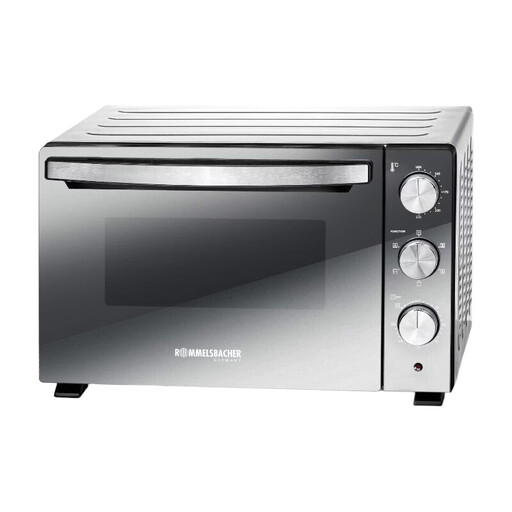 No image available
Factor in the stated footprint when comparing models if your worktop space is limited.
The stated exterior dimensions are 50,5 × 33 × 40,3 cm.
 No image available
Check that this version with hob suits your intended use and the space available.
The stated exterior dimensions are 59 × 46,5 × 36 cm.
 No image available
A compact option to compare if you have limited space; check whether the baking tray is long enough for your dough log.
Don’t just measure the casing; also check the clearance specified in the manual for the exact model. The Dutch Fire Service advises allowing heat to escape around appliances, so there isn’t one fixed clearance that applies to every model.
In the Koken met Kennis recipe, 25 cm dough logs are first baked for 30 minutes in a preheated oven at 170 °C. Once cooled and sliced, they go back into the oven for another 15 minutes. Check that your oven’s baking tray and settings are suitable for this recipe.
Yes. CE marking is mandatory for electrical products placed on the market in the Netherlands that are covered by the applicable regulations. The NVWA explains that the manufacturer uses it to declare conformity; a mention on a manufacturer’s website is not the same as confirmation for the specific product listing.
According to the Dutch Government, you can contact the retailer to find a solution. The Netherlands has no fixed statutory guarantee period; a manufacturer’s guarantee is in addition to your legal right to a product that is fit for purpose.