
Party host cooking for a crowd
You want to prepare the beetroot wedges in a manageable number of batches before the party. The size of the baking tray matters more than the oven’s stated capacity alone.


First, choose a baking tray that can hold the amount of beetroot wedges you need, then work out how many batches you can bake before the party. Next, compare the oven settings and external dimensions: a compact model may mean baking more batches, while a larger one needs more worktop space and room for heat to escape. Also check the CE marking on the actual appliance; a model’s features alone don’t tell you whether the specific item being sold meets the applicable UK requirements.
You want to prepare the beetroot wedges in a manageable number of batches before the party. The size of the baking tray matters more than the oven’s stated capacity alone.
You want to follow a recipe and check whether conventional heat or a fan setting is best for cooking the wedges.
You’re looking for a freestanding oven that fits on your worktop, while also allowing enough room for heat to escape.
Start with the tray size and number of batches you’ll need, then compare the oven settings and the space required for installation. The Voedingscentrum generally recommends setting a fan oven to a temperature around 10% lower than a conventional oven.
| What to consider | What should you check? | Who is this important for? |
|---|---|---|
| Baking tray and batches | Compare the baking tray’s dimensions and usable interior space with the amount of beetroot wedges you want to cook. Plan extra batches if everything won’t fit at once. | For a party, I want to know how many wedges will actually fit side by side on the tray. Around 36% of consumers focus mainly on having enough tray space and a manageable number of batches. |
| Oven setting and cooking | Check whether the model offers conventional heat, a fan setting and the temperature you need. Follow the recipe’s setting and cooking time, and check the results. | When I’m following a beetroot recipe, I want to be able to adjust the oven setting accordingly. Around 29% of consumers give top priority to having a suitable oven setting. |
| Positioning and ventilation | Measure the space available and compare it with the oven’s external dimensions. Follow the positioning and ventilation instructions in the manual for your chosen model. | With limited worktop space, I want to position an oven without ignoring the ventilation requirements. Around 21% of consumers focus mainly on finding a safe, suitable spot. |
| Cleaning and aftercare | Check which accessories are included and how they should be cleaned according to the instructions. Keep your proof of purchase and check any additional warranty terms. | After baking, I want to be able to clean the tray and accessories easily, and know who to contact if something goes wrong. Around 14% of consumers give top priority to cleaning and aftercare. |
The oven’s stated capacity doesn’t tell you how many beetroot wedges will fit side by side on the supplied baking tray. If the tray is too small, you may need to plan for more batches.
Before buying, check the tray size and usable interior space, and compare them with the portion you plan to cook.
Allow for extra batches if everything won’t fit on one tray.
Cooking time depends on factors such as whether the beetroot is raw or pre-cooked, how thick it is and which oven setting you choose. The Voedingscentrum generally recommends a lower temperature for a fan oven than for conventional heat.
Follow a recipe suited to raw or pre-cooked beetroot, choose the corresponding oven setting and check that it’s cooked through.
A freestanding oven needs to fit without blocking heat from escaping. Brandweer Nederland lists ovens among appliances that need to be able to release heat.
Compare the external dimensions with the space available and follow the ventilation instructions for the specific model.
The OV-3620 is a compact mini oven worth comparing if you’re cooking smaller portions or don’t mind baking several batches.
The Optimo OF4848 is a mid-sized option to compare if you want to weigh up oven settings and where you can put it.
The freestanding 112754 is an option to compare if you have more space to spare than you would for a compact mini oven.
The freestanding OV607B is a larger option to compare if you want to cook a bigger quantity and have enough room for it.
The TO 2058 is a useful comparison between mid-sized and larger freestanding ovens.
These product picks are freestanding ovens for beetroot wedges and other oven-cooked dishes. Compare the baking tray and positioning instructions with your needs, and check the CE marking on the actual appliance.
 No image available
An option to compare if you’re looking for a fan oven with several shelf levels.
The product name lists a 35-litre capacity and a four-tier baking rack.
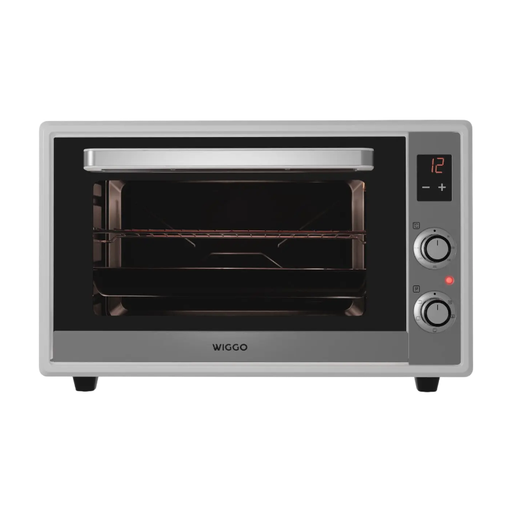 No image available
A freestanding model to compare if you’re planning to cook several portions for a party.
The product name lists a 65-litre capacity and 2000 W. The product description mentions six cooking functions and a 90-minute timer; it describes the turbo fan as optional.
 No image available
An option to compare if you want to choose between conventional heat and convection when cooking.
The product description lists a 30-litre capacity, top and bottom heat, convection and an adjustable temperature range of 100–230 °C.
 No image available
A model to compare if you’re weighing up top and bottom heat against convection.
The product name lists a 45-litre capacity and 2000 W. The product description mentions six functions, including top and bottom heat and convection.
 No image available
An option to compare if you’re looking for a supplied baking tray and top and bottom heat.
The product name lists a 35-litre capacity and 1800 W. The product description mentions a temperature of up to 250 °C, a 90-minute timer and four shelf positions. It states that at least 10 cm of clearance is needed on all sides and 30 cm above; don’t use the oven in an enclosed cupboard.
Don’t assume the cooking time will be the same. Follow a recipe suited to whether the beetroot is raw or pre-cooked and how thick it is, take your chosen oven setting into account, and check that it’s cooked through.
The Voedingscentrum generally recommends setting a fan oven to a temperature around 10% lower because heat transfers more quickly. Check the results as it cooks; this isn’t a guarantee for every model.
Follow the instructions for the specific model and make sure heat can escape. Brandweer Nederland lists ovens among appliances that need ventilation, so don’t use a general clearance as a substitute for the manual.
An electric mini oven covered by the applicable Dutch rules, including the Warenwetbesluit elektrisch materiaal, must have a CE marking. The NVWA describes the low-voltage rules for electrical equipment with a nominal AC voltage of 50–1000 V. A CE marking is the manufacturer’s declaration and doesn’t, in itself, mean that an independent inspection has been carried out. Check the marking on the actual appliance.
Cool leftovers quickly, seal them well and put them in the fridge. The Voedingscentrum says cooked beetroot will keep for two days in the fridge and advises not leaving leftovers out of the fridge for more than two hours. For unopened packaging, follow the storage instructions and use-by date on the pack.