Choose a mini oven based on the usable baking tray, the setting your recipe calls for and the space the appliance needs. The number of litres alone won’t tell you how many pastries will fit at once. For the Koopmans recipe, the recommended settings are 225 °C on the electric conventional setting or 210 °C on the fan setting. A compact model may take up less space, but could mean baking in more batches.
Who is a mini oven suitable for?
Bring-and-share baker making lots of pastries
Wants to take plenty of almond pastries along, so compares the usable baking tray with the size of their own portions. The Koopmans recipe and the product specifications from Inventum and Tomado can help you work out the baking setting and size you need.
Student with limited kitchen space
Has little worktop or storage space and checks the placement instructions for their chosen model as well as its external dimensions. For example, the Tomado manual specifies the clearance required for the TEO2101B.
Student who uses the oven regularly
Wants to bake other dishes after the bring-and-share, so weighs up the baking settings and cleaning involved against the size of the oven. The functions listed vary by model, so choose only settings that suit dishes you actually plan to make.
What should you look for when choosing one?
| What to consider |
What should you check? |
Who is this important for? |
| Batch size |
Compare the usable baking tray with the dimensions of your pastries, leaving space between them. |
If I want to take plenty of pastries to the bring-and-share, I want to know how many will fit on the tray at once. Around 29% of consumers say batch size is their main consideration. |
| Baking setting and temperature |
Check the settings and temperature range of the exact model. For its recipe, Koopmans recommends 225 °C on the electric setting or 210 °C on the fan setting. |
If you want to follow the recipe closely, pay particular attention to the right setting and temperature. Around 23% of consumers prioritise these recipe settings. |
| Space for positioning |
Measure the available space, including the clearance specified in the manual, and keep ventilation openings unobstructed. |
If you have limited space in a shared or small kitchen, the oven needs to fit in line with its manual. Around 18% of consumers say positioning is their main concern. |
| Use after the bring-and-share |
Compare the settings and accessories you expect to use for other recipes. |
If I want to use the oven for other dishes too, the settings I’ll need for them matter. Around 18% of consumers put versatility first. |
| Overall cost |
Allow for the number of batches you expect to bake, and compare electricity use only on a like-for-like basis. |
If you want to manage your spending, consider both the purchase price and the cost of use; wattage alone won’t tell you how much electricity a baking session uses. Around 12% of consumers focus mainly on cost. |
Common buying mistakes
-
Assuming the litre capacity tells you how many pastries fit in each batch
The oven’s capacity won’t tell you how many shaped almond pastries will fit on the baking tray with space between them.
Check the usable tray dimensions and compare them with the size of your own pastries before choosing a model.
-
Positioning an oven without the required ventilation space
Heat needs to escape from an oven. The Tomado TEO2101B manual specifies 10 cm of clearance all around; this measurement does not automatically apply to other models.
Measure the space with the manual for the exact model to hand, and keep the ventilation openings clear.
-
Treating fan and conventional top-and-bottom heat as the same setting
The Koopmans recipe gives a different temperature for the electric conventional setting than for the fan setting.
Choose the baking setting first, then set the temperature specified for that setting in the recipe you’re following.
-
Using wattage or extra warranty cover as a complete cost comparison
Rated power is not the same as measured electricity use per baking session. A commercial warranty is also separate from your statutory rights.
Where available, compare energy use per bake on the same basis, and assess paid cover separately from the statutory guarantee. Milieu Centraal recommends comparing ovens by their energy use per use or per year.
Brands to consider
Inventum
Inventum lists the OV207B as having a net capacity of 20 litres, with both a fan setting and separate top- and bottom-heat settings.
- The listed settings give you a choice between conventional and fan-assisted baking.
- The capacity doesn’t tell you how many almond pastries will fit on the baking tray; compare it with the size of your portions.
Tomado
Tomado says the TEO2101B has a capacity of 21 litres, three shelf positions and a baking tray.
- The manual gives positioning clearance for this specific model.
- Include the clearance specified in the TEO2101B manual in your measurements; don’t apply it to other models without checking.
Tristar
Tristar lists the OV-3615 as having a capacity of 10 litres, top and bottom heat and an included baking tray.
- This model offers a compact option with a conventional baking setting.
- Check that the baking tray is large enough for the number of pastries you want to bake.
Rommelsbacher
Rommelsbacher lists the BG 950 as having a capacity of 10 litres and the BGS 1400 as having a capacity of 22 litres, with settings for conventional baking and circulating air.
- The two models offer different sizes; according to the manufacturer, the BGS 1400 also has circulating-air settings.
- The maximum dish size listed for the BGS 1400 doesn’t tell you how many pastries will fit on the baking tray.
Severin
Severin describes the TO 2067 as a baking and toast oven with a capacity of around 20 litres, offering separately or jointly adjustable top and bottom heat.
- The manufacturer states a temperature range of 100 to 230 °C.
- Before buying, check that the available baking settings suit the recipes you want to follow.
Mini ovens at Joybuy
These product picks range from compact mini ovens with conventional heat to larger models with a choice of baking settings. Compare the stated capacity and functions with the baking tray, the setting required by your recipe and the space you have available.
 No image available
Wiggo WMO-E456(W) mini oven, 2000 W, 45 litres
An option to consider if you want to switch between conventional heat and convection, and need a roomy oven.
Capacity: 45 litres. Power: 2000 W. The description lists top and bottom heat and convection.
View at Joybuy
 No image available
Wiggo WMO-E353(X) oven, 1800 W, 35 litres, stainless steel
Worth considering if you’re looking for an oven with top and bottom heat and several shelf positions.
Capacity: 35 litres. Power: 1800 W. The description lists four shelf positions, a baking tray and a rack, with an adjustable temperature of up to 250 °C. Leave at least 10 cm of clearance all around and 30 cm above the oven.
View at Joybuy
 No image available
Rommelsbacher BGS 1400 mini oven, 22 litres
An option to consider if you want to choose between conventional baking and circulating-air settings.
Capacity: 22 litres. The description lists five settings and a maximum dish diameter of 25 cm. That measurement doesn’t tell you how many pastries will fit on the baking tray.
View at Joybuy
 No image available
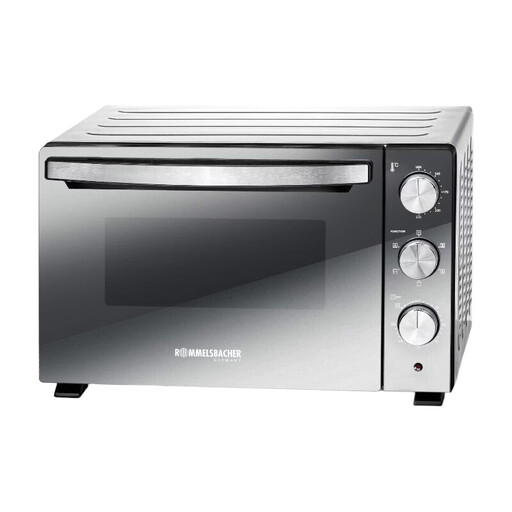
Rommelsbacher BGS 1500 baking and grill oven, 30 litres
Worth considering if you want to use hot air and a grill function as well as top and bottom heat.
Capacity: 30 litres. The description lists top and bottom heat, hot air and a grill function. It mentions both 250 °C and a minimum and maximum temperature, so check the available temperature range for your needs before buying.
View at Joybuy
 No image available
Rommelsbacher BG 950 mini oven, 10 litres
A compact option if top and bottom heat are enough and your baking tins fit within the stated dimensions.
Capacity: 10 litres. The maximum stated diameter for baking tins is 20 cm. Top and bottom heat are available; according to the description, the temperature range goes up to 230 °C.
View at Joybuy
Frequently asked questions
What temperature should you use for almond pastries?
For the Koopmans recipe, the recommended settings are 225 °C on the electric conventional setting or 210 °C on the fan setting, with a baking time of 20 minutes. Follow the instructions for the recipe you’re using, and don’t automatically use temperatures from a different recipe.
Can a mini oven be placed tightly between cupboards?
That depends on the manual for the exact model. For the TEO2101B, Tomado specifies 10 cm of clearance all around; the Brandweer advises that heat from electrical appliances needs to escape. Don’t automatically apply the Tomado measurement to another oven.
How do you clean the oven after baking?
Let the oven cool down and follow the manual for your model. For the TEO2101B, Tomado says to unplug the oven before cleaning it. For the inside of the OV207B, Inventum recommends using a soft, damp cloth.
Are you automatically entitled to only two years of statutory guarantee in the Netherlands?
No. ACM ConsuWijzer distinguishes between the statutory guarantee and a guarantee offered by a seller or manufacturer for a set period. If a product develops a fault during normal use, the seller must resolve the issue in line with what you could reasonably expect from the product.
Does an electric mini oven sold in the Netherlands need a CE mark?
For electrical appliances placed on the Dutch market that fall under the applicable European rules, Ondernemersplein explains that the manufacturer must apply a CE mark after assessing conformity and draw up an EU declaration of conformity. A statement in a product advert does not in itself prove that an individual product complies with those rules.
What should you tell others about allergens when sharing the pastries?
Tell them which ingredients you used and check the labels on the almond paste and puff pastry. The NVWA lists nuts and cereals containing gluten among the allergens that food businesses must tell consumers about; this does not establish that the same duty applies to a private student bring-and-share.


